A new leaf for girls with literary role models
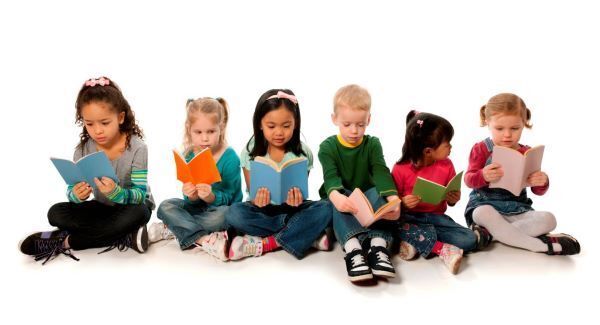
It’s crucial girls are introduced to literary role models, says children’s author Robin Stevens. So what should our daughters be reading? compiles an expert reading list.
Children’s books are chock-full of heroes and heroines — but there are differences in the way they’re portrayed, muses best-selling children’s crime-writer, Robin Stevens.
Male heroes, she observes, often start out as unlikely candidates for future triumph — take Wart, the humble orphan and future King Arthur in The Sword in the Stone, or Harry Potter, the ordinary boy who becomes a wizard.
Neither is exceptional or even particularly interesting at the beginning of these stories, nor do the boys behave in any way heroically.
All the same, Stevens points out, despite his unprepossessing start, an ordinary boy will often emerge as a hero.
“The boy who seems to have no talent is often the one who becomes the wizard or the prince, but that doesn’t necessarily happen in fiction for girls,” observes the author of the bestselling girl-detective series, Murder Most Unladylike.
However, when it comes to girls’ books, it appears to be rigueur for future heroines to demonstrate some early signs of ‘special-ness’, she complains. “Often a girl-heroine is already special, like Katniss Everdeen in The Hunger Games.”
In other words, she points out, the underlying message is that any boy can be a hero, but a girl must already be “phenomenally special” to achieve that status.
Stevens’ aim is to break that tradition. she declares:
“I want to say to girls that they can be ordinary and still be a hero,” says Stevens, winner of the 2015 Waterstones Children’s Book Prize for Young Fiction, who is coming to Ireland to meet up with fans in Kerry and Cork at the end of this month.
“It’s very important when you write female characters not to create ‘ideal’ heroines but to create characters who are flawed and who make mistakes and who sometimes say the wrong thing.
“I want to show readers you can be strong in so many ways, but not at the same time necessarily perfect.
“You can be wonderful in your own way and not worry that you should be better than who you are but to be happy with who you are — and be proud of it.”
She adheres to this philosophy with her hugely popular detective characters, Hazel Wong and Daisy Wells — these girls are clever, but credibly ordinary, too.
“I wanted to show that there are lots of ways to be brave.
“Daisy is athletic, fearless, and quick-witted, and she enjoys wearing nice clothes. She’s very intelligent — and she likes being intelligent.
“Hazel is shyer and quieter and more interested in books and reading — she’s a bit more thoughtful and is very kind.
“I wanted to show that being quieter and thoughtful is also a way to be heroic. You can sit there and think about something — she’s also very smart.”
The message of her books is that girls can be both smart and proud of being smart she says — and her detective stories are essentially about two really smart girls who work out problems.
“There’s so much media which is centred around men and boys that we’re taught in many insidious ways that to be male is to be the default,” says Stevens, whose books are written for eight- to 12-year-olds, but who says she finds their appeal extends into the Young Adult and even the adult market.
It’s important to have strong female role models to counteract the routine dominance of male role models in everything from TV shows like PAW Patrol to picture books for small children.
Otherwise she warns, girls are told “in so many ways that they’re not the centre of the narrative, that they’re not what the story is about”.
Too often, by the time girls reach the eight to 12 age bracket, she warns, they’ve unconsciously come to expect to read and hear more about boys than about girls:
“I really want to push back against that and write about a friendship between girls. I want to centre on a positive female friendship. There are males in this environment, but I really want to write about girls and women,” she says, adding however that her books should be viewed as reading for all children, and not solely for girls:
“It’s important too, for boys to read about girls and read books where girls are at the centre of the story.
“They need to see that the world is not just about them, that the world is about women as well as men.”
As a child, says Stevens, whose seventh book in her award-winning murder mystery series is due out in October, she loved the Nancy Drew mysteries and was also drawn to writers like Diana Wynne-Jones and Agatha Christie and, yes, Enid Blyton:
“I read a lot of stories about girls who were smart and brave and strong.
“I push back against the idea that books are for girls or for boys. My books are very much about girls but I aim them at all children and I would very much like boys to read them,” she says, adding that, in fact, when boys read her books “they generally really enjoy them”.
However, she points out, if a boy is informed that a certain book is “for girls” they will understandably reject them.
She questions whether gendered reading is innately in children, or whether it’s a result of their being nudged or pushed towards reading certain books.
“I think there’s a lot to be said for adults stepping back and not saying to kids that there are certain ‘books for boys’ and certain ‘books for girls!’ As it is, she warns, children already receive hundreds of often invisible social ‘nudges’ about what is ‘appropriate’ behaviour for their gender:
“I would urge parents to push back against that and try to show kids there is a wide world of reading for children out there and that every book is for them.”
Robin Stevens will appear at the Listowel Writers’ Week festival on May 31 and on June 1. For details and to book tickets, visit the childrens festival section of Writers Week website and click on childrens festival details.
For more info see here.
Robin Stevens is also hosting a book-signing and murder mystery event at Waterstones book shop on Patrick’s Street in Cork at 2pm on June 2.

CONNECT WITH US TODAY



Be the first to know the latest news and updates