Conservative and far-right parties claim victory in Spain’s national elections
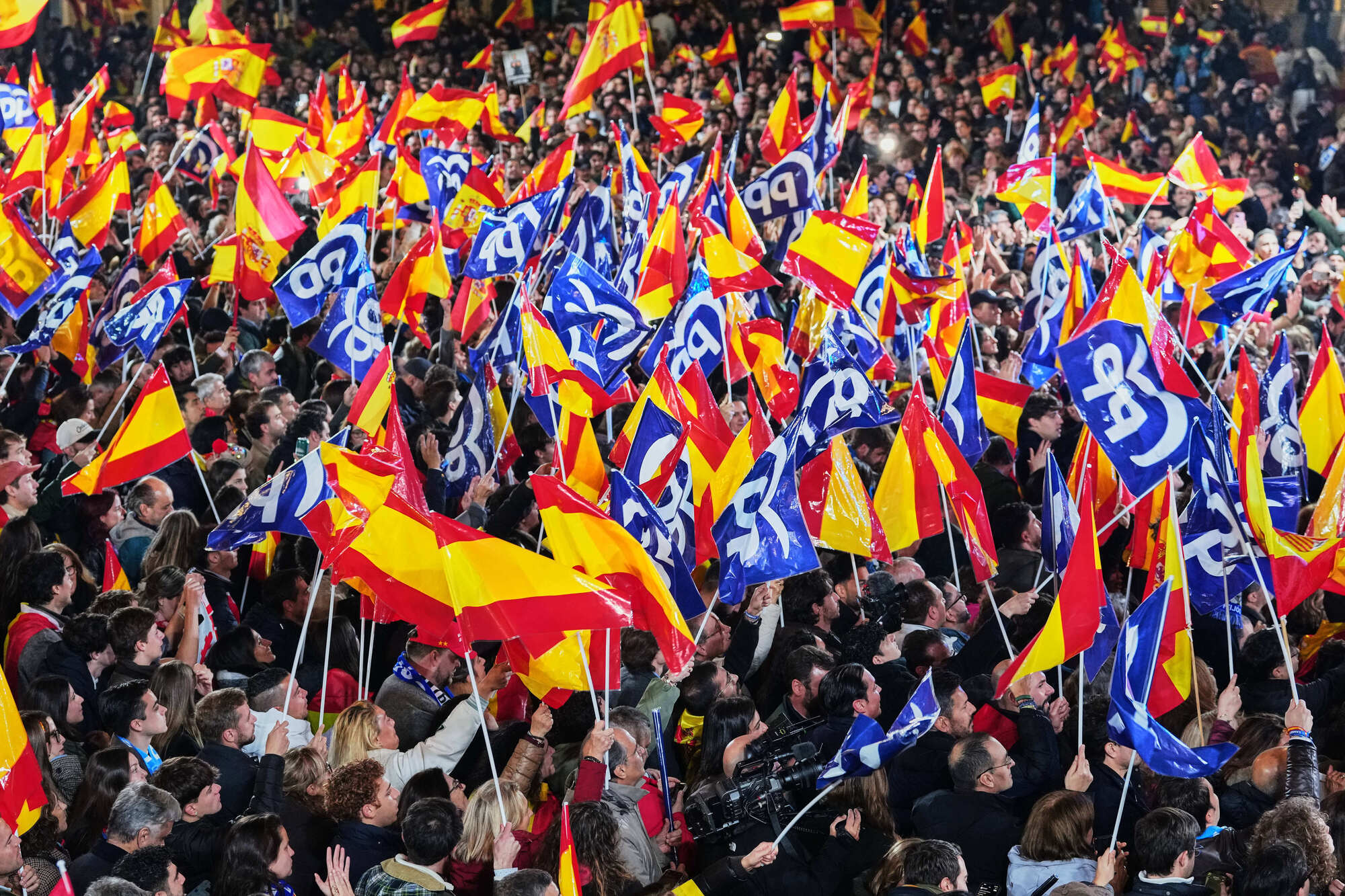
Conservative and far-right parties were poised to end Pedro Sanchez’s eight-year tenure as Spain’s prime minister after scoring a victory in Sunday’s national elections.
The result is part of a wider European trend towards demands for tighter immigration restrictions.
With 90% of votes counted, the conservative Popular Party and the far-right Vox party are closing in on a combined total well over the threshold of 176 seats needed to form a government.
“Mission complete!” Vox leader Abascal shouted to a thrilled crowd, who responded by shouting insults against Mr Sanchez. “We have kicked them all out!”
The Popular Party, or PP, declared victory on X, saying, “The PP is going to win the elections and Alberto Nunez Feijoo is going to be prime minister of Spain”.
Mr Feijoo is the party’s leader.
A large crowd of supporters gathered in front of the PP’s headquarters in Madrid, waving both the party’s and Spain’s flag.
The victory would return the PP to power for the first time since 2018 along with junior partner Vox.
This would make the incoming administration the first to feature a far-right, nationalist party in power for the first time since dictator Francisco Franco’s death in 1975.
Mr Sanchez conceded electoral loss to the conservatives and far-right.
“Today is a sad day for our country,” he said.
“We haven’t achieved our goal of being able to keep together a progressive government,” he told party members at Socialist headquarters, as they prepare to move into opposition.
He did not mention his role.
Mr Sanchez said he called Mr Feijoo to congratulate the Popular Party leader for his victory.
US President Donald Trump welcomed the defeat on Sunday, saying it was “great news” that Mr Sanchez was on track to be unseated.
“That’s a good thing,” Mr Trump told reporters in Washington.
“He did a terrible job. He deserves to lose.”
Mr Sanchez has been one of Mr Trump’s loudest critics in Europe and the two have frequently clashed over topics including the Iran war, Venezuela and Nato spending.
Mr Feijoo would become Spain’s next prime minister as long as PP and Vox can agree, as is widely expected, to form a coalition when the new parliament meets next month to vote in a government.
“This result signifies a strengthening of the axis between the traditional right and the far-right on a European scale — most notably within European institutions,” Steven Forti, professor of political science at the Autonomous University of Barcelona, said.

BLACK FRIDAY
Already a subscriber? Sign in

CONNECT WITH US TODAY



Be the first to know the latest news and updates