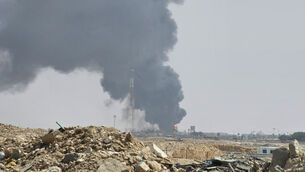
Death toll from Nepal-Tibet flash flood hits 389 amid aid scramble and fears lake will burst
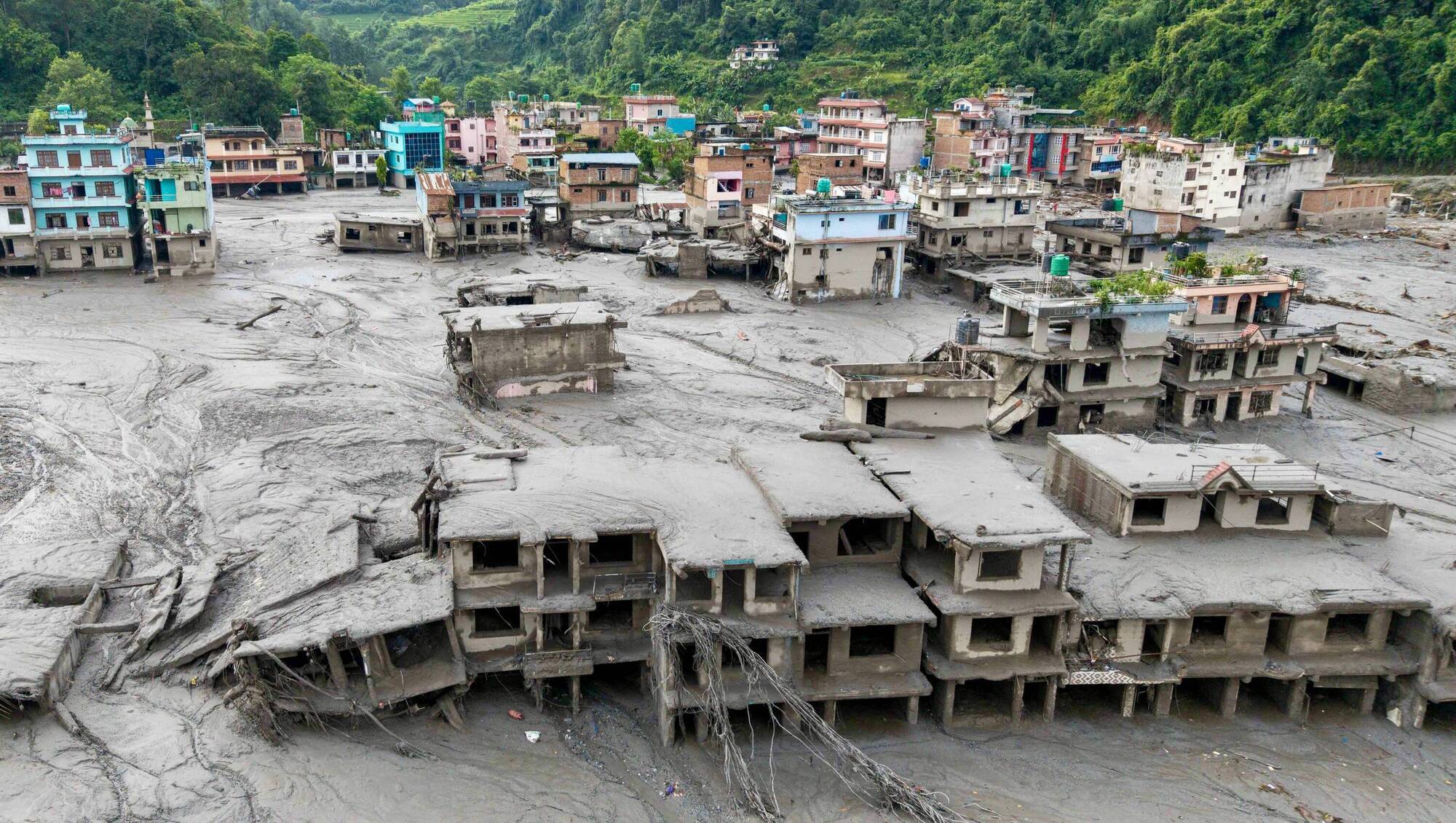
An aerial view shows houses lying deluged in sludge after flash floods at Devighat, Bidur Municipality in Nepal's Nuwakot district on August 27, 2026. (Photo by Prabin RANABHAT / AFP via Getty Images)
The international community was scrambling to get aid into flood-stricken parts of Nepal and Tibet on Thursday as authorities warned that a lake formed at the site where the deadly torrents occurred was rising and at risk of bursting.
Rescuers are searching for nearly 1,400 people, most of them tourists, who are missing after the catastrophic flash flood which thundered down valleys, obliterating entire villages and killing at least 389 people.
Efforts to locate those missing – including hundreds of people from Ireland, India, the US, UK, Australia and Canada – have been complicated by the destruction of dozens of bridges and almost 40km of roads in the mountainous region popular with trekkers and pilgrims.
Videos from Wednesday’s disaster showed a massive wall of water crashing down on the border as people tried to flee. Trucks were upended and houses, roads and power plants swept away in Nepal, while officials in Tibet said they feared “major casualties” after a mudslide hit a border crossing.
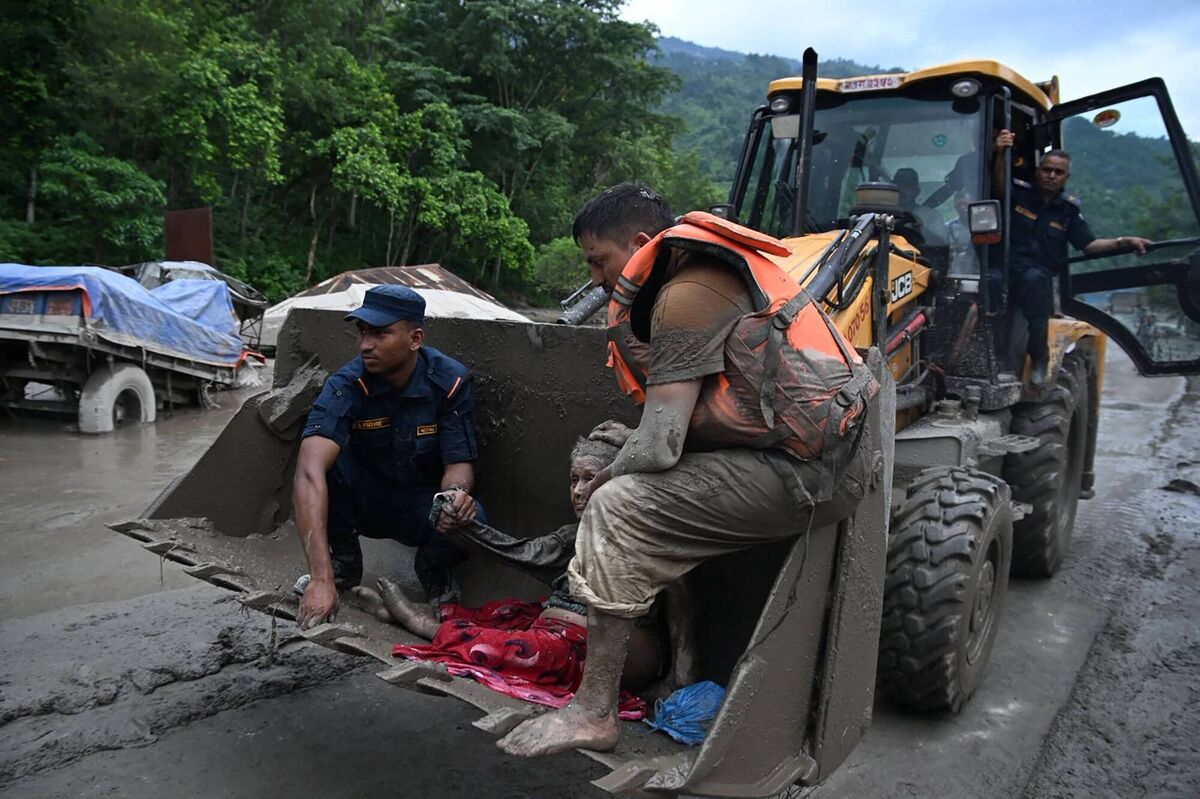
Rescue teams have found bodies hundreds of miles downstream from the disaster zone in the Chitwan district of Nepal, near the Tibetan border. Dozens of injured people have been transported to Kathmandu for advanced medical care. By Thursday morning, the Nepali army had rescued more than 100 people from flood-affected areas by helicopter.
David Fisher, the head of the Nepal delegation of the International Federation of the Red Cross, said entire villages and market areas had been wiped out.
In the affected areas, houses, trees and vehicles were submerged or buried in mudslides. Helicopters hovered overhead all day, helping to rescue survivors.
Read More
The power, volume and speed of the surging waters gave little time for anyone to flee.
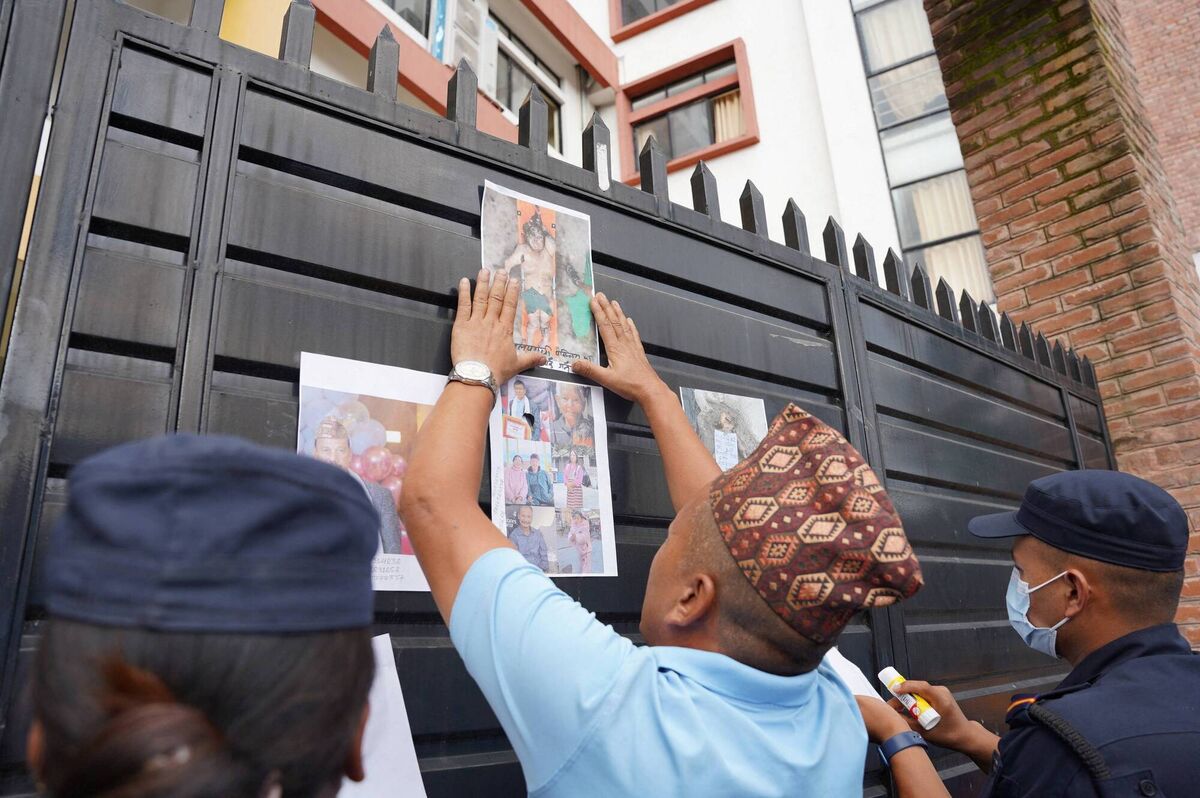
People from the hard-hit areas of Nuwakot and Dhading were seen gathering outside a Nepali army training centre – the base for helicopter rescue operations – seeking information about missing family members.
Police were recording the names of the missing just outside the barracks gate. Mobile phone torches were their only source of light as the area remained without electricity due to damaged hydroelectric infrastructure.
The village of Soley, in Nuwakot, which had about 25 homes, was virtually wiped out, according to Nirajan Paudyal, a Kathmandu-based journalist whose parents and other relatives live there. Desperate for information, he travelled to the area on Thursday for news of his family.
“There is no update till now,” he said. “I fear there won’t be any update.”
Almost 600 foreigners were among 826 people missing in Nepal, police and tourism officials said. Among those unaccounted were two Irish nationals, 177 from India, 63 from the US, 34 from Australia, 33 from Britain and 25 from Canada.
Chinese state media said at least 558 were missing on the Tibet side of the border, of whom at least 260 were foreign nationals.
The Irish Red Cross said it is working with the Nepal Red Cross Society, which is providing emergency humanitarian support to people affected by the disaster.
Secretary general Deirdre Garvey said “reaching isolated communities and aiding those who are injured or displaced is our top priority” and that “we are also preparing for long-term recovery; entire villages and market centres have been completely wiped out”.
A spokesperson said the Department of Foreign Affairs will provide consular assistance to impacted Irish citizens and their families.
Tom Fletcher, the UN’s humanitarian chief, described the flood as “horrifying”. He said emergency teams had been mobilised and an initial $2m of disaster funds allocated to cover emergency medical care, shelter, and water.
Nepal’s disaster authority warned of continuing danger on Thursday, appealing to residents and rescuers to stay away from a swelling lake that had formed at the flood site. Chinese authorities said a barrier lake at the confluence of the Tsogyal and Purupqiangzangbu rivers was overflowing and could burst.
Many of the victims were on a pilgrimage to Kailash Mansarovar, a high-altitude site in Tibet revered by Hindus and Buddhists among others.
Early reports from Nepali officials suggested an earthquake could have caused the lower part of a glacier to collapse and trigger the floods. But the US Geological Survey later said what was initially reported as a 4.4-magnitude earthquake was a seismic shock generated by glacial rock and ice collapsing and the flow of debris. “No earthquake had occurred,” it said.
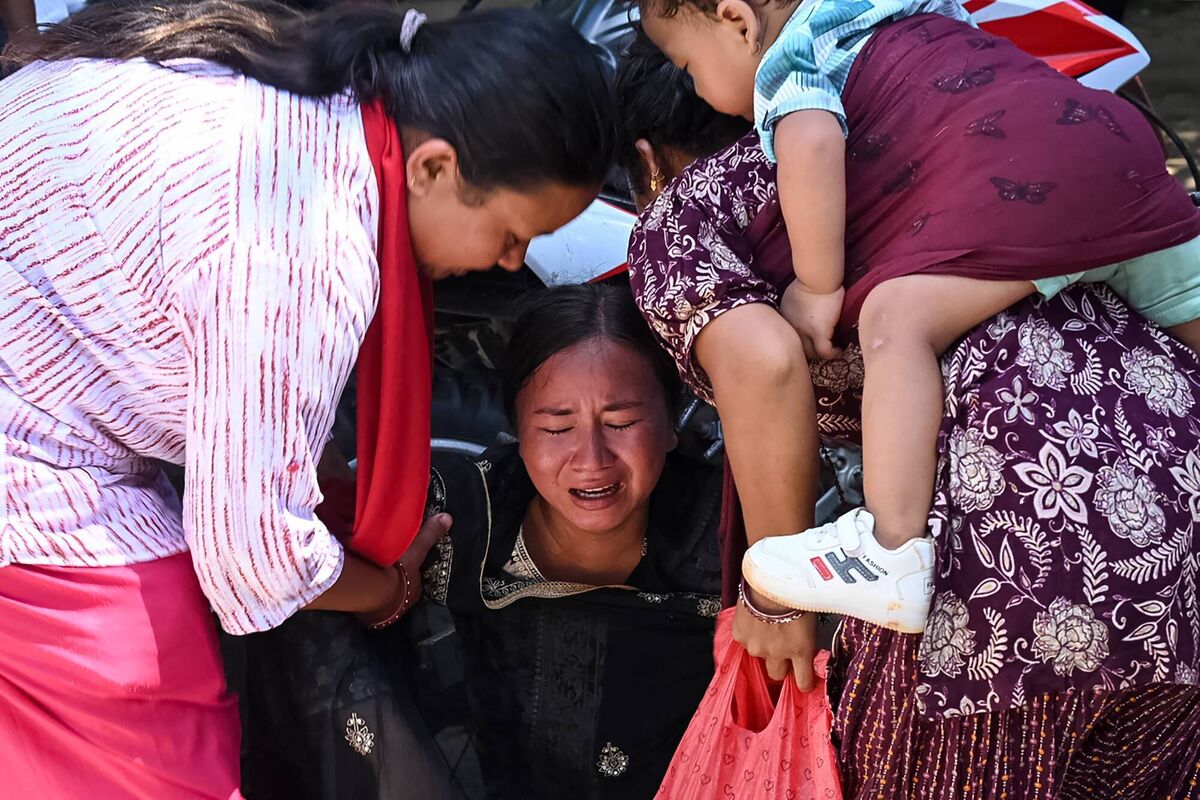
An initial study of Planet Labs satellite imagery indicated a landslide of ice and rock triggered the debris-laden flood in the Lhende River, about 12 miles (20km) north-east of the Nepal-China Rasuwagadhi border crossing, Nepal’s national disaster authority said. Experts say the risk of such events is compounded by the extreme topography of the Himalayas.
People shared harrowing stories of how they managed to survive. “I started running. Then a wall of water came thundering down as if it was an earthquake,” said Bibek Kumal, a labourer who was working downstream from the worst-hit Rasuwa district, near Nepal’s Himalayan border with China’s Tibet.
From his hospital bed, Kumal said the torrent swept him downstream amid mud and debris but he survived by clinging to a mango tree. “Had there been no mango tree, I would have been washed away to death,” he said.
Keshav Prasad Baral, a 68-year-old survivor who was being treated at a small hospital, said: “It was a huge gush of mud coming straight towards us. As it got closer, it kept rising higher and higher.
“I tried to grab my wife’s hand and take her to the terrace. But she was swept away by the mud. Four or five hours later, a helicopter came to rescue me. My wife is still somewhere beneath the mud. She’s gone.”
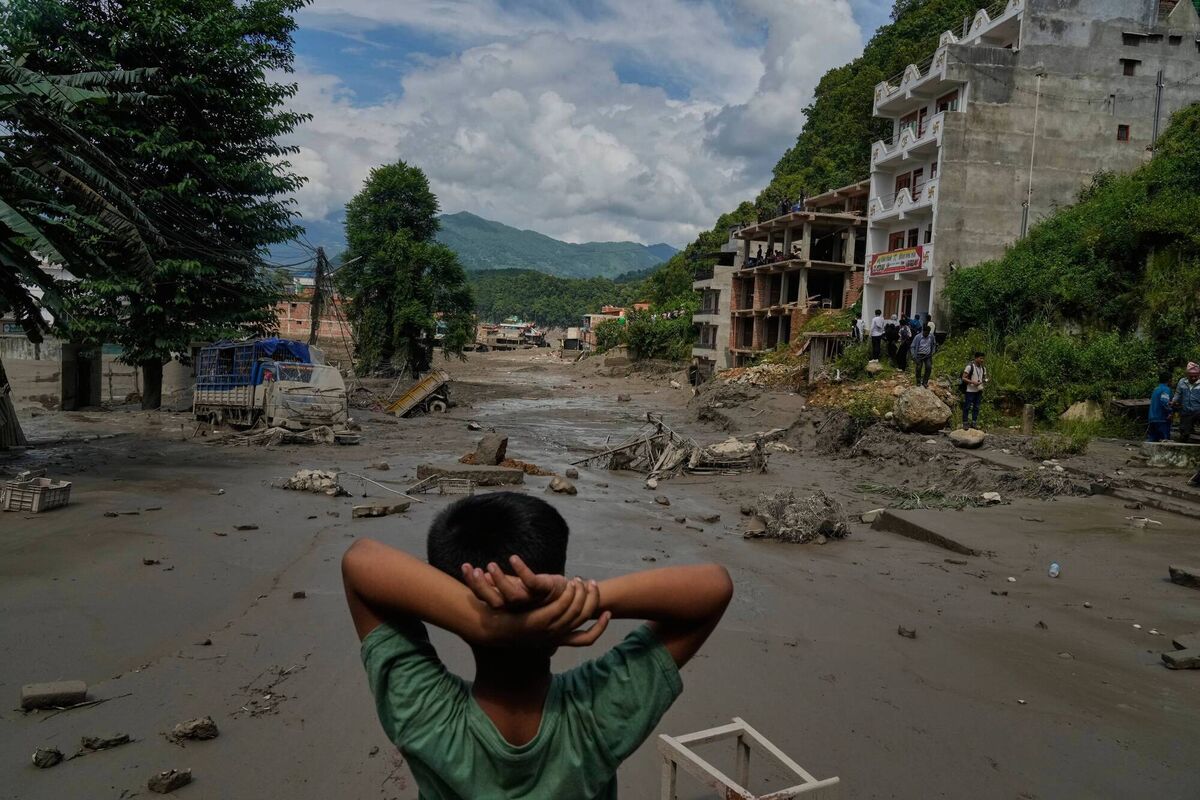
The United Nations secretary general, António Guterres, said UN teams and partners were mobilising supplies and personnel to support communities affected by the disaster. The US government said it would provide $500,000 in emergency assistance.
Tibet government officials deployed nearly 800 emergency workers and 150 vehicles as well as sniffer dogs and speedboats to help the rescue efforts, China’s official Xinhua news agency said.
The Chinese premier, Li Qiang, travelled to the affected area on the China-Nepal border on Thursday to oversee search efforts there.
The tour company Himalayan Glacier said 47 people, including two children, were missing from one of its groups in Nepal. Among them were 15 Australians, 10 Canadians, nine Nepalis, eight Americans, two Britons, two Singaporeans and one Russian-American dual citizen, its managing director, Sanket Pandey, said.
The Australian prime minister, Anthony Albanese, said his thoughts were with those concerned about their loved ones, and that getting information about the status of missing people remained difficult.
Reuters and Agence France-Presse contributed to this report


CONNECT WITH US TODAY



Be the first to know the latest news and updates