Search continues for seven villagers trapped in flooded Laos cave
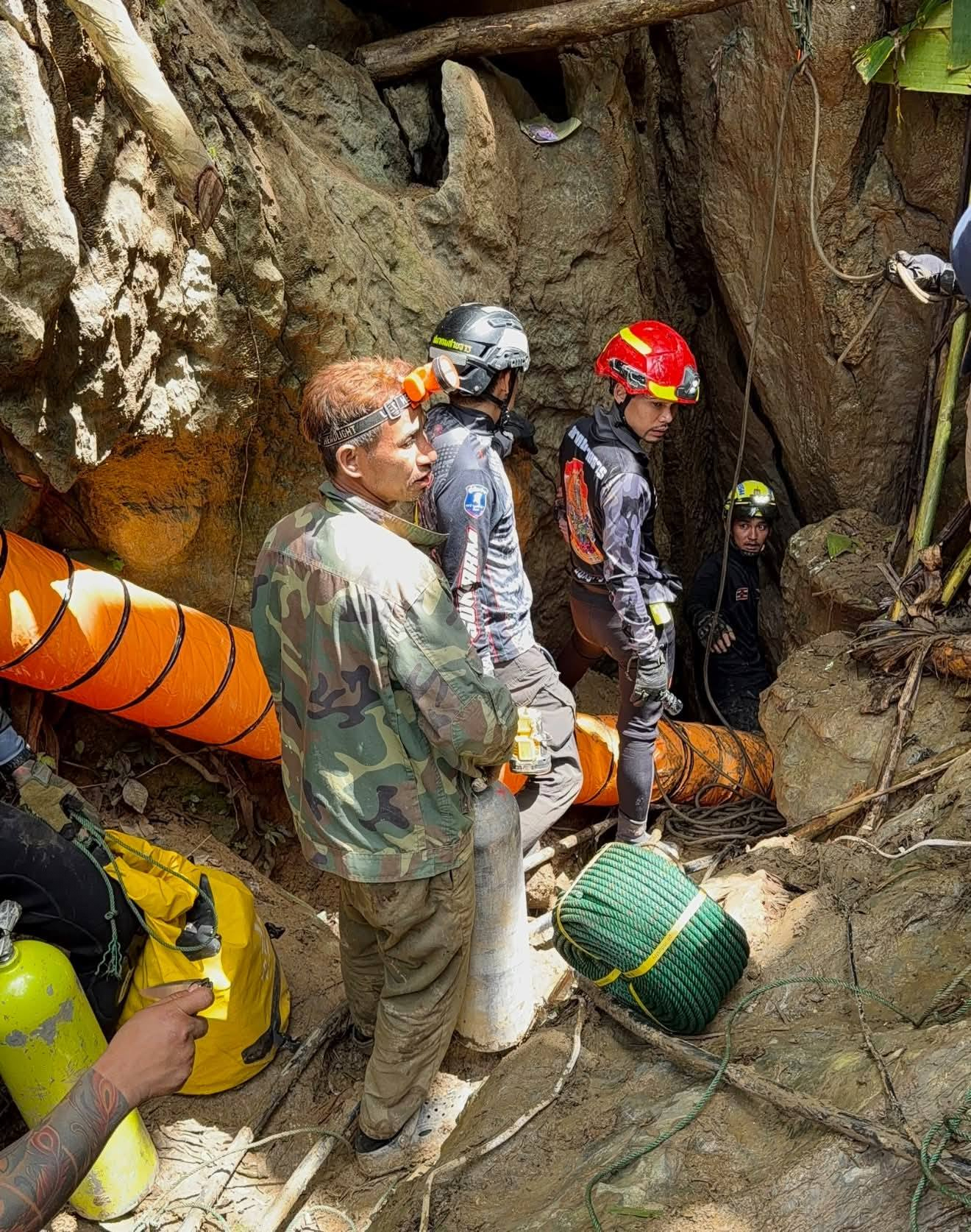
A search operation for seven villagers trapped inside a flooded cave in central Laos has entered its seventh day, as rescuers encountered difficult terrain and weather as they are trying to reach the group whose condition remains unknown.
The villagers entered the cave in Xaisomboun province on May 19, but heavy rain triggered flash flooding that blocked the exit, according to Lao and Thai rescue teams involved in the operation.
The Lao organisation Rescue Volunteer for People, which is working closely with the local authorities, posted on its Facebook page that Tuesday’s operation plan includes exploring air shafts above the cave in hopes of identifying possible access points, and locating the trapped people.

Rescuers from neighbouring Thailand also arrived at the site over the weekend to assist the operation.
According to rescuers, divers have navigated about 100 metres into the flooded, narrow cave. They believe the villagers may be trapped about 30 metres beyond the furthest point currently accessible. They are working to pump water out of the cave to aid the search efforts.
The site is in a remote area in Xaisomboun province’s Longcheng district, which is about 75 miles (120km) north of the capital, Vientiane.
Rescuers at the scene have detailed on social media the challenging mountainous terrain and heavy rain that is hampering the operation.
Videos shared online by Thai rescuers showed that reaching the cave’s entrance requires a steep hike on foot of roughly 2.5 miles (4km). The entrance is also steep and rocky, and barely wide enough for a single person to climb through at a time.
Inside, rescuers must go through muddy passageways, flooded sections and narrow tunnels that forced them to crawl forward.

There has been no official confirmation on why the villagers went into the cave, although the rescuers involved said that they went in to look for gold deposits.
Bounkham Luanglath of the Lao rescue group has told The Associated Press that the cave was frequented by local residents looking for gold, although authorities had repeatedly warned them against entering the cave out of safety concerns.
The average per capita income in Laos of about 2,000-2,500 US dollars (£1,484-£1,855) is among the lowest in Southeast Asia, and it is less still in underdeveloped rural areas.
Laos is not known as a major gold producer, but its mining industry is sizable considering the country’s developing economy.
The mining sector is fuelled by foreign direct investment, largely from neighbouring Thailand and China.
Copper is a major export, and mining for rare earth elements, needed for most modern technologies, has become more common in Laos recently.
The Laos foreign ministry said on Tuesday that it had no official information to share with the media.
The Southeast Asian nation is a one-party communist state with no organised opposition and the government keeps a tight lid on information.
The news quickly drew headlines in Thailand because of its resemblance to the dramatic 2018 cave rescue in northern Thailand, where 12 boys and their football coach were trapped for more than two weeks before being safely rescued in an operation that became a global sensation.


CONNECT WITH US TODAY



Be the first to know the latest news and updates