CNN founder Ted Turner, brash and outspoken television pioneer, dies aged 87
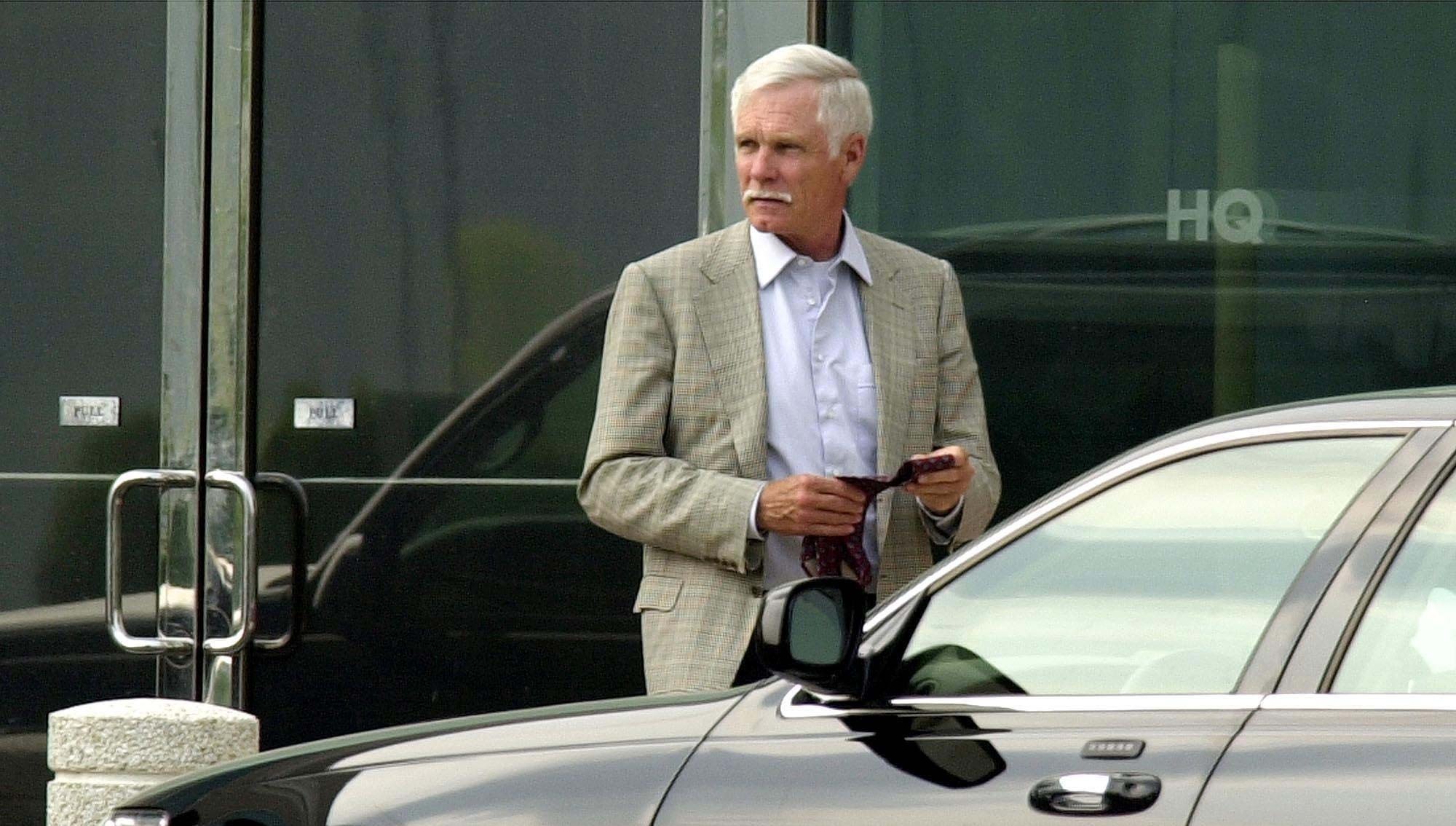
CNN founder Ted Turner in 2002. File picture: AP Photo/Kenneth Lambert
Ted Turner, a brash and outspoken television pioneer who raced yachts, owned huge chunks of the American West and transformed the news business by launching in 1980, has died aged 87.
reported that he died on Wednesday, citing a Turner Enterprises news release.
Mr Turner owned professional sports teams in Atlanta, defended the America’s Cup in yachting in 1977 and donated a stunning $1bn to United Nations charities.
He married three women – most famously actress Jane Fonda – and earned the nicknames Captain Outrageous and The Mouth of the South.
Mr Turner once bragged: “If only I had a little humility, I’d be perfect.”
Read More
He was slowed in later years by Lewy body dementia.
Long since out of the television business, Mr Turner concentrated on philanthropy and his more than two million acres of property, including the nation’s largest bison herd.
His garrulous personality sometimes overshadowed a driven, risk-taking business acumen.
By the time he sold his Turner Broadcasting System to in a 1996 media megadeal, Mr Turner had turned his late father’s billboard company into a global conglomerate that included seven major cable networks, three professional sports teams and two hit film studios.
Mr Turner’s signature achievement was creating , the first 24-hour, all-news television network in 1980.
At a time news is instantly available at anyone’s fingertips, it is hard to recall that the idea of letting consumers decide when they choose to learn what is going on in the world was once revolutionary.
In part, Mr Turner’s own frustration with television news was the instigator.
He often worked past 8pm, after the , and nightly newscasts had already gone off the air, and was in bed by the time his local stations did their own newscasts at 11pm.
He took a chance by starting the operation sometimes derided as the “chicken noodle network” in the early days of cable television, living in an apartment above its Atlanta office.
“I was going to have to hit hard and move incredibly fast and that’s what we did – move so fast that the (broadcast) networks wouldn’t have the time to respond, because they should have done this, not me,” Mr Turner recalled in a 2016 interview with the Academy of Achievement.
“But they didn’t have the imagination.” breakthrough moment came during the Gulf War with Iraq in 1991.
Most television journalists had fled Baghdad, warned of an imminent American attack.
stayed, capturing arresting images of a war’s outbreak, with anti-aircraft tracers streaking across the sky and correspondents flinching from the concussion of bombs.
Mr Turner was promised a continued role in after his company’s sale to for $7.3bn in stock, but was gradually pushed out, much to his regret.
“I made a mistake,” he later said.
“The mistake I made was losing control of the company.”
That same year – 1996 – saw the birth of the and arrival of a new dominant mogul in cable news, Rupert Murdoch.
Political opinion became the stock in trade of networks such as and .
Even though built a worldwide news organisation particularly strong online, it struggles to this day with a diminished desire for straighter TV newscasts.
CONNECT WITH US TODAY



Be the first to know the latest news and updates