Sick crew member to be urgently evacuated as hantavirus-hit cruise ship heads to Spain
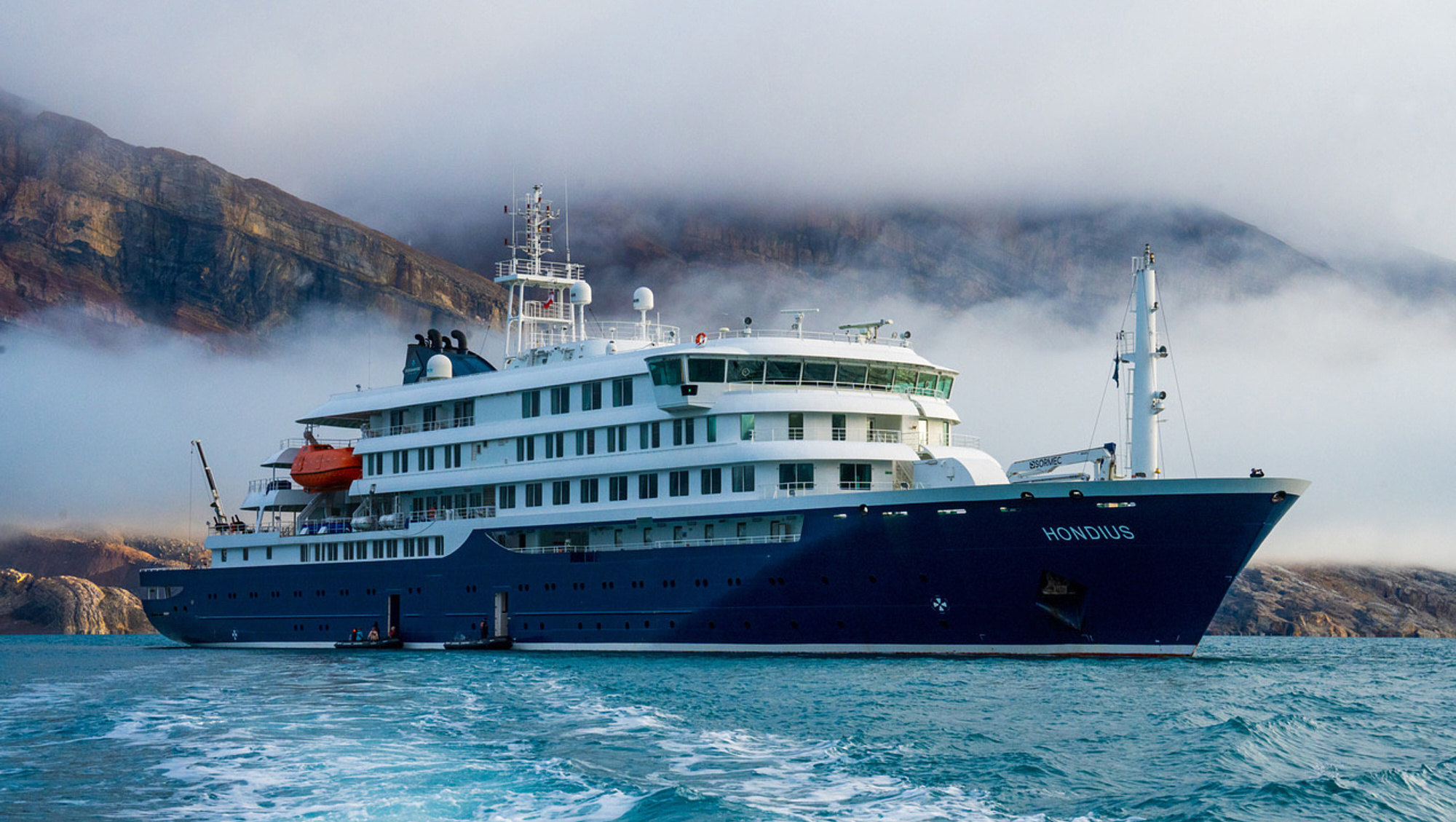
The crew member is being prepared for medical evacuation from the MV Hondius along with a Dutch colleague, with Dutch authorities overseeing the operation. Picture: Oceanwide Expeditions via AP
A British crew member who became ill after a suspected outbreak of hantavirus on a luxury cruise ship in the Atlantic Ocean will be medically evacuated, as the World Health Organisation (WHO) said rare human-to-human spread of the deadly virus may have occurred on the vessel.
The crew member is being prepared for medical evacuation from the MV Hondius along with a Dutch colleague, with Dutch authorities overseeing the operation.
The two crew members needed “urgent medical care” after experiencing respiratory symptoms, the tour operator Oceanwide Expeditions said. The pair will be evacuated via Cape Verde to the Netherlands, allowing the vessel to sail on to Spain’s Canary Islands.
Once in the Canary Islands, at a port to be determined, the Spanish health ministry said crew and passengers would be examined, treated and repatriated to their respective countries, in coordination with the European Centre for Disease Prevention and Control and the WHO.
Read More
The Spanish health ministry confirmed on Tuesday evening it would receive the MV Hondius in the Canary Islands “in three or four days”, after the WHO deemed Cape Verde was unable to carry out the operation.
People are usually infected with hantavirus through contact with infected rodents or their urine, droppings or saliva. But the WHO said on Tuesday it suspects some rare human-to-human transmission took place between very close contacts on board the Hondius.
“We do believe that there may be some human-to-human transmission that’s happening among the really close contacts, the husband and wife, people who have shared cabins,” Maria Van Kerkhove, the director of epidemic and pandemic preparedness and prevention at the WHO, told reporters in Geneva.
Ms Van Kerkhove also sent a direct message to people on board. “We just want you to know we are working with the ship’s operators,” she said. “We are working with the countries where you are from. We hear you, we know that you are scared.” Health authorities say about 150 people from 23 countries are on board the ship.

A limited spread among close contacts has been observed in some previous outbreaks of the Andes strain, which spreads in South America, including Argentina, and which the WHO believes could be involved in this instance. Testing is underway.
The Hondius left Ushuaia in southern Argentina in March. The WHO said it had been told there were no rats on board.
A British passenger with symptoms of hantavirus is understood to be improving. The passenger was medically evacuated on 27 April to Johannesburg, and remains in intensive care.
The UK prime minister, Keir Starmer, said the government was putting “plans in place” for the onward travel of Britons stuck on the Dutch-flagged cruise ship.
Ms Van Kerkhove said on Tuesday: “As of today, seven individuals of the 147 passengers and crew have been reported ill. Sadly, three have died.
Another suspected case has been reported, but this person was “currently doing well and is asymptomatic”, Van Kerkhove added.
“At this stage, there are no additional symptomatic people onboard,” she said.
“That said, the situation is being closely monitored and, as a precaution, passengers have been asked to remain in their cabins while disinfection and other public health measures are carried out.”

A Dutch passenger died on board the ship on 11 April. His wife died on 27 April, with authorities later confirming she had tested positive for a variant of hantavirus. On 2 May, a German passenger died, although the cause has not yet been confirmed.
Oceanwide Expeditions said in a statement that the atmosphere on the ship “remains calm, with passengers generally composed”.
The company added that it was “working to provide clarity and reassurance to guests and expedite their disembarkation and medical screening”.
Hantavirus infections, which are usually spread by infected rodents’ urine or faeces, can lead to severe respiratory illness and can sometimes be fatal. While rare, infections can spread between people, according to the WHO.
There is no specific treatment or cure, but patients have a better chance of survival if they receive medical attention early.