Donald Trump says US operations in Middle East will end 'very soon'
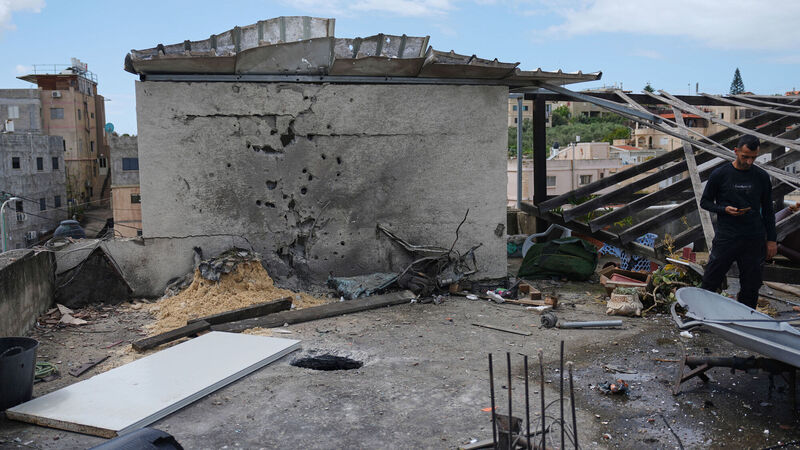
Residents inspect a damaged house following an Iranian missile strike in Shefaram Israel, Monday, March 30, 2026. (AP Photo/Ariel Schalit)
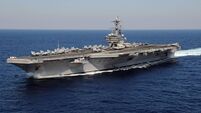
- Thousands of additional US troops are heading to the Middle East. The aircraft carrier USS George HW Bush deployed on Tuesday and is slated to travel to the region along with three destroyers, two US officials said.
- A drone attack has sparked a large fire at Kuwait international airport, according to its state news agency, which said no casualties had been reported.
- Bahrain also said early on Wednesday that it was working to extinguish a fire at a business facility that resulted from an Iranian attack.
- A tanker also came under attack off the coast of Qatar early on Wednesday, according to the British military’s United Kingdom Maritime Trade Operations centre.
- Israeli strikes in southern Beirut and a nearby area have killed seven people, according to Lebanon’s health ministry.
- An American journalist, Shelly Kittleson, has been kidnapped in Baghdad by a suspected Iranian-backed Iraqi armed group, the US said.
- The Wall Street Journal is reporting that the United Arab Emirates is preparing to help the US open the strait of Hormuz by force.
Donald Trump said on Tuesday that US forces would end operations in Iran, “very soon,” suggesting a timeline of two to three weeks.
The US president also told reporters that the responsibility for keeping the Strait of Hormuz open will rest with the countries that rely on it.
“That’s not for us … That’ll be for whoever’s using the strait,” he said.
Later, US secretary of state Marco Rubio told Fox News the US would need to reevaluate the Nato relationship after the conflict in Iran concludes, saying: “I do think, unfortunately, we are going to have to re-examine whether or not this alliance that has served this country well for a while is still serving that purpose.
“If now we have reached a point where the Nato alliance means that we can’t use [US military bases in Europe]... then Nato is a one-way street.”
It comes as Mr Trump launched a tirade against European countries that refused to join his war against, calling out the UK and France, as transatlantic relations soured from the spiralling conflict that has wreaked havoc on the global economy.
On his Truth Social website, the US president told governments worried about fuel prices to “go get your own oil” by force from the Gulf, comments that sent oil prices even higher.
Later on Tuesday, Mr Trump said US forces would end operations in Iran “very soon,” evoking a timeline of two to three weeks as his administration pursues talks with Iranian authorities.
Mr Trump also told reporters that the responsibility for keeping the Strait of Hormuz open will rest with countries that rely on it. “That’s not for us … That’ll be for whoever’s using the strait.”
Read More
Karoline Leavitt, the White House press secretary, announced Tuesday that Mr Trump will give an address to the US to “provide an important update on Iran”.
In a tentative sign of a more proactive European pushback to the war, it was revealed on Tuesday that France had blocked Israeli planes from flying weapons through its airspace while Italy refused last-minute permission for US bombers to land in Sicily.
Spain has already denied the US use of its bases and airspace for the war, and on Tuesday, Madrid’s defence minister said the country would not “accept lectures from anyone”. The UK, meanwhile, has allowed the US to use its bases for a war its government says is illegal, but has nonetheless received public admonishment from Mr Trump.
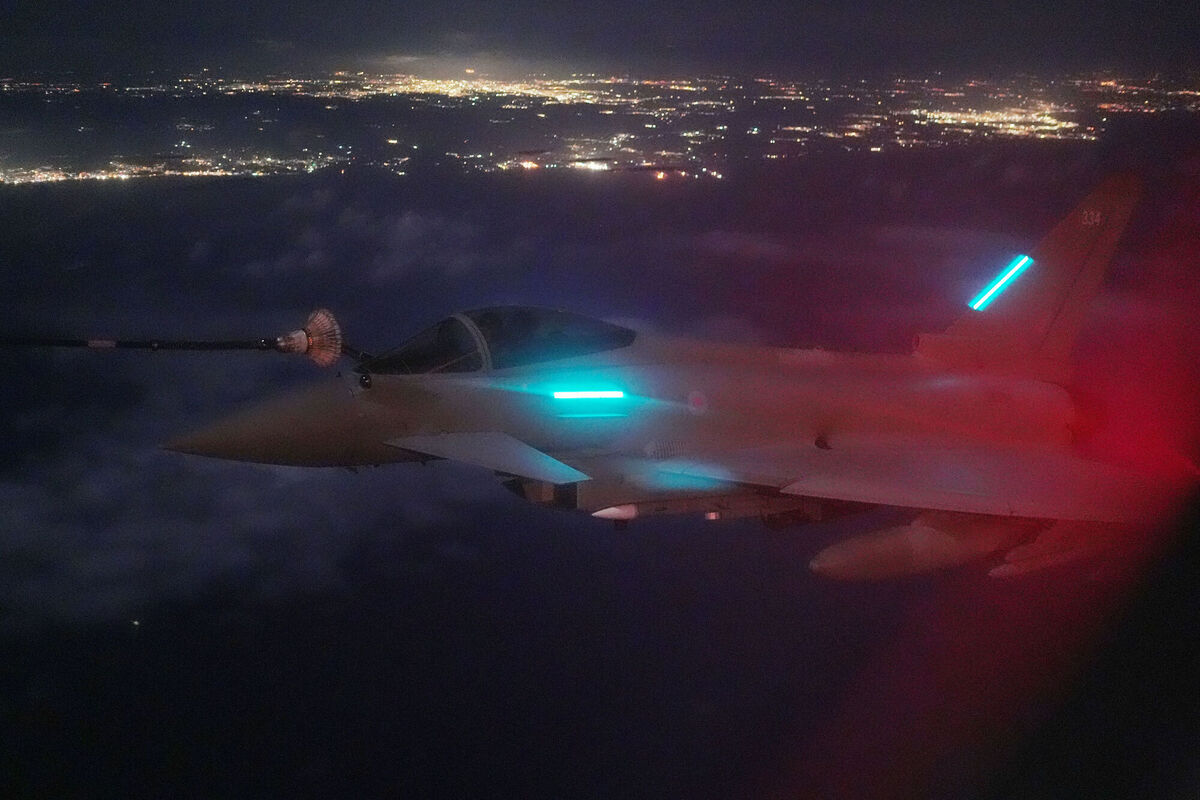
In his Tuesday posts, Mr Trump said “all of those countries that can’t get jet fuel because of the Strait of Hormuz, like the United Kingdom, which refused to get involved in the decapitation of Iran”, should buy US oil instead.
He suggested they should also “build up some delayed courage, go to the Strait, and just TAKE IT”. The US secretary of defence, Pete Hegseth, repeated the call, saying there were countries that “ought be prepared to step up on this critical waterway as well”.
“Last time I checked, there was supposed to be a big, bad Royal Navy that could be prepared to do things like that as well,” Mr Hegseth said, calling out the UK during a press conference on Tuesday morning.
Plans to control the strait of Hormuz by force are widely considered high risk and unrealistic, and European countries have been working for years on plans to buy more US oil.
In a separate post, Mr Trump criticised France because it “wouldn’t let planes headed to Israel, loaded up with military supplies, fly over French territory”, writing that the country had been “VERY UNHELPFUL”. The office of the French president, Emmanuel Macron, said it was “surprised” by Mr Trump’s tweet, saying Paris “has not changed its position since day one” of the war.
The US secretary of state, Marco Rubio, said that after the war, Washington would look at whether Nato has “served this country well”, or whether it has become a “one-way street where America is simply in a position to defend Europe, but when we need the help of our allies, they’re going to deny us basing rights, and they’re going to deny us overflight.”
Global frustration with the economic fallout is growing. The Taoiseach, Micheál Martin, said on Tuesday that the oil supply shock caused by the US-Israeli attack on Iran was “probably the worst ever”.
With average US gas prices passing $4 a gallon for the first time in four years, Mr Trump now also faces the prospect of a domestic backlash to a one-month conflict he is unable to end with violence, threats or flattery.
While Washington has said it is negotiating hard with Iran to reach a deal, Tehran’s ruling regime has been lukewarm, seeing the crisis as an existential fight.
On Tuesday, the Iranian president, Masoud Pezeshkian, said Iran had the “necessary will” to end the war," provided that essential conditions are met”, in particular guarantees that the conflict would not be repeated.
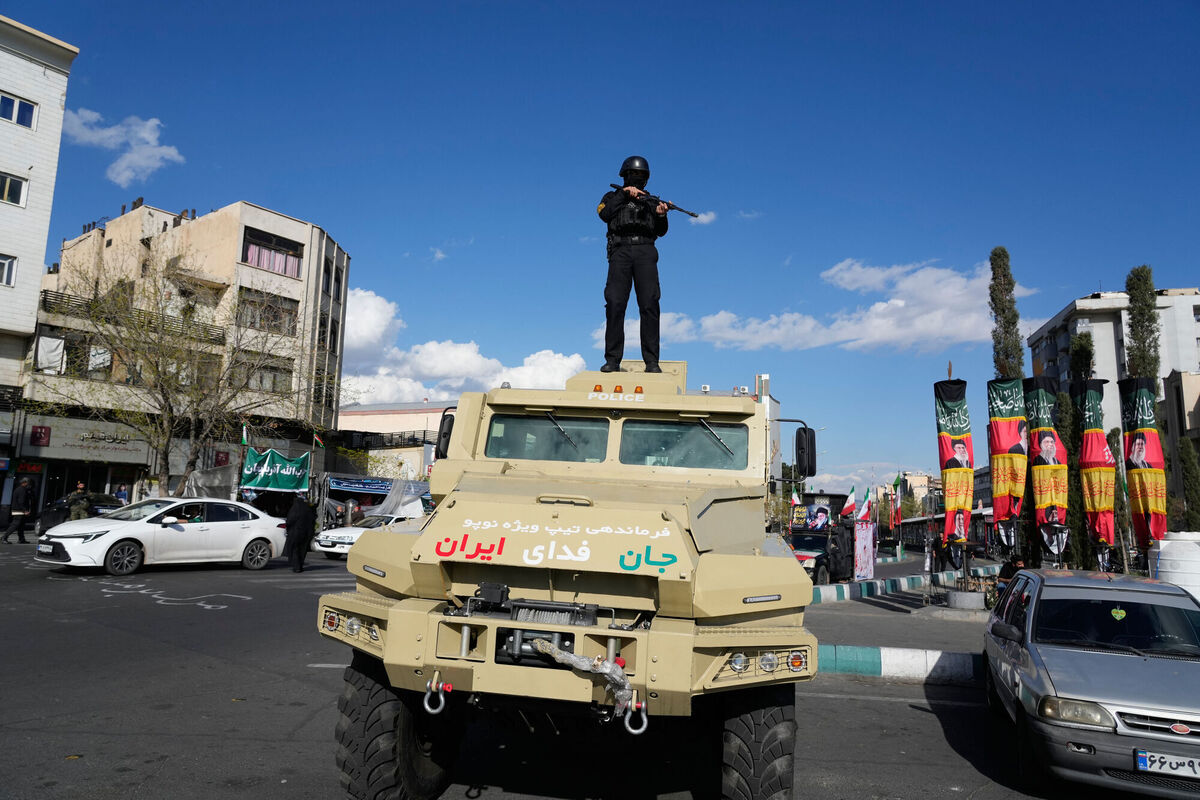
Spot prices for Brent crude dropped below $104 a barrel for the first time since Friday on Pezeshkian’s remarks, as markets rallied on even the outside potential for negotiations to end the war. Mr Trump on Tuesday also told NBC News the war was “coming to an end”, although he did not say how that would happen.
On Tuesday, blasts were heard in the Saudi Arabian capital, Riyadh, and Tehran attacked a fully loaded Kuwaiti oil tanker in the Gulf. US strikes also hit the city of Isfahan, home to one of Iran’s main nuclear sites, sending a huge fireball into the sky. The US announced it had begun using B-52 bombers to strike targets in Iran, indicating a level of air superiority over Iran that would allow the military to operate without fear of pilots being shot down.
The conflict has killed more than 3,000 people, and governments outside the region are focused on the economic shocks at a time of high inflation, slow growth and a cost-of-living crisis in many countries.
Mr Trump has been openly upset with Iran closing off the Strait of Hormuz, even though the closure was widely predicted, even before the war, if there were an all-out assault on Tehran.
Pakistan and China have also released a joint five-part plan to negotiate an end to the war and reopen the Strait of Hormuz. It is not clear if that proposal is linked to the US’s recent diplomatic messaging to Iran through Pakistan, which has good relations with both countries.
This week, Mr Trump warned that if a ceasefire was not reached “shortly”, the US would broaden its offensive, including by “obliterating” Iran’s power stations and fresh water plants, attacks that legal scholars say would probably be war crimes.
As the war with Iran continued, Israel stepped up its attack in Lebanon, a country it reinvaded this month and which it now plans to permanently occupy, according to its defence minister.
Israel Katz on Tuesday said the military would occupy a swathe of southern Lebanon and maintain control over the entire area up to the Litani River, which is about 30km (20 miles) inside Lebanon. Israeli forces would stay even after the current war with Hezbollah militants ended, he said.
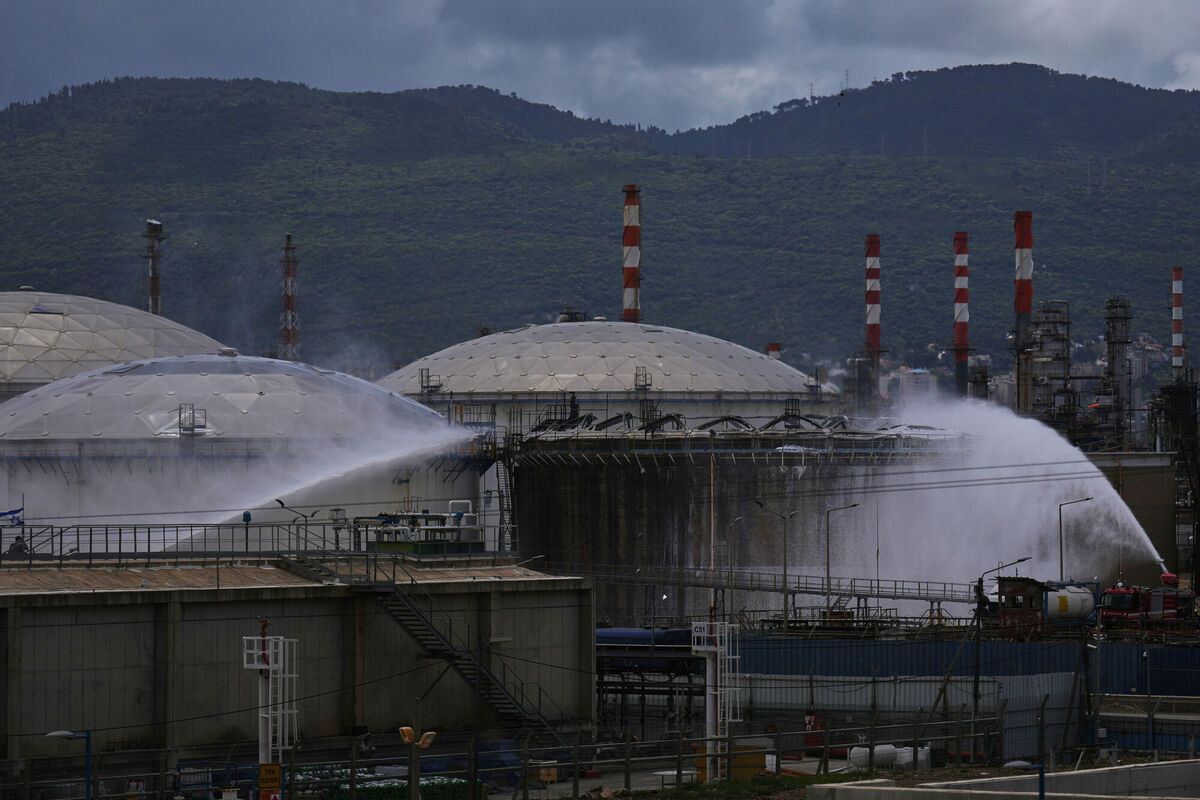
Israel would block Lebanese people from returning to their homes there, he added, and Arab villages near the frontier would be demolished in the same way Israel demolished neighbourhoods in Gaza, where it is accused of committing a genocide.
While European powers have not taken effective measures to hold back Israeli and US attacks, the moves by Spain, France and Italy over the past few days suggest there are pushes to take a more proactive approach.
Margarita Robles, the Spanish defence minister, said on Tuesday that the US and Israel “can’t be the ones who, without anyone’s support, not even of their allies, decide what type of rules or peace apply in the world”.
Speaking to Congress, she said: “Our position is supported by the majority of people, and not just Spanish but European.” Spain felt no obligation to join an illegal war whose objectives, 30 days into the conflict, have yet to be defined, she added. “Two countries went to war and expected us to join them,” she said, adding, “We don’t accept lectures from anyone in regard to our commitment to peace.”
Reports that Italy had denied permission for US military planes carrying weapons for the war in Iran to land in Sicily suggested fraying nerves even from stalwart European allies. It was dismissed by Rome as a procedural issue.
In Italy, the Corriere della Sera newspaper reported that “some US bombers” had been blocked from landing at Sigonella, one of seven US Navy bases in Italy. A source at the Italian defence ministry confirmed the report, but said that use of the base had been denied because the US sought authorisation to land only while the aircraft were already en route to Sicily, meaning there was not enough time to seek approval in parliament, as required under law.
It is unclear how significant the incident was. The office of Italy’s far-right prime minister, Giorgia Meloni, issued a statement on Tuesday denying that the move had caused “critical issues or frictions” with international partners, and said relations with the US were “solid and based on full and loyal cooperation”.
CONNECT WITH US TODAY



Be the first to know the latest news and updates