Iran’s Supreme Leader makes first public statement after end of Israel-Iran war
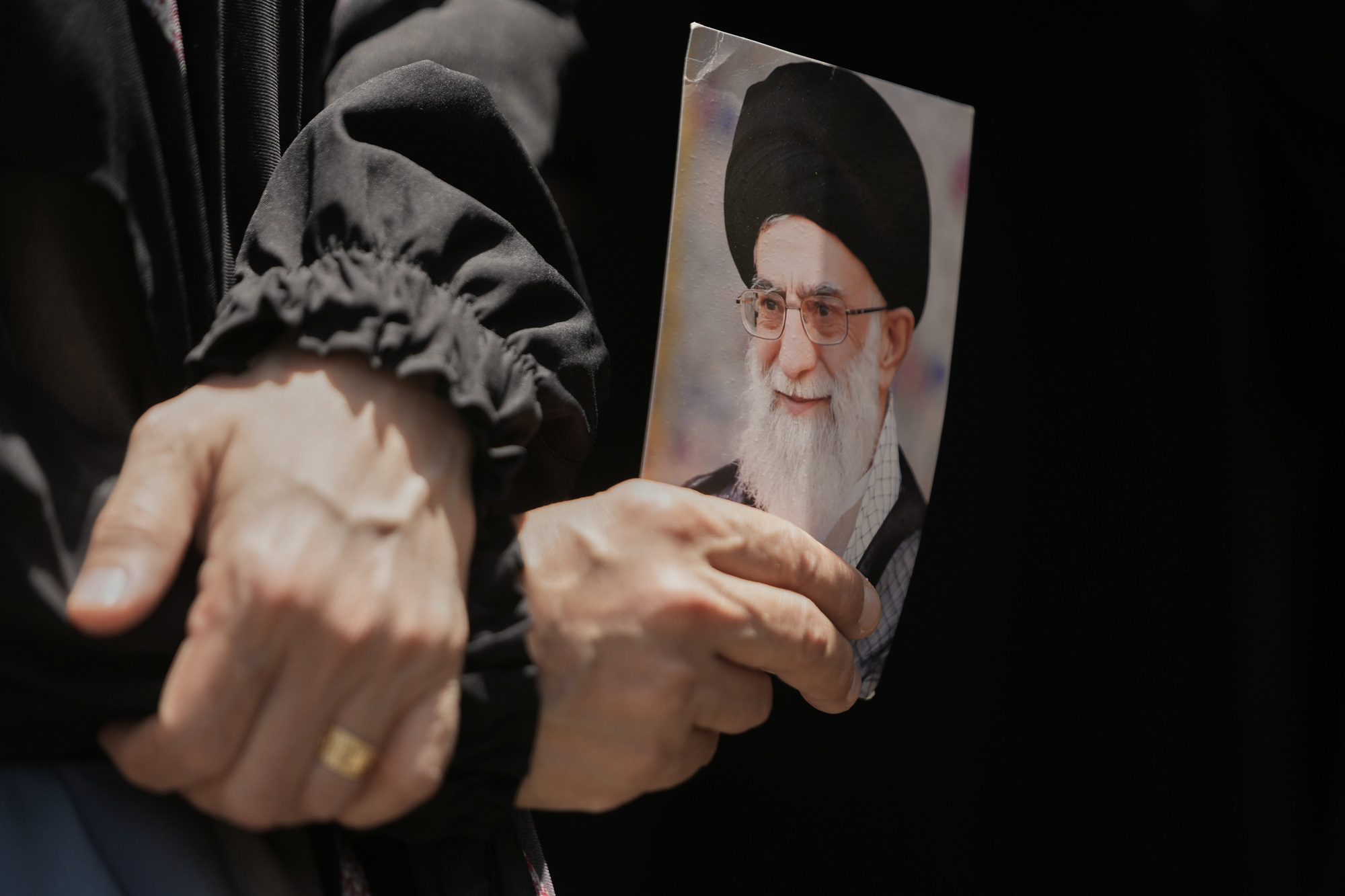
Iran’s Supreme Leader Ayatollah Ali Khamenei claimed victory over Israel and said his country had “delivered a hand slap to America’s face” on Thursday, in his first public comments since a ceasefire was declared in the war between the two countries.
Mr Khamenei spoke in a video broadcast on Iranian state television, his first appearance since June 19, looking and sounding more tired than he did only a week ago.
He told viewers that the US had only intervened in the war because “it felt that if it did not intervene, the Zionist regime would be utterly destroyed”.
But he said, however, that the US “achieved no gains from this war”.
“The Islamic Republic was victorious and, in retaliation, delivered a hand slap to America’s face,” he said, in apparent reference to an Iranian missile attack on an American base in Qatar on Monday, which caused no casualties.
The 86-year-old Mr Khamenei hasn’t been seen in public since taking shelter in a secret location after the outbreak of the war June 13 when Israel attacked Iranian nuclear facilities and targeted top military commanders and scientists.
Following an American attack on June 22, which hit the nuclear sites with bunker-buster bombs, US President Donald Trump was able to help negotiate a ceasefire that came into effect on Tuesday.
In his appearance on Thursday, he sat in front of plain brown curtains to give his address, similar to his June 19 message.
It comes as Mr Trump earlier insisted that US strikes had delivered a crushing blow to Iran’s nuclear programme despite a preliminary American intelligence assessment suggesting that the assault inflicted only a marginal setback.
“This was a devastating attack, and it knocked them for a loop,” Mr Trump said as his administration deployed a phalanx of top officials to defend his claims that Iran’s nuclear programme was “completely and fully obliterated”.
US defence secretary Pete Hegseth said the leaked intelligence assessment, which said Iran suffered a delay of only a few months, was “preliminary” and “low confidence”.
US secretary of state Marco Rubio said the officials who disclosed the findings are “professional stabbers”.
The White House pointed to a statement from the Israel Atomic Energy Commission that said Iran faced a setback of “many years”.
Drawing reliable conclusions about the impact of the US strikes is difficult, making the issue a breeding ground for competing claims that could determine how American voters view Mr Trump’s risky decision to join Israel’s attacks on Iran.
Also at stake are Mr Trump’s next steps in the Middle East, where diplomatic efforts could be required to prevent Iran from rebuilding its nuclear program.
Iran maintains that its atomic ambitions are for peaceful purposes, while US and Israeli leaders have described the country’s nuclear programme as the precursor to obtaining a nuclear weapon.
One of the targets of the US attack was Fordo, where nuclear infrastructure is buried deep underground.
The Israeli commission said in a statement that the bombing “rendered the enrichment facility inoperable”.
The statement was distributed by the White House and the office of Israeli Prime Minister Benjamin Netanyahu.
The American strikes on Iran’s nuclear facilities, combined with Israeli strikes on other parts of Iran’s military nuclear programme, have “set back Iran’s ability to develop nuclear weapons by many years”, the statement said.
In addition, Iranian Foreign Ministry spokesman Esmail Baghaei told Al Jazeera that there was significant damage from US bombers.
“Our nuclear installations have been badly damaged, that’s for sure,” he said.

CONNECT WITH US TODAY



Be the first to know the latest news and updates