US tariffs against dozens of nations draw dismay with calls for negotiations
Sweeping new tariffs announced by US President Donald Trump provoked dismay, threats of countermeasures and urgent calls for further negotiations to make trade rules fairer.
But responses to the tariffs on Wednesday were measured, highlighting a lack of appetite among key trading partners for an outright trade war with the worldâs biggest economy.
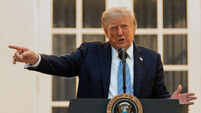
Mr Trump said the import taxes, ranging from 10% to 49%, would do to US trading partners what they have long done to the US.
He maintains they will draw factories and jobs back to the US.
âTaxpayers have been ripped off for more than 50 years,â he said. âBut it is not going to happen anymore.â
Mr Trumpâs announcement of a new 20% tariff on the European Union drew a sharp rebuke from European Commission President Ursula von der Leyen, who said it was a âmajor blow to the world economyâ.
âThe consequences will be dire for millions of people around the globe,â Ms von der Leyen said.
Groceries, transport and medicines will cost more, she said while visiting Uzbekistan.
âAnd this is hurting, in particular, the most vulnerable citizens.â
Ms Von der Leyen held off, however, from announcing new retaliatory measures and underlined that the EU was ready to negotiate with the US.
Analysts say there is little to be gained from an all-out trade war, for the US or other countries.
âIf Trump really imposes high tariffs, Europe will have to respond, but the paradox is that the EU would be better off doing nothing,â said Matteo Villa, a senior analyst at Italyâs Institute for International Political Studies.
âOn the other hand, Trump seems to understand only the language of force, and this indicates the need for a strong and immediate response,â Mr Villa said.
âProbably the hope, in Brussels, is that the response will be strong enough to induce Trump to negotiate and, soon, to backtrack.â
Europeâs strategy so far has been to limit retaliation to early tariff rounds to just a few politically sensitive goods such as bourbon and motorcycles in an attempt to push the US to the negotiating table, rather than escalate an all-out trade war that could cripple its export-dependent economy.
Economists say the next target could be US tech companies.
They fall into the services category, where the US exports more than it imports to Europe and thus would be more exposed to retaliation.
The EU response, likely to be ready by the end of April, includes the option of a tax on US digital giants, said French government spokeswoman Sophie Primas.
âWeâre going to target the services, for example, digital services which are not being taxed for now and could be, the GAFAM for example,â she said on French radio RTL. That is a colloquial acronym for Google, Apple, Facebook, Amazon and Microsoft.
Outgoing German Chancellor Olaf Scholz said the EU will not be able to limit itself to saying the tariffs are damaging â âwe must show that we have strong musclesâ.
He added: âBut this is with the aim of an agreement, because that is the best for prosperity in the US, for prosperity in Europe and for prosperity in the world.â
Japan, Americaâs closest ally in Asia, plans to closely analyse the US tariffs and their impact, chief cabinet secretary Yoshimasa Hayashi said, while refraining from talk of retaliation.
â âBlow to the world economyâ
Financial markets were jolted, with US stock futures down by as much as 3% early Thursday and a 2.8% drop in Tokyoâs benchmark leading losses in Asia.
Oil prices sank more than two dollars a barrel.
Analysts fished for superlatives to a step that disrupts the global trading order and overturns decades of efforts to lower tariffs through trade talks and free trade agreements.
âThe magnitude of the rollout â both in scale and speed â wasnât just aggressive; it was a full-throttle macro disruption,â Stephen Innes of SPI Asset Management said in a commentary.
Deutsche Bankâs Jim Reid called it âradical policy reorderingâ and said the US now had an average tariff of 25%-30%, the âworst end of expectationsâ and the highest since the early 20th Century.
While the longer-term ramifications could encompass a dismantling of supply chains built up over decades, a more immediate concern is the higher risk of recession.
âThe (average) US tariff rate on all imports is now around 22%, from 2.5% in 2024. That rate was last seen around 1910,â Olu Sonola, Fitch Ratingsâ head of US Economic Research, said in a report.
âThis is a game changer, not only for the US economy but for the global economy. Many countries will likely end up in a recession. You can throw most forecasts out the door, if this tariff rate stays on for an extended period of time,â Mr Sonola said.
â âMinimise damageâ
Asian countries that are among the biggest exporters to the US pledged to act fast to support automakers and other businesses likely to be affected.
South Korean Prime Minister Han Duck-soo told officials to work with business groups to analyse the impact of the new 25% tariff to âminimise damage,â the trade ministry said.
Chinaâs Commerce Ministry said Beijing would âresolutely take countermeasures to safeguard its own rights and interestsâ, without saying exactly what it might do.
With earlier rounds of tariffs China reacted by imposing higher duties on US exports of farm products, while limiting exports of minerals used for high-tech industries such as electric vehicles.
Mexican President Claudia Sheinbaum said she would wait to see how Mr Trumpâs announcement will affect Mexico, which like Canada was spared for goods already qualified under their free trade agreement with the US, though previously announced 25% tariffs on auto imports took effect on Thursday.
â âWe are scratching out heads hereâ
Some countries including Australia and New Zealand decried the tariffs but said they would not retaliate.
âThat would put up prices on New Zealand consumers and it would be inflationary,â said New Zealand Trade Minister Todd McClay.
A 29% tariff imposed on the tiny South Pacific outpost of Norfolk Island came as a shock.
The Australian territory has a population of around 2,000 people and the economy revolves around tourism.
âTo my knowledge, we do not export anything to the United States,â Norfolk Island Administrator George Plant, the Australian governmentâs representative on the island, told the AP on Thursday.
âWe donât charge tariffs on anything. I canât think of any non-tariff barriers that would be in place either, so weâre scratching our heads here.â