Stressed bees make pessimistic choices, research shows
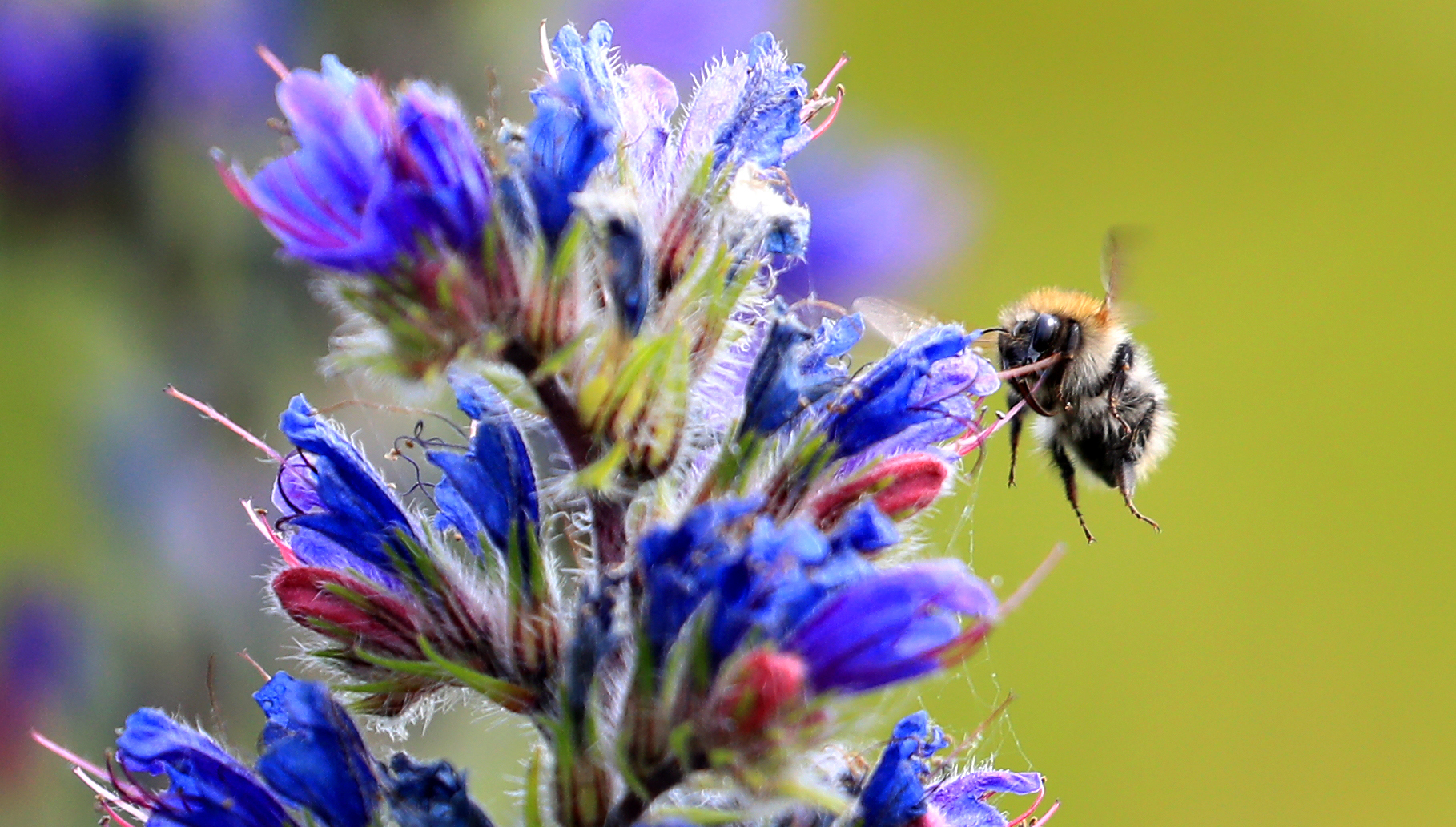
Bumblebees makes pessimistic choices after suffering stress, researchers have found. Picture: Gareth Fuller/PA
Stressed bees are more likely to make pessimistic choices – indicating that their response to set-backs resembles human emotions, scientists have found.
Researchers at Newcastle University trained bumblebees to decide whether a colour signalled something good or bad.
The bees learned that one colour led to a sweet reward location and another colour had a less sucrose-soaked outcome.
Once bees learnt these associations, two groups experienced a simulated attack and a third group did not experience any external stress.
When shown an ambiguous colour, the bees that came under simulated attack were less likely to interpret the colour as indicating a high reward, and instead visited low reward locations more than the “control” bees that had not been stressed.
Dr Vivek Nityananda, a behavioural scientist from Newcastle University, said: “Our study shows that bees are more pessimistic after stress as their behaviour suggests that they do not expect to get rewards.
“Emotions are complex states and in humans involve a subjective understanding of what you are feeling.
“We might never know if bees feel something similar, however, what this research can say is that bees have similar responses when they are stressed and make pessimistic choices.
“The best explanation for their behaviour is that they expect high rewards to be less likely and exhibit traits of pessimistic people.”
Dr Olga Procenko, who led the study, said: “Our research suggests that, like other animals including humans, bees may experience emotion-like states when stressed, as demonstrated by a clear shift towards pessimism.
“When faced with ambiguity, stressed bees, much like someone seeing the glass as ‘half empty,’ are more likely to expect negative outcomes.”
The research is published in the aptly-named biological research journal Proceedings of the Royal Society B.

CONNECT WITH US TODAY



Be the first to know the latest news and updates