Drugs which switch on vitamin A in the body may stave off MND, research suggests
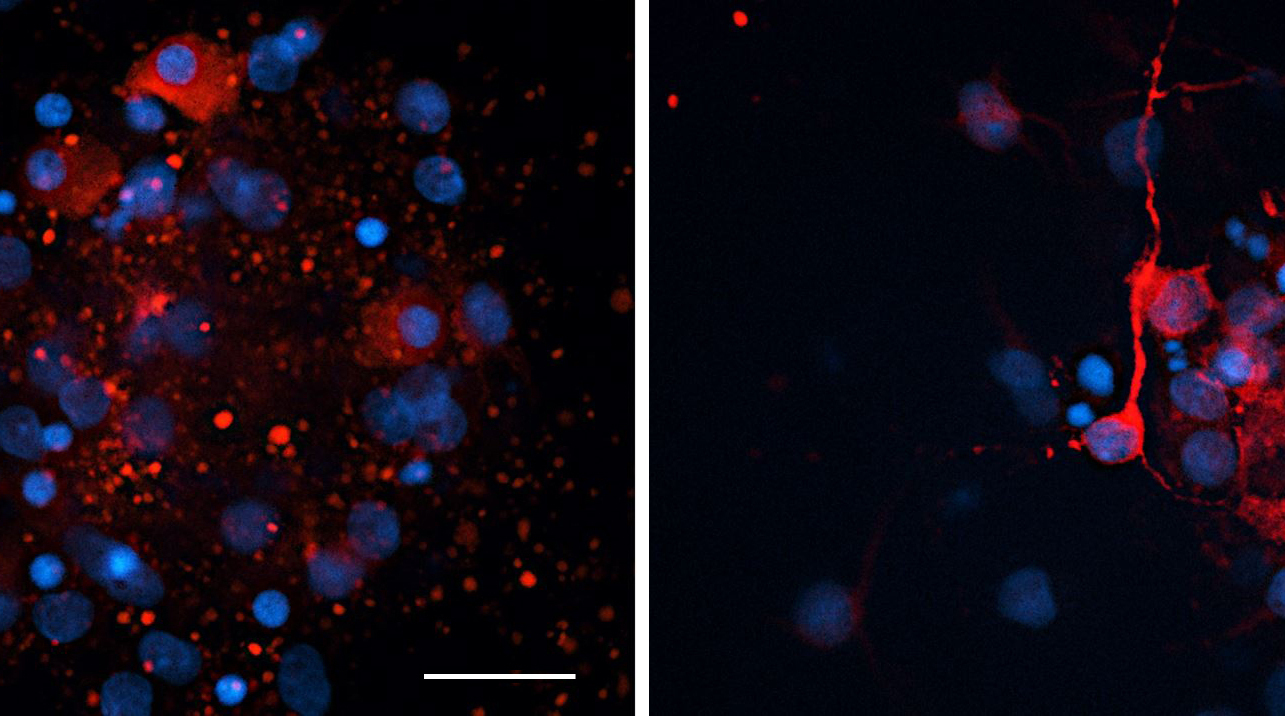
Disintegrating neurons can be seen on the left hand panel and healthier neurons on the right. Picture: University of Aberdeen/PA
Drugs that switch on vitamin A in the body may also help stave off conditions such as motor neurone disease (MND), raising hopes of new treatments, research suggests.
Scientists found drugs which target the specific receptors necessary to activate vitamin A may be therapeutic for diseases that lead to deterioration of the brain.
They found that when disease conditions were simulated in the laboratory, the “super-activation” of the vitamin A signalling system helped protect against the type of damage that can occur in diseases such as MND.
Professor Peter McCaffery, chairman of medical sciences at the University of Aberdeen who led the study, said: “We discovered that these drugs bind and turn on the ‘retinoic acid receptor’, a key protein involved in activation of vitamin A in the body.
“Our research provides the first steps to identify new targets for drugs that may then lead to future therapies.”
Once the disease progresses it leads to the death of the motor neurons essential for muscle control, resulting in progressive muscle weakness, and in most cases the disease is fatal in a few years.
Explaining the research process, Azita Kouchmeshky, neuroscientist at the University of California in San Francisco and one of the authors of the study, said: “We tested these drugs in a series of studies on neurons grown in a dish.
“Chemicals were added to the neurons that caused harm similar to the changes that occur in diseases such as MND or ALS (Amyotrophic lateral sclerosis).
“Usually, these chemicals will cause the neurons to die. However, the application of the drugs that bind to the retinoic acid receptor significantly reduced the number of cells that died off.
“The same drugs were also tested in mice and were found to induce changes that suggest they may also be effective in the body.”

The research paper is published in Frontiers in Neuroscience.
Andy Whiting, chief executive of Nevrargenics Ltd and emeritus professor at Durham University, designed and synthesised the drugs the team used.
He said: “There is a total lack of genuinely disease-modifying drugs out there for neurodegeneration in general, and Amyotrophic lateral sclerosis specifically. We are committed to changing that and delivering hope for MND sufferers in the first instance.
“This is one further step along the road to deliver new therapeutics for such globally challenging diseases.”
The research was funded by the Chief Scientist Office, the Sprint-MND/MS PhD programme and the Motor Neurone Disease Association.
Dr Nicholas Cole, head of research at the MND Association, said: “We are delighted to be supporting such valuable early work which we hope will go towards aiding the discovery of potential new therapies which could be put forward for clinical testing.
“The hope of course, is that through continuing public support, collaboration and partnership working we will find solutions to unpick the complex nature of MND which will lead to an effective treatment.”

CONNECT WITH US TODAY



Be the first to know the latest news and updates