Looted artworks returned to heirs of Holocaust victim
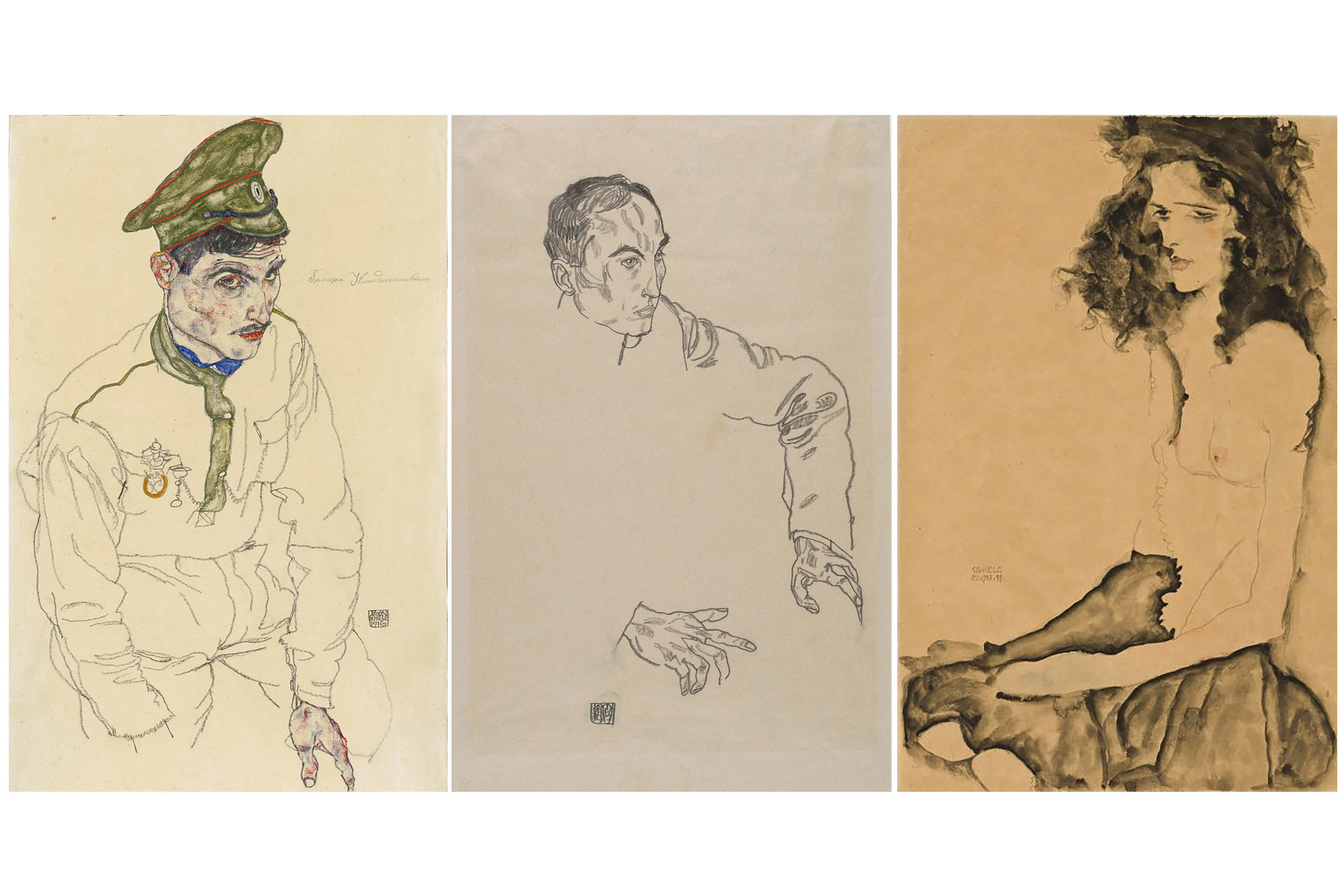
US prosecutors have returned two pieces of art they say were stolen by Nazis from a Jewish performer and collector who was murdered in the Holocaust.
The artworks were surrendered by museums in Pittsburgh and Ohio, but prosecutors are still fighting in court in New York to recover third piece by the same artist, Austrian expressionist Egon Schiele, that was seized from a Chicago museum at the same time.
On Friday in Manhattan, the estate of Holocaust victim Fritz Grunbaum accepted “Portrait of a Man”, which was surrendered by the Carnegie Museum of Art, and “Girl with Black Hair”, handed over by the Allen Memorial Art Museum at Oberlin College.
Prosecutors have collectively valued the two pieces at around 2.5 million dollars (£1.9 million).
Ten of Schiele’s works have now been returned to the family, but “Russian War Prisoner” remains at the Art Institute of Chicago, which maintains that it was legally acquired.
Mr Grunbaum was the son of a Jewish art dealer and law school student who began performing in cabarets in Vienna in 1906. As the Nazis rose to power, he mocked them, once saying on a darkened stage: “I can’t see a thing, not a single thing; I must have stumbled into National Socialist culture.”
In 1938, he was captured by Nazi officials, who created a trail of paperwork. Manhattan prosecutors say they forced him to give power of attorney to his wife, and then forced her to sign away the art – including around 80 Schiele works – to Nazi officials.
Some of the art was sold to fund the Nazi war effort, they say. Elizabeth and Fritz Grunbaum died in concentration camps.
Prosecutors say the works reappeared in 1956 in Switzerland, part of a shady art deal with members of the Nazi regime, that led to them being sold in New York galleries.
On Friday, one of Mr Grunbaum’s heirs thanked leaders at Oberlin College and the Carnegie Institute, saying they “did the right thing”.
“This is a victory for justice, and the memory of a brave artist, art collector, and opponent of Fascism,” said Timothy Reif, Mr Grunbaum’s great-grandnephew and a federal judge in New York City, in a statement released by the office of Manhattan district attorney Alvin Bragg.
He added: “As the heirs of Fritz Grunbaum, we are gratified that this man who fought for what was right in his own time continues to make the world fairer.”
A New York judge ruled in 2018 that other two works by Schiele had to be turned over to Mr Grunbaum’s heirs under the Holocaust Expropriated Recovery Act, passed by US congress.
In that case, art dealer Richard Nagy said he was the rightful owner of the works because Mr Grunbaum’s sister-in-law had sold them after his death. But the judge in the case ruled that there was no evidence that Mr Grunbaum had given them to her voluntarily, writing that it was “a signature at gunpoint”.
The Art Institute of Chicago, however, disputes that claim. And it argues that “Russian War Prisoner”, a pencil and watercolour piece, was legally acquired.
Art Institute of Chicago spokesperson Megan Michienzi said: “We have done extensive research on the provenance history of this work and are confident in our lawful ownership of the piece.”
Ms Michienzi pointed to a prior 2010 ruling from another federal judge that she said “explicitly ruled that the Grunbaum’s Schiele art collection was ‘not looted’ and ‘remained in the Grunbaum family’s possession’ and was sold by Fritz Grunbaum’s sister-in-law”.
Mr Reif and his relatives had been fighting in a separate federal civil court case for the return of the work.
The Art Institute of Chicago had the case thrown out in November on technical grounds, successfully arguing that, unlike the Nagy case, the family had missed a lawsuit deadline under the Holocaust Expropriated Recovery Act.
After that case was dismissed, Mr Bragg’s office earlier this month asked a Manhattan court to authorise the return of the artwork.

CONNECT WITH US TODAY



Be the first to know the latest news and updates