What to know on the sixth day of the latest Israel-Palestinian war

Destruction from Israeli aerial bombardment is seen in Gaza City on Wednesday.
Palestinians say civilians are paying the price as the latest Israel-Palestinian war rolls into a sixth day of fighting. People in Gaza spent the night in darkness, surrounded by the ruins of pulverized neighborhoods as Israeli Prime Minister Benjamin Netanyahu vowed to “crush and destroy” Hamas, with the support of a new war cabinet that includes a longtime opposition critic.
Hamas said it launched its attack Saturday because Palestinians’ suffering had become intolerable under unending Israeli military occupation and increasing settlements in the West Bank and a 16-year-long blockade in Gaza.
Israeli prime minister Netanyahu said that Hamas beheaded soldiers and raped women in their attack on Israel, but the allegations could not be independently confirmed, and authorities did not immediately offer further details.
Egypt has engaged with intensive talks with Israel and the United States to allow the delivery of aid and fuel through its Rafah crossing point. However, it pushed back against proposals to establish corridors out of Gaza, saying an an exodus of Palestinians from the enclave would have grave consequences on the Palestinian cause.
The latest conflict, which has claimed at least 2,300 lives on both sides, is expected to escalate.
Here are some key takeaways from the war:
As the Israeli military retaliates for the Hamas attack, Palestinians say civilians are paying the price in strikes on Gaza, a small coastal strip of land packed with 2.3 million residents.
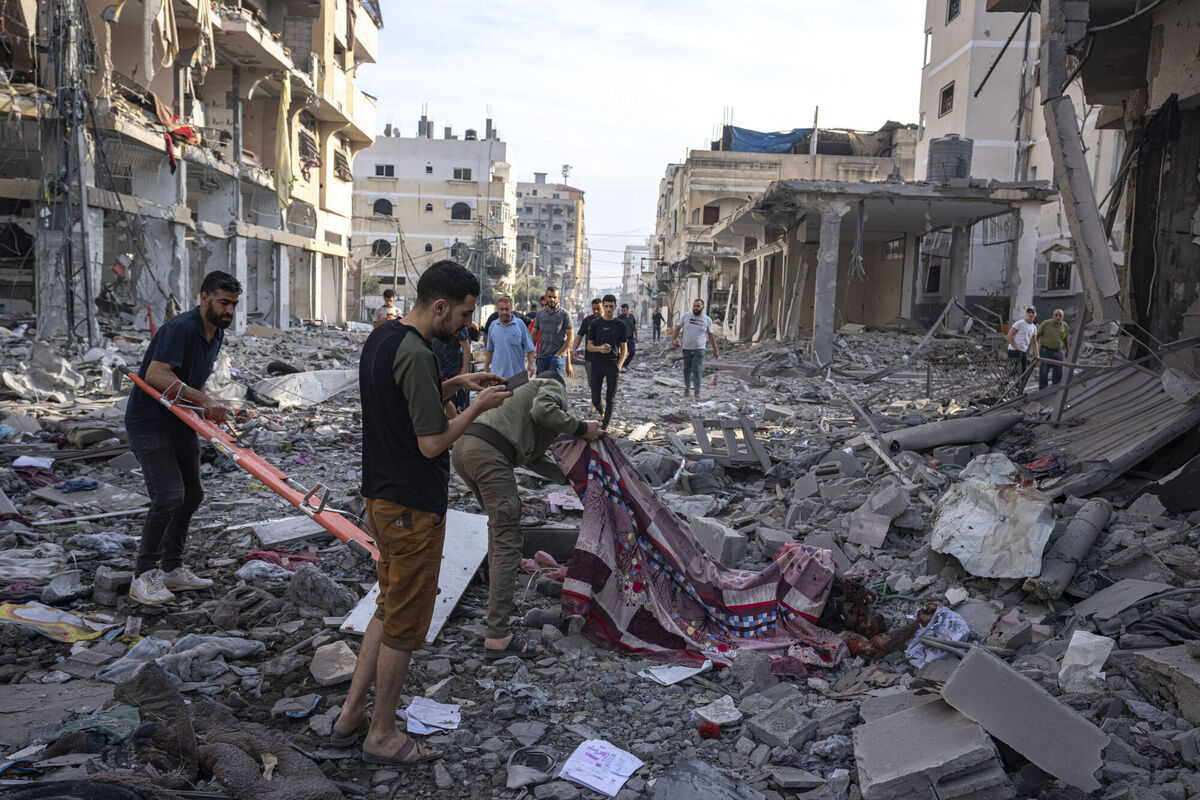
The United Nations says 260,000 people have fled their homes, most crowding into United Nations schools. Others sought the shrinking number of safe neighborhoods. Gaza is only 40 kilometers (25 miles) long, wedged among Israel, Egypt and the Mediterranean Sea.
After nightfall, Palestinians were plunged into pitch blackness in large parts of Gaza City and elsewhere after the power station shut down.
The Gaza Strip’s biggest hospital, Al-Shifa, will run out of fuel to keep the power on within days, said Matthias Kannes, a Gaza-based official for Doctors Without Borders. The group said the two hospitals it runs in Gaza were running out of surgical equipment, antibiotics, fuel and other supplies.
Israel has cut off supplies of food, fuel, electricity and medicine into Gaza. Convoys stood loaded with fuel and food Wednesday on the Egyptian side of the Rafah crossing but were unable to enter Gaza, a senior Egyptian official said. The only crossing point between Egypt and Gaza was shut down Tuesday following nearby Israeli airstrikes.
At least 1,200 people have been killed in Gaza, according to authorities there. Israel says hundreds of the dead inside Gaza are Hamas members.
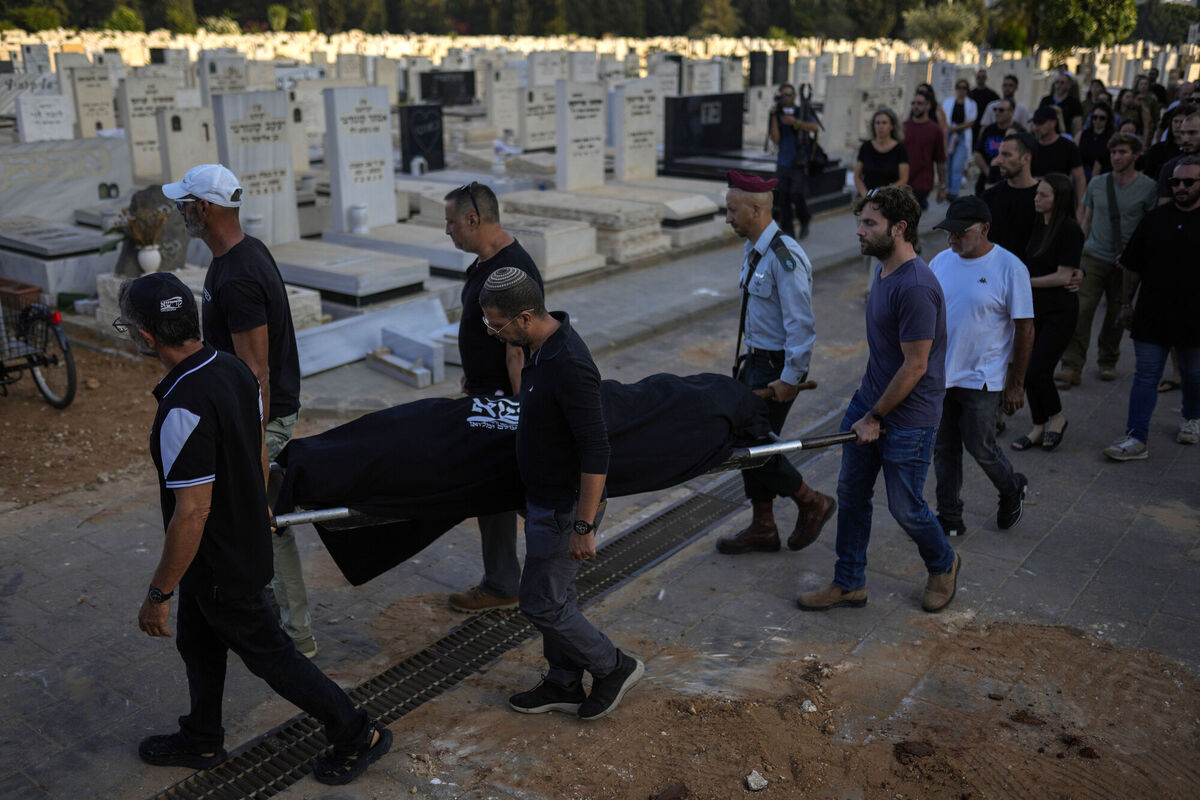
In one kibbutz near Gaza, Israeli troops were still removing the bodies of dead Hamas militants who stormed the community and killed more than 100 residents, then battled soldiers for nearly three days.
Maj. Gen. Itai Veruv told visiting journalists that the military found evidence of Hamas militants cutting throats of bound captives, lining up children and killing them and packing 15 teenage girls in a room before throwing a grenade inside.
An Israeli-American teenager in a kibbutz survived a siege on his home by Hamas attackers over the weekend after his parents shielded him from the gunfire but were killed themselves.
The Israeli military said more than 1,200 people, including 189 soldiers, have been killed in Israel, a staggering toll unseen since the 1973 war with Egypt and Syria that lasted weeks.
Four previous rounds of Israel-Hamas fighting between 2008 and 2021 all ended inconclusively, with Hamas battered but still in control.
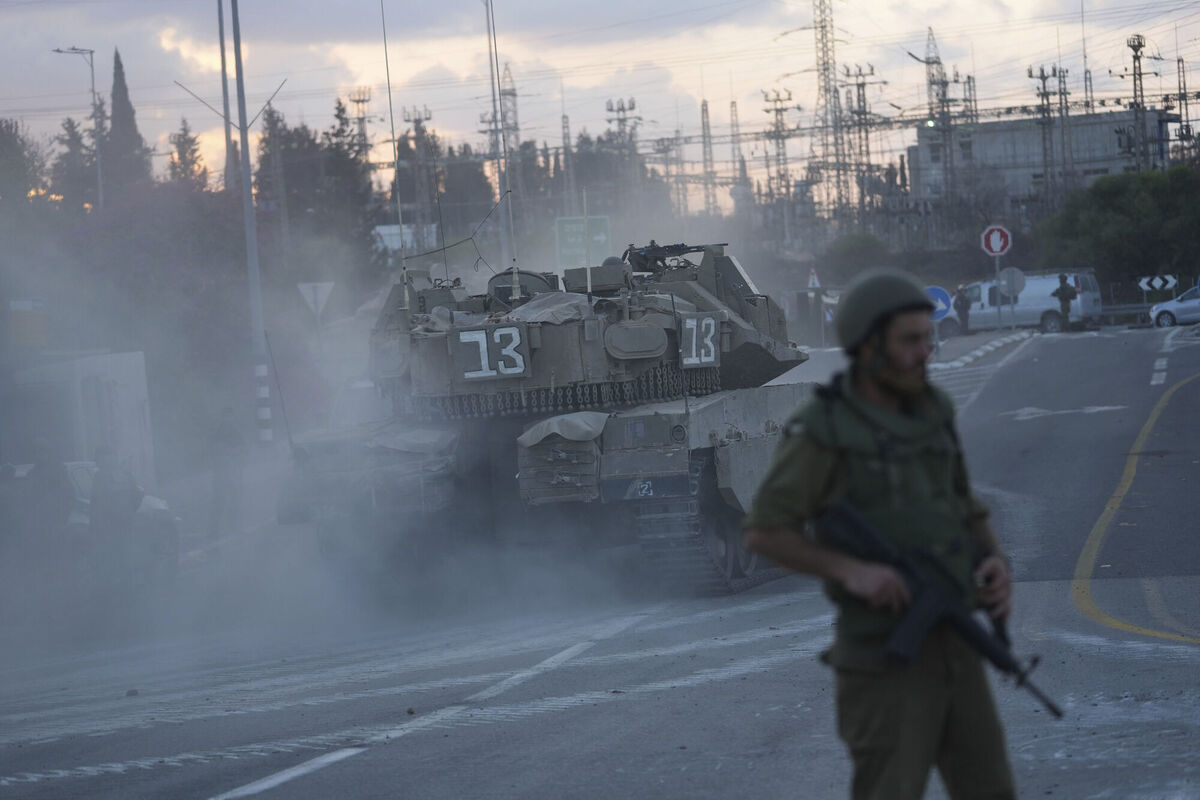
This time, Israel’s government is under intense pressure from the public to topple Hamas, which has ruled Gaza since 2007. That would likely require reoccupying Gaza, at least temporarily. Even then, Hamas has a long history of operating as an underground insurgency in areas controlled by Israel. A ground offensive would also likely result in a surge of casualties for fighters on both sides.
Benjamin Netanyahu and a leading opposition figure on Wednesday created a war-time Cabinet.
The risk of the war spreading was evident Wednesday after the Iranian-backed Lebanese militant group Hezbollah fired anti-tank missiles at an Israeli military position and claimed to have killed and wounded troops. The Israeli military confirmed the attack but did not comment on possible casualties. The military shelled the area in southern Lebanon where the attack was launched.
US President Joe Biden on Wednesday called the attack by Hamas the worst attack on Jews since the Holocaust as the number of US citizens killed in the fighting ticked up to at least 22.
“This attack was a campaign of pure cruelty — not just hate, but pure cruelty — against the Jewish people,” Biden told Jewish leaders gathered at the White House.
Signs of US support for Israel were seen across the administration, with Secretary of State Antony Blinken traveling there for meetings, Biden denouncing antisemitism in America and the US military moving a second aircraft carrier toward the Mediterranean Sea as part of efforts to prevent the war from spilling over into a more dangerous regional conflict.
On Tuesday, Biden warned other countries and armed groups against entering the war.
British Foreign Secretary James Cleverly arrived in Israel on Wednesday to express “unwavering solidarity” with the country following the attacks by Hamas, while Britain’s King Charles III condemned the “barbaric acts of terrorism in Israel,” a palace official said Wednesday. The German government held a minute of silence Wednesday in parliament for the Israeli victims of the Hamas attacks in parliament.
Malaysian Foreign Minister Zambry Abdul Kadir slammed Israel’s “outrageous acts of cruelty” in cutting off food, water and fuel to the Gaza Strip and said Malaysia will provide an emergency fund to help Palestinians.
Turkey is holding negotiations for the release of civilian hostages held by Hamas, a Turkish official said Wednesday.
The number of US citizens confirmed to have been killed in the latest Israel-Hamas war has risen to at least 22, the US State Department said Wednesday. That’s an increase from 14 the day before.
The State Department said at least 17 more Americans remain unaccounted for in a war that has already claimed more than 2,300 lives on both sides.
Two Brazilian citizens were killed as the result of the Hamas attack on Israel, according to that country’s foreign ministry, which also said that three people with dual Brazilian-Israeli citizenship were missing after they disappeared at a music festival outside of Kibbutz Re’im.
Missing Irish-Israeli woman Kim Damti (22) has been confirmed dead following the Hamas attack on a music festival in Israel last weekend.

Ms Damti had been unaccounted for since Hamas gunmen opened fire on festival-goers on Saturday, but in a post on social media on Wednesday night, her sister Laura confirmed that she had died.
The Austrian government has confirmed that one of three Austrian-Israeli citizens who went missing after Hamas’ attack on Israel has been found dead.
Spain’s Foreign Ministry said one of two Spaniards affected by the Hamas attacks in Israel had died.
Hamas, which seeks Israel’s destruction, says it is defending Palestinians’ right to freedom and self-determination.
But the devastation following Hamas’ surprise attack on Saturday has sharpened questions about its strategy and objectives. Hamas officials have said they planned for all possibilities, including a punishing Israeli escalation.
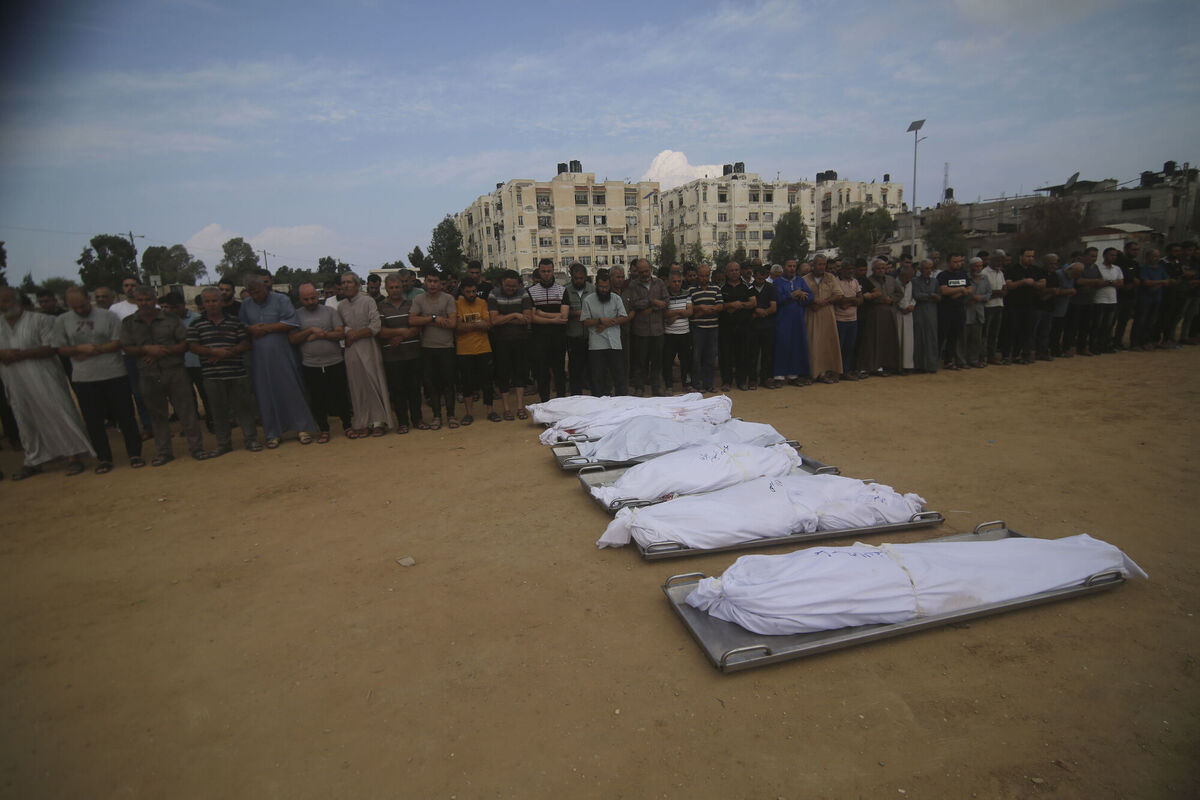
Desperation has grown among Palestinians, many of whom see nothing to lose under unending Israeli control and increasing settlements in the West Bank, a 16-year-long blockade in Gaza and what they see as the world’s apathy.
In addition to citing long-simmering tensions, Hamas officials cite a long-running dispute over the sensitive Al-Aqsa Mosque that is sacred to both Muslims and Jews. Competing claims over the site, known to Jews as the Temple Mount, have spilled into violence before, including a bloody 11-day war between Israel and Hamas in 2021.
Tensions between Israel and the Palestinians escalated with recent violent Palestinian protests. In negotiations with Qatar, Egypt and the United Nations, Hamas has pushed for Israeli concessions that could loosen the blockade on the Gaza Strip and help halt a worsening financial crisis.
CONNECT WITH US TODAY



Be the first to know the latest news and updates