Kosovo police officer killed and another injured as tensions with Serbia rise
Kosovo police officer killed and another injured as tensions with Serbia rise
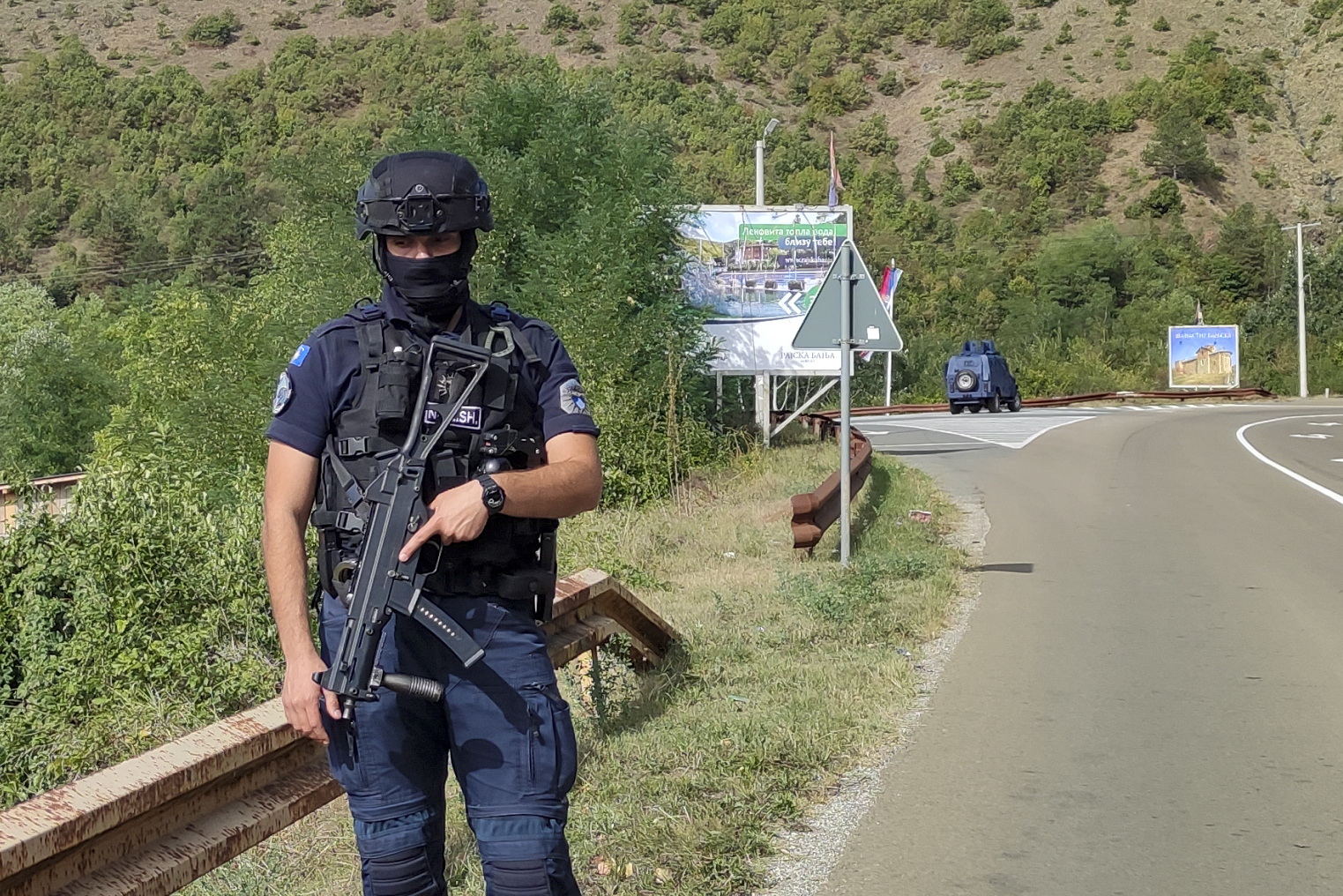
A Kosovo police officer guards the road near the village of Banjska (AP Photo/Dejan Simicevic)

Kosovo’s prime minister has said one police officer was killed and another wounded in an attack he blamed on support from neighbouring Serbia.

Albin Kurti said “masked professionals armed with heavy weapons” opened fire on a police patrol in the village of Banjska, Leposavic, 35 miles north of the capital Pristina at 3am, killing one officer. Another officer was injured but his condition is not life-threatening.

Kosovo police said two lorries with no licence plates had blocked a bridge at the entrance of the village. Three police units were sent to unblock it but came under fire from different positions with different weapons, hand grenades and bombs.

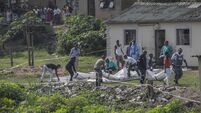
Police around 35 miles north of the capital Pristina in Kosovo (AP Photo/Bojan Slavkovic)

Police managed to push back the attack and take two injured police officers to the hospital in southern Mitrovica.

One of them was dead on arrival, doctors said.

Speaking after a meeting of the country’s Security Council on Sunday, Mr Kurti said it was a “sad day” for Kosovo and named the dead police officer as Afrim Bunjaku.

The prime minister displayed a set of photos which showed a number of vehicles without licence plates and an armoured personnel carrier “which does not belong to the Kosovo police”, near the Orthodox monastery in Banjska.

There was ongoing gunfire from what he described as a group of at least 30 military professionals, masked and heavily armed.

“It is clear that these uniformed persons, at least 30, are an organized professional unit who have come to fight in Kosovo,” he said, calling on them to hand themselves over to authorities.

The area around Mitrovica, in northern Kosovo, is where most of the country’s ethnic Serb minority lives, in four municipalities.

Reports in the media in Serb-dominated northern Kosovo said residents of the village of Banjska were woken up by shootings and detonations in the middle of the night until dawn.

“It was a real little war: first some gunfire, then silence, shootings, detonations,” Serbian Kossev news agency quoted an unidentified resident as saying.

Serbian media said both local roads and crossings with Serbia were blocked.

“Organised crime, which is politically, financially and logistically supported from Belgrade, is attacking our state,” Mr Kurti wrote on his Facebook page.

Mr Kurti said that gunfire against police with different weapons was ongoing.

Serbian media said both local roads and crossings with Serbia were blocked (Bojan Slavkovic/AP)

“The government of the Republic of Kosovo and its state institutions are ready and co-ordinated to respond to crime and criminals, terror and terrorists,” he said.

Kosovo’s president Vjosa Osmani, who is in New York at the United Nations General Assembly, denounced the killing and the “attacks against the Republic of Kosovo’s sovereignty”.

“Such attacks testify once again the destabilising power of the criminal bands organised from Serbia which for a long time .. are destabilising Kosovo and the region,” she said.

Serbia’s parliamentary speaker Vladimir Orlic said Mr Kurti “was quick to blame the Serbs,” adding that Mr Kurti was the one who wanted an “escalation” in the field.

“He (Kurti) said it was some kind of organised action by professionals,” Mr Orlic told local Prva television station. “They must have been identified and he knows who they are and what they are, and everything is clear.”

Earlier this month, an EU-facilitated dialogue meeting in Brussels between Mr Kurti and Serbian President Aleksandar Vucic ended in acrimony.

Washington has fully supported the negotiations and the stance of the EU.

In February, the EU put forward a 10-point plan to end months of political crises. Mr Kurti and Mr Vucic gave their approval at the time, but with some reservations that have still not been resolved.

The EU warned both countries that the commitments that Serbia and Kosovo made in February “are binding on them and play a role in the European path of the parties,” which refers to their chances of joining the 27-nation bloc.

In May tensions in northern Kosovo left 93 peacekeepers hurt in riots.

Serbia and its former province, Kosovo, have been at odds for decades. Their 1998-99 war left more than 10,000 people dead, mostly Kosovo Albanians. Kosovo unilaterally declared independence in 2008 but Belgrade has refused to recognise the move.

More in this section

Cookie Policy Privacy Policy Brand Safety FAQ Help Contact Us Terms and Conditions

© Examiner Echo Group Limited