Former Italian premier claims French missile accidentally hit airliner in 1980
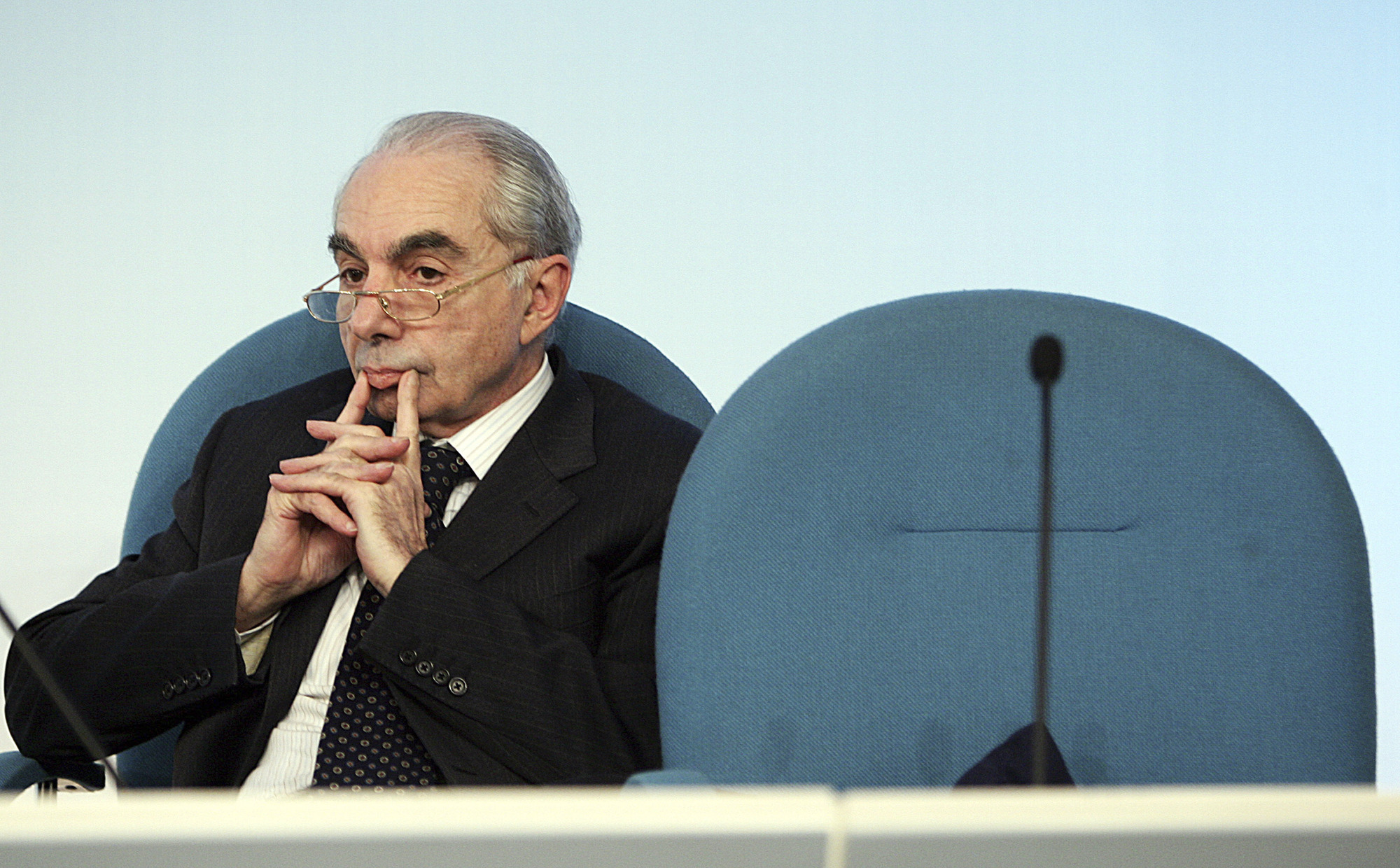
A former Italian premier contended that a French air force missile accidentally brought down a passenger jet over the Mediterranean Sea in 1980 in a failed bid to assassinate Libya’s then-leader Moammar Gaddafi.
Former two-time premier Giuliano Amato appealed to French President Emmanuel Macron to either refute or confirm his assertion about the cause of the crash of Itavia flight 870 on June 27 1980, which killed all 81 persons aboard.
In an interview with Rome daily La Repubblica, Mr Amato said he is convinced that France hit the plane while targeting a Libyan military jet.

While acknowledging that he has no hard proof, Mr Amato also contended that Italy tipped off Gaddafi, and so the Libyan, who was heading back to Tripoli from a meeting in Yugoslavia, did not board the Libyan military jet.
What caused the crash is one of modern Italy’s most enduring mysteries.
Some say a bomb exploded aboard the Itavia jetliner on a flight from Bologna to Sicily, while others say examination of the wreckage, pulled up from the seafloor years later, indicate it was hit by a missile.
Radar traces indicated a flurry of aircraft activity in that part of the skies when the plane went down.
Mr Amato was quoted as saying: “The most credible version is that of responsibility of the French air force, in complicity with the Americans and who participated in a war in the skies that evening of June 27.”
Nato planned to “simulate an exercise, with many planes in action, during which a missile was supposed to be fired” with Gaddafi as the target, Mr Amato said.
In the aftermath of the crash, French, US and Nato officials denied any military activity in the skies that night.
According to Mr Amato, a missile was allegedly fired by a French fighter jet that had taken off from an aircraft carrier, possibly off Corsica’s southern coast.
Mr Macron, 45, was a toddler when the passenger jet went down in the sea near the tiny Italian island of Ustica.

Mr Amato told La Repubblica: “I ask myself why a young president like Macron, while age-wise extraneous to the Ustica tragedy, wouldn’t want to remove the shame that weighs on France.
“And he can remove it in only two ways — either demonstrating that the this thesis is unfounded or, once the (thesis’) foundation is verified, by offering the deepest apologies to Italy and to the families of the victims in the name of his government.”
Mr Amato, who is 85, said that when he was premier in 2000, he wrote to the then-presidents of the United States and France, Bill Clinton and Jacques Chirac, to press them to shed light on what happened.
But ultimately, those entreaties yielded “total silence,” Mr Amato said.
When queried by The Associated Press, Mr Macron’s office said it would not immediately comment on Mr Amato’s remarks.
Italian Premier Giorgia Meloni called on Mr Amato to say if he has concrete elements to back his assertions so that her government could pursue any further investigation.

Mr Amato’s words “merit attention”, Ms Meloni said in a statement, while noting that the former premier had specified that his assertions are “fruit of personal deductions”.
Assertions of French involvement are not new.
In a 2008 TV interview, former Italian President Francesco Cossiga, who was serving as premier when the tragedy occurred, blamed the crash on a French missile whose target had been a Libyan military jet and said he learned that Italy’s secret services military branch had tipped off Gaddafi.
Gaddafi was killed in the Libyan civil war in 2011.
A few weeks after the crash, the wreckage of a Libyan MiG, with the badly decomposed body of its pilot, was discovered in the remote mountains of southern Calabria.
CONNECT WITH US TODAY



Be the first to know the latest news and updates