Debris found in search area came from missing Titan sub, friend of crew says
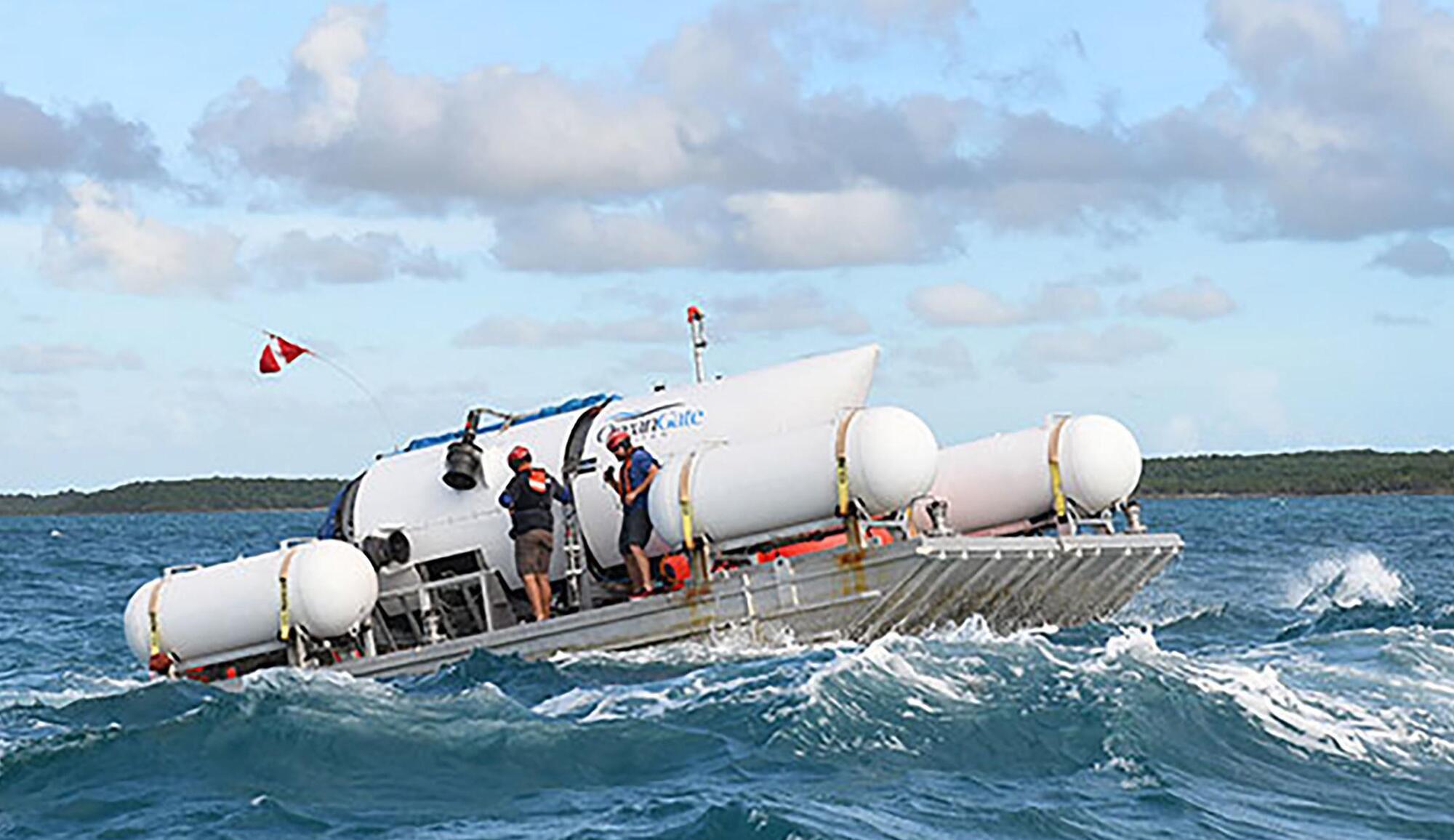
Rescue teams are continuing the search for the submersible tourist vessel which went missing during a voyage to the Titanic shipwreck with British billionaire Hamish Harding among the five people aboard. Picture: OceanGate Expeditions/PA Wire
The ‘landing frame and cover’ of the missing submersible Titan have been found in the search for the vessel, according to reports.
David Mearns, a UK-based marine scientist and oceanographer who specialises in searching for shipwrecks, told and the that he debris, found by a remotely-operated vehicle (ROV) near the wreckage of the Titanic this afternoon, is from Titan.
Mr Mearns, who is a close friend of Hamish Harding, said he had been contacted by the president of The Explorers Club, which Mr Harding belongs to, saying: “It was a landing frame and a rear cover from the submersible.”
The US Coast Guard said it was not commenting on what the debris consisted of. It is holding a press briefing on the matter this evening.
Earlier, the Cost Guard said the submersible's 96 hours of estimated oxygen were likely to now be exhausted.
The Titan submersible was estimated to have about a four-day supply of breathable air when it launched Sunday morning in the North Atlantic — but experts have emphasized that was an imprecise approximation to begin with and could be extended if passengers have taken measures to conserve breathable air.
And it’s not known if they survived since the sub’s disappearance.
However, by Thursday morning, hope was running out that anyone on board the vessel would be found alive.
Rear Admiral John Mauger confirmed the main focus of the US Coast Guard and the unified command in charge of the operation was to retrieve the vessel in what is still being seen as an active search and rescue.
He told : “We continue to keep the crew members and the families in our thoughts as we proceed with this search and rescue while we’re cognisant of the time and we’ve factored in a lot of data and information into the search.
When questioned about the noises detected by the sonar buoys dropped into the ocean, he revealed initial reports found that it was “ocean background noise”.
He said: “We’ve taken that information and shared it with top leading experts from the US Navy and the Canadian Navy, and they’re working on the analysis of that information, they’re continuing to work on the analysis of that information.
“The initial reports is that there’s a lot of the sounds that were generated were from background ocean noise, but they continue to … look for all available information there.
“What’s important to me, and what’s important as the unified command, is that we’ve continued search in the areas where noise was detected with the ROVs that we have from the time of that detection, so we’re not waiting for this analysis to take action.
“The analysis is really helpful to our overall search-and-rescue efforts, but we’re not waiting on it, we’ve moved the remote-operated vehicles that we’ve had on site to those areas where noise was detected.”

In a statement published online Guillermo Sohnlein, co-founder of OceanGate, thanked the people involved in the search and rescue, as well as confirming the pilot to be his “co-founder and friend”.
He also claims that the time window the people on board have is larger than the estimated 96 hours.
In the statement, he said: “Today will be a critical day in this search and rescue mission, as the sub’s life support supplies are starting to run low.
“I’m certain that Stockton and the rest of the crew realized days ago that the best thing they can do to ensure their rescue is to extend the limits of those supplies by relaxing as much as possible.
“I would encourage everyone to remain hopeful for getting the crew back safely.”
The US Coastguard said the French ship L’Atalante was preparing its specialist Victor 6000 ROV, which has a capacity to lift the Titan ship to the surface, to enter the water, while the Canadian vessel Horizon Arctic’s ROV had reached the sea floor.
Passengers on the craft are British billionaire adventurer Hamish Harding, UK-based businessman Shahzada Dawood, his son Suleman Dawood, and OceanGate’s chief executive and founder Stockton Rush, as well as French submersible pilot Paul-Henri Nargeolet.
A British submariner and equipment from a UK firm has been sent to help the search at the request of the US Coastguard, Downing Street said.
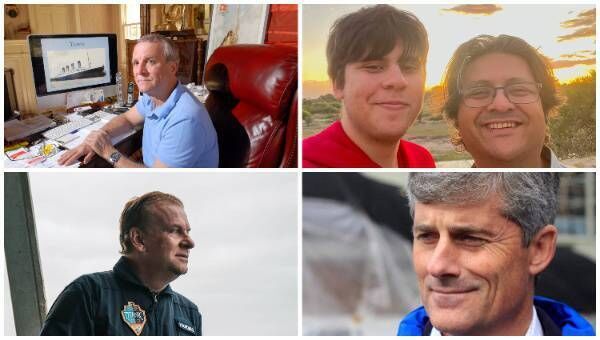
Experts said the chances of finding the sub and rescuing those inside was diminishing.
Many obstacles still remain: from pinpointing the vessel’s location, to reaching it with rescue equipment, to bringing it to the surface — assuming it’s still intact. And all that has to happen before the passengers’ oxygen supply runs out.
Former Royal Navy submarine captain Ryan Ramsey told the PA news agency: “The outlook is bleak, that’s the only word for it as this tragic event unfolds and almost the closing stages of where this changes from rescue to a salvage mission.”
Dr Jamie Pringle, a reader in Forensic Geosciences at Keele University, said: “I think there’s always hope with these things but you know about the golden first 24 hours and we’re well past that stage.
“So there’s always a chance, it’s never zero, but I think obviously the longer the time elapses the lower the chance of success.”
And British Antarctic Survey marine geophysicist Dr Rob Larter said: “It is just a desperate situation. It’s kind of unimaginable if people are alive trapped in a submersible with oxygen supplies running down, it doesn’t bear thinking about.
“An objective assessment of where things are at the moment – it doesn’t look good.
“You have to try and stay optimistic for as long as possible,” he added.
The Explorers Club, of which Mr Harding is a found member of the Board of Trustees, confirmed on Thursday morning it had approval to send an (ROV) from the Channel Islands-based company Magellan to the search area.
In the statement, Richard Garriott de Cayeux, president of The Explorers Club, criticised the time it took for the approval of the ROV which has visited the Titanic wreckage previously and can go to depths as low as 6,000m.
The statement said: “Magellan is en route (should have been accepted sooner), we are still trying to get side scan sonar (should have been accepted sooner), and still working on ships to transport equipment and other details.
“There is good cause for hope and we are making it more hopeful.” The area of the search has been expanded, with the surface search now about 10,000 square miles, and the sub-surface search about 2.5 miles deep.
The coast guard had five surface vessels searching for Titan on Wednesday and they expected there to be 10 by Thursday, Captain Jamie Frederick said.
Asked whether the mission was changing to become a recovery search, he said: “This is a search-and-rescue mission 100%, we are smack dab in the middle of search and rescue and will continue to put every available asset that we have in an effort to find the Titan and the crew members.”
Titan is believed to be about 900 miles east and 400 miles south of Newfoundland.
It is not known how deep the vessel is, with the seabed being around 3,800m from the surface.
CONNECT WITH US TODAY



Be the first to know the latest news and updates