Nun whose body shows little decay since death draws hundreds to rural Missouri
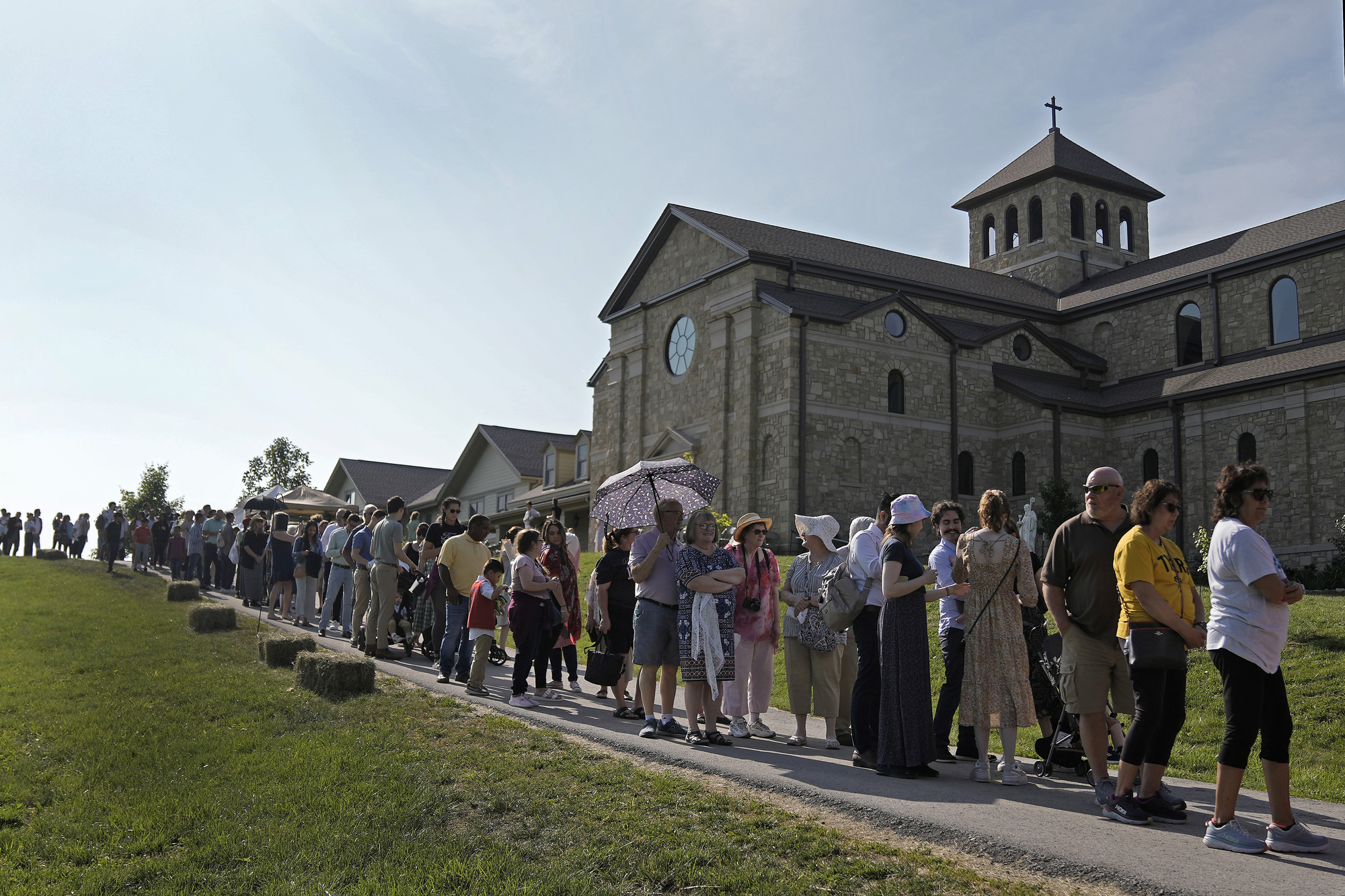
Hundreds of people have flocked to a small town in Missouri to see a black nun whose body has barely decomposed since 2019.
Some say it is a sign of holiness in Catholicism, while others say the lack of decomposition may not be as rare as people think.
Sister Wilhelmina Lancaster was exhumed in April, according to a statement from the Benedictines of Mary, Queen of Apostles, in Gower, Missouri.
The nuns were preparing for the addition of a St Joseph shrine and that involved âthe reinterment of the remains of our beloved foundress, Sister Wilhelminaâ, the statement said.
When they exhumed Ms Lancaster, they were told to expect only bones, since she had been buried in a simple wooden coffin without any embalming four years ago.
Instead, they discovered an intact body and âa perfectly preserved religious habitâ, the statement said.
The nuns had not meant to publicise the discovery but someone posted a private email publicly and âthe news began to spread like wildfireâ.
Volunteers and local law enforcement have helped to manage the crowds in the town of roughly 1,800 people, as people have visited from all over the country to see and touch Ms Lancasterâs body.
âIt was pretty amazing,â said Samuel Dawson, who is Catholic and visited from Kansas City with his son last week.
âIt was very peaceful. Just very reverent.â
Mr Dawson said there were a few hundred people when he visited and that he saw many out-of-state cars.
Visitors were allowed to touch Ms Lancaster, Mr Dawson said, saying the nuns âwanted to make her accessible to the public ⊠because in real life, she was always accessible to peopleâ.
The monastery said in a statement that Ms Lancasterâs body would be placed in a glass shrine in their church on Monday.
Visitors will still be able to see her body and take dirt from her grave but they will not be able to touch her.
The Diocese of Kansas City-St Joseph also released a statement.
âThe condition of the remains of Sister Wilhelmina Lancaster has understandably generated widespread interest and raised important questions,â the diocese said.
âAt the same time, it is important to protect the integrity of the mortal remains of Sister Wilhelmina to allow for a thorough investigation.â
âIncorruptibility has been verified in the past but it is very rare. There is a well-established process to pursue the cause for sainthood but that has not been initiated in this case yet,â the diocese added.
The Benedictines of Mary, Queen of Apostles, also said Ms Lancaster has not yet reached the required minimum of five years since death for the sainthood process to begin.
Rebecca George, an anthropology tutor at the Western Carolina University in North Carolina, said the bodyâs lack of decomposition might not be as rare as people are expecting.
Ms George said the âmummificationâ of un-embalmed bodies is common at the universityâs facility and the bodies could stay preserved for many years, if allowed to.
Coffins and clothing also help to preserve bodies, she said.
âTypically, when we bury people, we donât exhume them. We donât get to look at them a couple years out,â Ms George said.
âWith 100 years, there might be nothing left. But when youâve got just a few years out, this is not unexpected.â