Woman says robotic surgery saved her life after cancer diagnosis
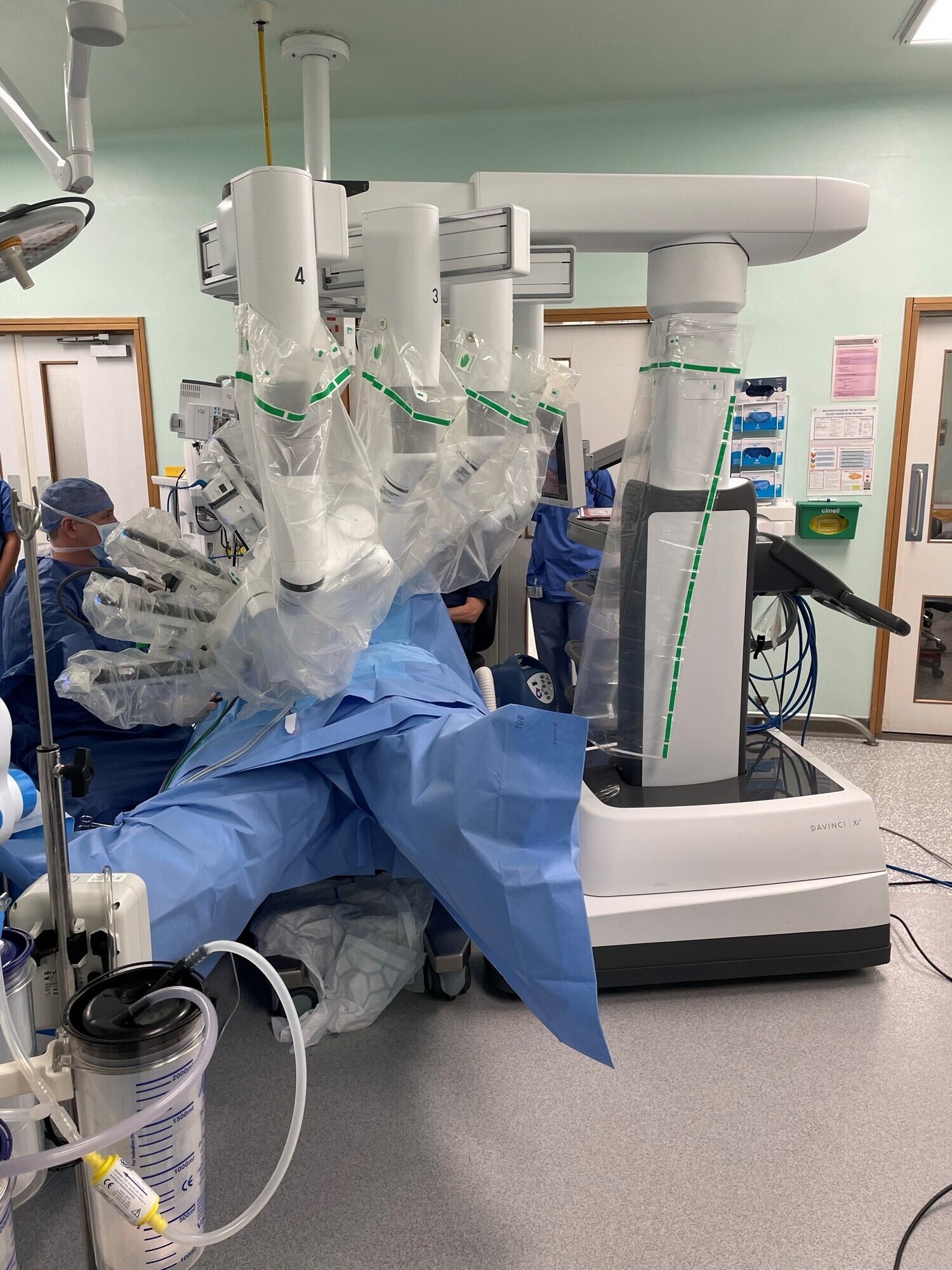
The robots give surgeons a greater range of motion than in traditional surgery (NHS Greater Glasgow and Clyde/PA)
A woman says she believes robotic surgery saved her life after she was diagnosed with cancer.
Deborah Speirs, 46, from the Tolllcross area of Glasgow, opted for the “innovative” procedure rather than traditional surgery after being told she had stage three bowel cancer in March 2021.
After undergoing the operation – as well as chemotherapy – she has now been given the all-clear.
She said: “In what was a very traumatic and difficult time for me and my family, I genuinely think that robotic surgery has saved my life.”

Ms Speirs opted for the robotic surgery after the procedure was explained to her by Professor Campbell Roxburgh, a surgeon at Glasgow Royal Infirmary.
Prior to that, she said she had “never heard about this type of procedure”, adding: “An operation is a scary word in itself and I never thought anything about a robot being directed by a surgeon.”
The da Vinci robotic systems used have four arms which can hold a camera as well as surgical tools, with a surgeon operating these from a console in the operating theatre.
The robots give surgeons a greater range of motion than in traditional surgery, with the precision they give bringing quicker recovery times, with shorter stays in hospital for patients.
Ms Speirs said: “When you are told you are diagnosed with cancer, it takes a while for this to really sink in as you never think it is going to happen to you.”
After having the procedure explained to her in detail, she was happy to go ahead with the robotic surgery, saying: “The technology is amazing and I was up and walking around in a matter of days after my surgery.
“I wanted to start hoovering when I got home from hospital but my daughter made sure I rested up. It just shows you how great this is for recovery.”

Prof Roxburgh said: “Robotic surgery has already shown huge improvements in patient care and recovery times.”
He stressed that the surgeon “still has absolute control of everything that is going on”, explaining that the medic uses a console that controls the instruments.
Prof Roxburgh said with robotic surgery “we have seen a halving in the length of time patients are required to stay in hospital in comparison to conventional key hole surgery as it is less invasive.
“In addition to this, it helps reduce complications, imaging assessments, blood transfusions, readmission rates and infections.
“Deborah is just one example of a number of successful surgeries using this type of equipment.”
David Marante, regional director at Intuitive, maker of the da Vinci surgical systems, praised the “commitment” of medics there to “expand robotic-assisted surgery so that more patients will have access to minimally invasive care with our technology”.
He said: “Our continued focus is to provide technology training to more surgeons, trainees and care teams across Scotland as they grow their da Vinci robotic programmes with the aim of further reducing rates of open surgery to improve patient outcomes and lower the total cost of care.”
CONNECT WITH US TODAY



Be the first to know the latest news and updates