Emmanuel Macron and Marine Le Pen begin duel to become French president
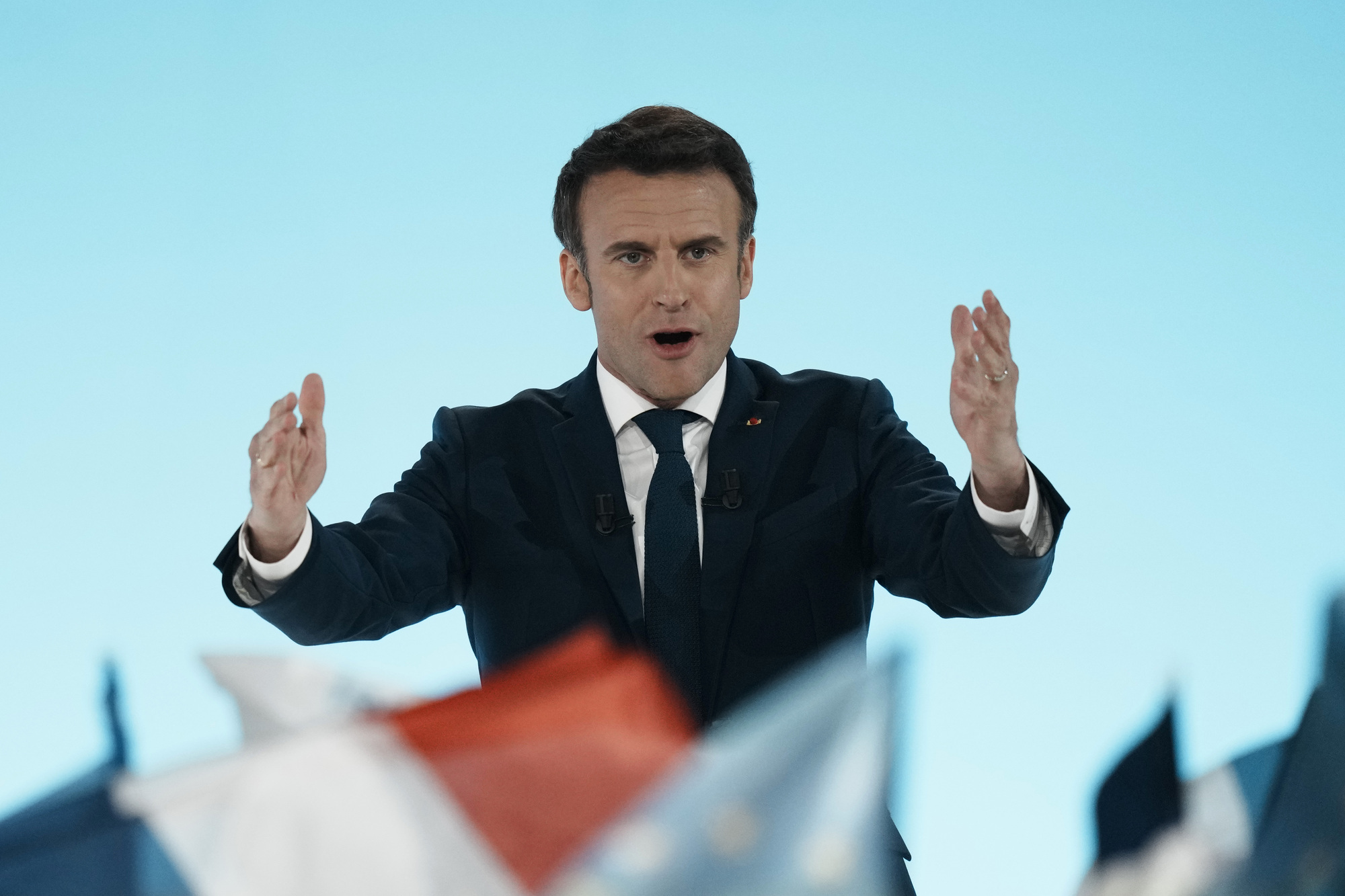
French President Emmanuel Macron has warned his supporters that ânothing is doneâ and his election run-off with far-right challenger Marine Le Pen will be a hard fight.
The duel is beginning after the two came out on top in Sundayâs first-round vote.
The centrist Mr Macron is heading to an economically depressed area of northern France where a majority of voters chose Ms Le Pen, close to her electoral stronghold of Henin-Beaumont.
Meanwhile, Ms Le Penâs National Rally officials will meet to plan strategy ahead of the second round of voting, which take place on April 24.
Ms Le Pen summed up the stand-off by saying voters are faced with âa fundamental choice between two opposing visions of the futureâ.
Mr Macron faced Ms Le Pen in the presidential run-off five years ago but opinion polls show the leader of the National Rally is much closer this time to a potential win.
Mr Macron said he wants to convince those who voted for the âextremesâ or stayed at home that âour project responds much more seriously to their fears and to the challenges of the timeâ.
On her third attempt to become Franceâs first woman president, Ms Le Pen was rewarded on Sunday for her years-long effort to rebrand herself as more pragmatic and less extreme.
Mr Macron has accused Ms Le Pen of pushing a dangerous manifesto of racist, ruinous policies.
Ms Le Pen wants to roll back some rights for Muslims, banning them from wearing headscarves in public, and to drastically reduce immigration from outside Europe.
In his speech on Sunday evening, Mr Macron said his project would protect all religions and the freedom âto believe, or notâ.
The rise of food and energy prices is at the core of Ms Le Penâs campaign, but Mr Macronâs team argue she would not have the financial means to meet her promises.
âOur focus is now on the project and the values,â Senator Francois Patriat, a member of Mr Macronâs party, said.
The strategy consists in being âproudâ of what has been done over the past five years, showing âa bit of humility,â and âabove all, some fighting spiritâ, he said.
Mr Macron will use the next days to âgo in the fieldâ, he said.
Visits to several French regions have been scheduled this week. Prior to Sundayâs first round, Mr Macron was absent from most of the electoral campaign as he spent most of his time focusing on diplomatic efforts over the war in Ukraine.
Ms Le Penâs camp, meanwhile, is hoping to capitalise on anger at Mr Macron over policies seen as favouring the rich.
âNow everything is possible,â Aurelien Lopez Liguori, a municipal councillor with Ms Le Penâs party in the southern city of Sete, told the AP.
Compared with 2017, ânow Macron has a record, a bad recordâ, he said.
Mr Macron and Ms Le Pen are to debate on national television next week.
With most votes from the 12-candidate first round counted by Monday morning, Macron had more than 27% and Le Pen had 23%. Hard-left leader Jean-Luc Melenchon was third with close to 22%.
Mr Macron improved on his first-round showing in 2017, despite his presidency being rocked by the yellow vest protest movement over perceived economic injustice, the pandemic and Russiaâs war in Ukraine.
The election outcome will have wide international influence as Europe struggles to contain the havoc wreaked by that war.
Mr Macron has strongly backed European Union sanctions on Russia while Ms Le Pen has worried about their impact on French living standards. Mr Macron also is a firm supporter of Nato and of close collaboration among the EU 27 members.