Cop26 talks drift into overtime in push to save 1.5 Celsius goal
Cop26 talks drift into overtime in push to save 1.5 Celsius goal

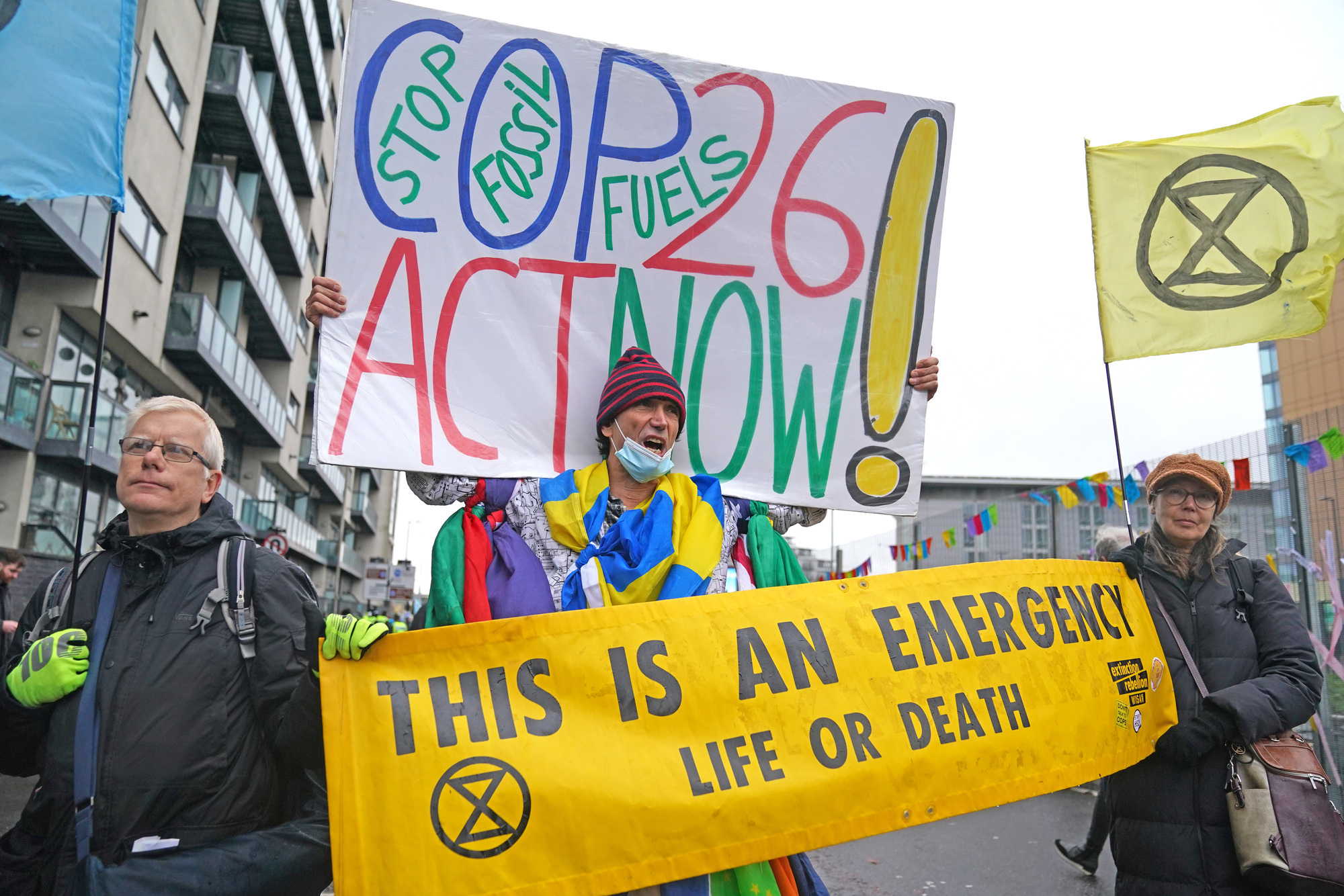
Climate Justice Activists at the Cop26 Gates asking delegates as they make final decisions, "Are You With Us Or With Fossil Fuels?" during the final day of the Cop26 summit in Glasgow which has now drifted into overtime and is set to continue today. Picture date: Friday November 12, 2021.

Two weeks of Cop26 climate talks in Glasgow blew past a deadline on Friday as the conference president called on countries to make a final push to secure commitments that would rein in the rising temperatures that threaten the planet.

With a deal now expected sometime today, there remained tough-talking to be done on issues such as the phasing out of fossil fuel subsidies, carbon markets and financial help for poor countries to tackle climate change.

A draft of the final deal, released early on Friday, requires countries to set tougher climate pledges next year - in an attempt to bridge the gap between current targets and the much deeper cuts scientists say are needed this decade to avert catastrophic climate change.

"We have come a long way over the past two weeks and now we need that final injection of that 'can-do' spirit, which is present at this COP, so we get this shared endeavour over the line," said Britain's Cop26 President Alok Sharma.

Late on Friday Sharma announced that meetings would continue into Saturday and that he expected a deal later in the day. 

The meeting's overarching aim is to keep within reach of the 2015 Paris Agreement's aspirational target to cap global warming at 1.5 degrees Celsius above pre-industrial levels, the limit scientists say would avert its worst effects.

Under current national pledges to cut emissions this decade, researchers say the world's temperature would soar far beyond that limit, unleashing catastrophic sea level rises, droughts, storms and wildfires.

The new draft is a balancing act - trying to take in the demands of the most climate-vulnerable nations such as low-lying islands, the world's biggest polluters, and countries whose exports of fossil fuels are vital to their economies. 

"China thinks the current draft still needs to go further to strengthen and enrich the parts about adaptation, finance, technology, and capacity building," said Zhao Yingmin, the climate negotiator for the world's largest greenhouse gas emitter.

The draft retained its most significant demand for nations to set tougher climate pledges next year, but couched that request in weaker language than before, while failing to offer the rolling annual review of climate pledges that some developing countries have sought.

Nations are currently required to revisit their pledges every five years.

Weaker language

The latest proposal included slightly weaker language than a previous one in asking states to phase out subsidies of the fossil fuels - coal, oil and gas - that are the prime manmade cause of global warming.

That dismayed some campaigners, while others were relieved that the first explicit reference to fossil fuels at any UN climate summit was in the text at all, and hoped it would survive the fierce negotiations to come.

"It could be better, it should be better, and we have one day left to make it a lot, lot better," Greenpeace said.

"Right now, the fingerprints of fossil fuel interests are still on the text and this is not the breakthrough deal that people hoped for in Glasgow."

Some thinktanks were more upbeat, pointing to progress on financing to help developing countries deal with the ravages of an ever-hotter climate.

Saudia Arabia, the world's second-largest oil producer and considered among the nations most resistant to strong wording on fossil fuels, said the latest draft was "workable".

A final deal will require the unanimous consent of the nearly 200 countries that signed the Paris accord.

To increase pressure for a strong deal, protesters rallied outside the Cop26 venue, where activists had hung ribbons with messages imploring delegates to protect the Earth.

The latest draft acknowledged scientists say the world must cut carbon dioxide emissions by 45% from 2010 levels by 2030, and to net zero by "around mid-century" to hit the 1.5C target.

This would effectively set the benchmark to measure future climate pledges.

Currently, countries' pledges would see global emissions increase by nearly 14% by 2030 from 2010 levels, according to the UN.

-Reuters

CLIMATE & SUSTAINABILITY HUB

More in this section

Cookie Policy Privacy Policy Brand Safety FAQ Help Contact Us Terms and Conditions

© Examiner Echo Group Limited