Pfizer's Covid vaccine less effective on some mutations
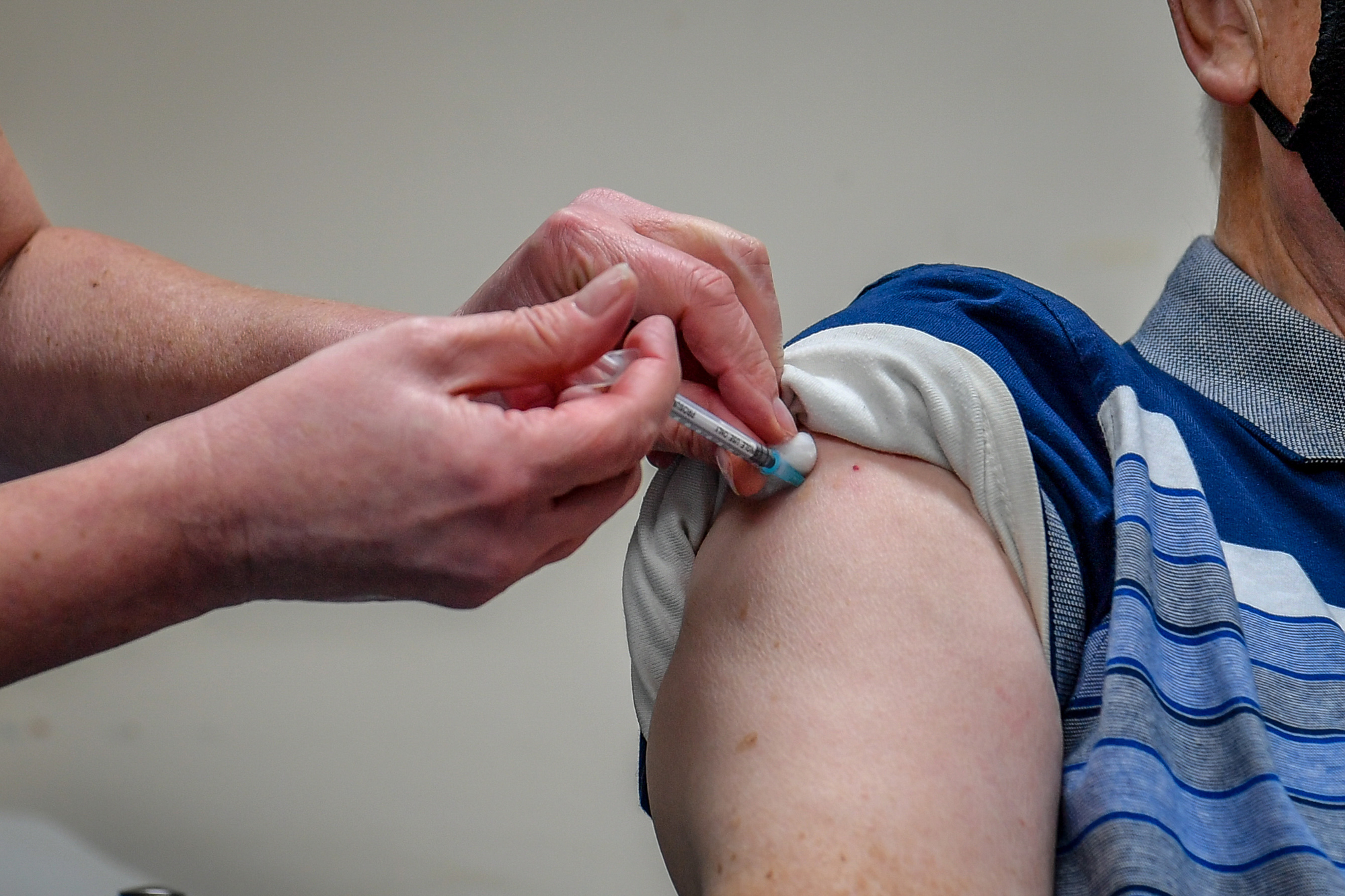
A vaccine developed by Pfizer and BioNTech appears to be effective against the UK variant of coronavirus – but it is not as effective against a mutation of the variant that has now appeared.
Experts need to begin working on the next generation of vaccines to have modifications to account for new variants.
Experts from the University of Cambridge found that when a mutation (known as E484K) was introduced to the UK variant, "substantially higher levels of antibody were required" to neutralise the virus.
According to the scientists, their findings, which have not yet been peer-reviewed, suggest the Pfizer/BioNtech vaccine may be less effective when dealing with the E484K mutation.
England has started to see cases that contain this mutation.
It was previously thought the mutation was not present in the UK variant, also known as B117. It had already been found in the South Africa and Brazil variants that are of concern.
Laboratory studies have shown that antibodies are less able to bind to a part of the virus, known as the spike protein, to stop it from unlocking human cells to gain entry.
Researchers analysed blood samples from 26 individuals between the ages of 29 and 89, who had received the first dose of the Pfizer vaccine three weeks ago.
The team extracted serum, the fluid part of the blood which contains antibodies – proteins formed in response to the vaccine that can counteract infection.
The serum from each participant was exposed to lab-made versions of the Sars-CoV-2, the virus that causes Covid-19.
The team found the B117 variant required about twice the amount of antibodies to neutralise the virus, when compared to previous versions of the virus without the mutations.

When the E484K mutation was added, it required an almost 10-fold increase in the concentration of serum antibody for neutralisation, the researchers said.
Professor Ravi Gupta, who led the study, said: "Our findings suggest that the Pfizer/BioNTech vaccine is likely to offer similar protection against B117 as it does against the previous strain of Sars-CoV-2.
"Although we found a reduction in the ability of antibodies to neutralise the virus, given the number of antibodies produced following vaccination, this should still only have a relatively modest effect and people should still be protected.
"Of particular concern, though, is the emergence of the E484K mutation, which so far has only been seen in a relatively small number of individuals.
"Our work suggests the vaccine is likely to be less effective when dealing with this mutation.
"B117 will continue to acquire mutations seen in the other variants of concern, so we need to plan for the next generation of vaccines to have modifications to account for new variants.
"We also need to scale up vaccines as fast and as broadly as possible to get transmission down globally."