Trio win Nobel Prize for 'brain GPS' work
Three scientists, including a Norwegian married couple, have won the Nobel Prize in medicine for discovering the “inner GPS” that helps the brain navigate through the world.

Trio win Nobel Prize for 'brain GPS' work

Three scientists, including a Norwegian married couple, have won the Nobel Prize in medicine for discovering the “inner GPS” that helps the brain navigate through the world.

Their findings in rats represent a “paradigm shift” in our knowledge of how cells work together to perform cognitive functions, the Nobel Assembly said.

Research suggests humans have the same system in their brains and the trio’s work could help scientists understand the mechanisms behind Alzheimer’s disease, it added.

“This year’s Nobel Laureates have discovered a positioning system, an ’inner GPS’ in the brain that makes it possible to orient ourselves in space,” the assembly said.

Scientist John O’Keefe - whose father hailed from Newmarket, Co. Cork, and who still has family living in the area today - discovered the first component of this system in 1971 when he found that a certain type of nerve cell was always activated when a rat was at a certain place in a room.

Mr O’Keefe, 75, of University College London, demonstrated that these “place cells” were building up a map of the environment, not just registering visual input.

Some 34 years later May-Britt and Edvard Moser, of the Norwegian University of Science and Technology in Trondheim, identified another type of nerve cell – the “grid cell” – that generates a coordinate system for precise positioning and path-finding, the assembly said.

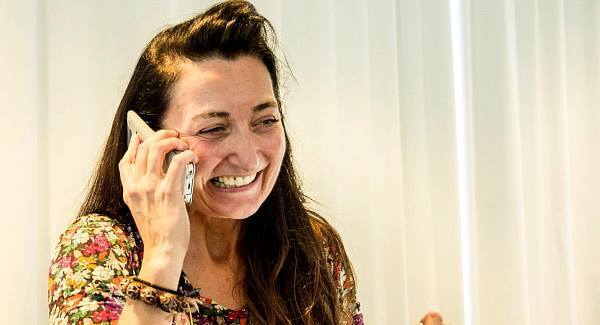
“I’m still in shock. This is so great,” Mrs Moser, 51, said.

Hege Tunstad, a spokeswoman at the university in Trondheim, said Mrs Moser was at the university when she found out she had won.

“She needed a minute to cry and speak with her team,” she said. Her 52-year-old husband was on a plane and did not immediately learn the news.

The Nobel Assembly said that knowledge about the brain’s positioning system may “help us understand the mechanism underpinning the devastating spatial memory loss” that affects people with Alzheimer’s disease.

The discoveries have also opened new avenues for understanding cognitive functions such as memory, thinking and planning, it said.

“Thanks to our grid and place cells we don’t have to walk around with a map to find our way each time we visit a city because we have that map in our head,” said Juleen Zierath, chair of the medicine prize committee.

“I think without these cells we would have a really hard time to survive.”

The Nobel laureates won Columbia University’s Louisa Gross Horwitz Prize last year for their discoveries.

The Nobel awards in physics, chemistry, literature and peace will be announced later this week and the economics prize next Monday.

The winners of each Nobel category split prize money of eight million Swedish kronor (€880,000). Each winner also receives a diploma and a gold medal.

Created by Swedish industrialist Alfred Nobel, the prizes were first awarded in 1901. The winners always collect their awards on December 10, the anniversary of Nobel’s death in 1896.

Last year’s medicine award went to researchers who discovered how substances are transported within cells, a process involved in such important activities as brain cell communication and the release of insulin.

"This is crazy,'' an excited Mrs Moser added. ``This is such a great honour for all of us and all the people who have worked with us and supported us.

“We are going to continue and hopefully do even more ground-breaking work in the future.”

Mr Moser was flying to the Max Planck Institute in Germany to demonstrate their research when the news broke.

He told the Norwegian news agency NTB that he discovered he was a Nobel Prize winner when he landed in Munich, turned on his phone and saw a flood of emails, texts and missed calls.

“I didn’t know anything. When I got off the plane there was a representative there with a bouquet of flowers who said ’congratulations on the prize’,” he was quoted as saying.

Professor O’Keefe is to receive an honorary doctorate from University College Cork on December 5 in recognition of his enormous contributions to neuroscience, and will deliver a lecture entitled 'The Hippocampus as a Cognitive Map: an update'.

More in this section

Cookie Policy Privacy Policy Brand Safety FAQ Help Contact Us Terms and Conditions

© Examiner Echo Group Limited