Workers trapped after landslide at Tibet mine
A large landslide has trapped 83 workers in a gold mining area in Tibet, Chinese state media said.
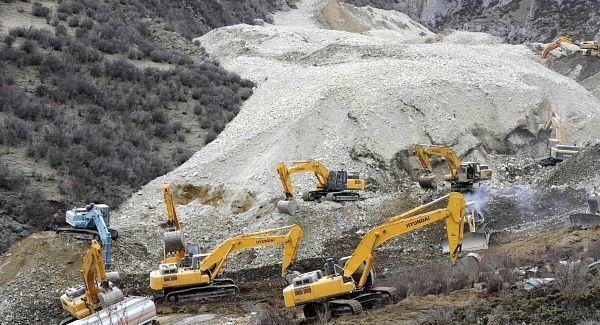
The landslide covered around 1.5 square miles in the Maizhokunggar county of Lhasa, the regional capital, according to an official speaking to China Central Television.
The official Xinhua News Agency said the workers were from a subsidiary of the China National Gold Group.
The reports said the landslide was caused by a “natural disaster” but did not provide specifics.
They said rescue efforts were under way.
County officials reached by phone confirmed the landslide but had no further details.
About 2 million cubic metres of mud, rock and debris engulfed the area as the workers were sleeping, China Central Television said.
Xinhua said at least two of the buried workers were Tibetan. CCTV said most of the workers were believed to be ethnic Han Chinese.
The site is about 45 miles east of Lhasa.
More than 1,000 police, firefighters, soldiers and medics have been deployed to the site to conduct searches armed with devices to detect signs of life and accompanied by sniffer dogs, reports said.
Around 30 excavators were digging at the site as temperatures fell below freezing.
The reports said the landslide was caused by a “natural disaster” but did not provide specifics. It was unclear why the first news reports of the landslide came out several hours after it occurred.
Doctors at the local county hospital said they had been told to prepare to receive survivors but none had arrived.
The Chinese government has been encouraging development of mining and other industries in long-isolated Tibet as a way to promote its economic growth and raise living standards.
The region has abundant deposits of copper, chromium, bauxite and other precious minerals and metals and is one of fast-growing China’s frontiers.
But others worry that the rush into Tibet could wreck much of the high-altitude region’s delicate ecosystem, and that an influx of the majority Han Chinese threatens its Buddhist culture and traditional way of life.
CONNECT WITH US TODAY



Be the first to know the latest news and updates