Doctors locate Clinton blood clot
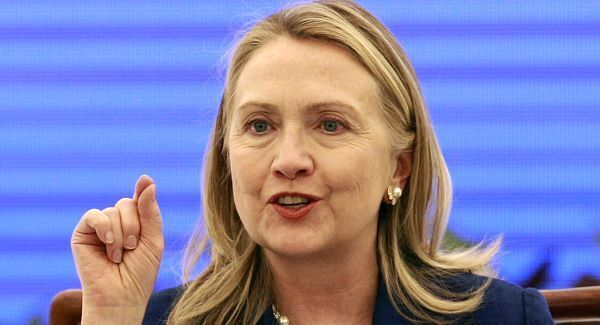
Doctors treating US secretary of state Hillary Clinton for a blood clot said today they were confident she would make a full recovery, after locating the damage.

Doctors locate Clinton blood clot

Doctors treating US secretary of state Hillary Clinton for a blood clot said today they were confident she would make a full recovery, after locating the damage.

Mrs Clinton did not suffer a stroke or neurological damage, the doctors said, in a statement that revealed the location of the clot – in the vein in the space between the brain and the skull, behind the right ear.

The former first lady is being treated with blood thinners to help dissolve the clot and will be allowed home once the medication dose has been established.

Mrs Clinton, 65, was making excellent progress and was in good spirits, Dr Lisa Bardack of the Mt Kisco Medical Group and Dr Gigi El-Bayoumi of George Washington University said.

Mrs Clinton, who was spending a second day in hospital, developed the clot after suffering concussion earlier this month when she fainted, fell and struck her head at home while battling a stomach virus. She has not been seen publicly since December 7.

Phillipe Reines, her spokesman, said her doctors discovered the clot yesterday while performing a follow-up exam on the concussion. She was admitted to New York-Presbyterian Hospital.

Mrs Clinton’s complication “certainly isn’t the most common thing to happen after a concussion” and is one of the few types of blood clots in the skull or head that are treated with blood thinners, said Dr Larry Goldstein, a neurologist who is director of Duke University’s stroke centre.

The area where her clot developed is “a drainage channel, the equivalent of a big vein inside the skull – it’s how the blood gets back to the heart”, Dr Goldstein said.

Blood thinners are usually enough to treat the clot and it should have no long-term consequences if her doctors are saying she has suffered no neurological damage, he said.

Mrs Clinton had planned to step down as secretary of state at the beginning of President Barack Obama’s second term. Whether she will return to work before she resigns remains a question.

Democrats are privately, if not publicly, speculating on how her illness might affect a decision about running for president in 2016.

After decades in politics, Mrs Clinton says she plans to spend the next year resting. She has long insisted she had no intention of mounting a second campaign for the White House four years from now. But the door is not entirely closed and she would almost certainly emerge as the Democrat to beat if she decided to give in to calls by supporters and run again.

Her age – and thereby health – would likely be a factor under consideration, given that Mrs Clinton would be 69 when sworn in, if she were elected in 2016.

That might become even more of an issue in the early jockeying for 2016 if what started as a bad stomach bug becomes a prolonged, public bout with more serious infirmity.

Publicly, Democrats reject the notion that a blood clot could hinder her political prospects.

“Some of those concerns could be borderline sexist,” said Basil Smikle, a Democratic strategist who worked for Mrs Clinton when she was a senator.

“Dick Cheney had significant heart problems when he was vice president, and people joked about it. He took the time he needed to get better, and it wasn’t a problem.”

It is not uncommon for presidential candidates’ health – and age – to be an issue. Both in 2000 and 2008, Senator John McCain had to rebut concerns he was too old to be commander in chief or that his skin cancer could resurface.

Americans admire Mrs Clinton more than any other woman in the world, according to a Gallup poll released today – the 17th time in 20 years that she has claimed that title. And a recent ABC News/Washington Post poll found that 57% of Americans would support her as a candidate for president in 2016, with just 37% opposed. Meanwhile, websites have already cropped up hawking “Clinton 2016” mugs and tote bags.

Mrs Clinton returned to the US from a trip to Europe, then fell ill with a stomach virus in early December that left her severely dehydrated and forced her to cancel a trip to North Africa and the Middle East.

Her condition worsened when she fainted, fell and suffered concussion while at home alone in mid-December as she recovered from the virus. It was announced on December 13.

This isn’t the first time Mrs Clinton has suffered a blood clot. In 1998, midway through her husband’s second term as president, she was in New York fund raising for the mid-term elections when a swollen right foot led her doctor to diagnose a clot in her knee, requiring immediate treatment.

More in this section

Cookie Policy Privacy Policy Brand Safety FAQ Help Contact Us Terms and Conditions

© Examiner Echo Group Limited