Gaza ceasefire hangs in the balance
Israel and the Hamas militant group edged closer to a ceasefire to end the week-long Israeli offensive in the Gaza Strip, but a deal remained elusive after a day of furious diplomatic efforts.
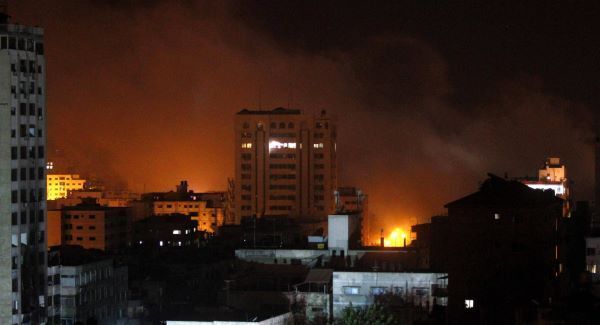
Israeli tanks and gunboats pummelled targets in Gaza in what appeared to be a last-minute burst of fire yesterday, while at least 200 rockets were fired into Israel.
As talks dragged on near midnight, Israeli and Hamas officials, communicating through Egyptian mediators, expressed hope that a deal would soon be reached, but warned that it was far from certain.
“If there is a possibility of achieving a long-term solution to this problem by diplomatic means, we prefer that. But if not, then I am sure you will understand that Israel will have to take whatever actions are necessary to defend its people,” Israeli prime minister Benjamin Netanyahu said at a late-night meeting with visiting US secretary of state Hillary Clinton.
Mrs Clinton was hastily dispatched to the region by President Barack Obama to join a group of world leaders working to halt the violence.
“In the days ahead, the United States will work with our partners here in Israel and across the region toward an outcome that bolsters security for the people of Israel, improves conditions for the people of Gaza and moves toward a comprehensive peace for all people of the region,” she said.
She expressed sorrow for the heavy loss of life on both sides, but called for Palestinian rocket attacks on Israel to end and stressed that the American commitment to Israel’s security was “rock solid”.
“The goal must be a durable outcome that promotes regional stability and advances the security and legitimate aspirations of Israelis and Palestinians alike,” she said.
US State Department spokeswoman Victoria Nuland said Mrs Clinton met Mr Netanyahu and other Israeli officials for two hours.
“They discussed efforts to de-escalate the situation and bring about a sustainable outcome that protects Israel’s security and improves the lives of civilians in Gaza,” Ms Nuland said.
“They also consulted on her impending stops in Ramallah and Cairo, including Egyptian efforts to advance de-escalation.”
Mrs Clinton will meet Palestinian president Mahmoud Abbas in the West Bank and Egyptian leaders in Cairo today.
Israel launched the offensive on November 14 in a bid to end months of rocket attacks out of the Hamas-run territory, which lies on Israel’s southern flank. After assassinating Hamas’ military chief, it has carried out a blistering campaign of air strikes, targeting rocket launchers, storage sites and wanted militants.
The campaign has killed more than 130 Palestinians, including dozens of civilians, and wounded hundreds of others. Five Israelis have been killed by rocket fire, including a soldier and a civilian contractor yesterday.
With Israel massing thousands of ground troops on the Gaza border, diplomats raced throughout the region in search of a formula to halt the fighting.
In a meeting with Mr Netanyahu, United Nations chief Ban Ki-moon condemned Palestinian rocket attacks, but urged Israel to show “maximum restraint”.
“Further escalation benefits no-one,” he said.
Israel demands an end to rocket fire from Gaza and a halt to weapons smuggling into Gaza through tunnels under the border with Egypt. It also wants international guarantees that Hamas will not rearm or use Egypt’s Sinai region, which abuts both Gaza and southern Israel, to attack Israelis.
Hamas wants Israel to halt all attacks on Gaza and lift tight restrictions on trade and movement in and out of the territory that have been in place since Hamas seized Gaza by force in 2007. Israel has rejected such demands in the past.
Egypt’s new Islamist government is expected to play a key role in maintaining a deal and the crisis has thrust President Mohammed Morsi, into the spotlight as he plays a difficult balancing act.
Mr Morsi belongs to the Muslim Brotherhood, Hamas’ parent movement, and clearly sympathises with the Islamic militant group. But at the same time, he relies heavily on US aid and is trying to preserve a historic peace agreement with Israel.
Earlier Mr Morsi raised hopes that a ceasefire was near when he predicted the negotiations would yield “positive results” during the coming hours. And Mr Netanyahu said his country would be a “willing partner” in a ceasefire agreement.
But as the talks stretched into the evening, it became clear that a deal remained a way off.
“Most likely the deal will be struck tomorrow. Israel has not responded to some demands, which delayed the deal,” Hamas official Izzat Risheq said last night.
Hamas officials refused to discuss the remaining sticking points.
Israeli media quoted defence minister Ehud Barak as telling a closed meeting that Israel wanted a 24-hour test period of no rocket fire to see if Hamas could enforce a truce.
Palestinian officials briefed on the negotiations said Hamas wanted assurances of a comprehensive deal that included new border arrangements – and were resisting Israeli proposals for a phased agreement.
Meanwhile the UN Security Council said it would hold an open debate on the Gaza crisis tonight if a ceasefire is not called before then. The move came after the United States blocked adoption of a unanimous press statement from the council because it did not explicitly criticise Hamas’ rocket attacks on Israel.

CONNECT WITH US TODAY



Be the first to know the latest news and updates