Greek court considers property tax case

A Greek high court is considering appeals against a deeply resented new property tax that has sparked anger across the country because those who do not pay will have their power turned off.
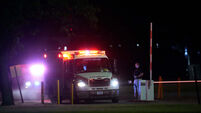
As the case was being heard, hundreds of protesters gathered outside the Council of State in Athens chanting: "We won't pay!"

Inside, court president Panayiotis Pikramenos voiced reservations over the stakes at hand.
"The Council of State has undertaken a burden that is not its own," he said, opening proceedings.
"The court will do its duty, but cannot undertake to handle a political problem that has built up over the past few years."
Greece's debt-strapped government is seeking to raise €2bn with the new tax. It is among a raft of cutbacks - including pension and pay cuts and tax hikes - imposed over the past 20 months to secure international rescue loans to keep the country afloat.
Fourteen appeals have been filed by bar associations, unions, lawyers and property owners. The court will reconvene on January 19, with parties submitting written positions and is expected to rule several weeks later.
The tax - which is paid through household electricity bills - has sparked strong resistance throughout the austerity-weary country. Several municipalities have urged their citizens not to pay, or threatened power suppliers with lawsuits if they disconnect clients who cannot afford the emergency levy.
Prime minister Lucas Papademos insisted today that the tax cannot be scrapped as it provides the state with vital revenue.
He told parliament that his interim coalition government will ease payment terms for disadvantaged householders, including long-term jobless, in a country where unemployment has risen to record levels amid a deep recession.
"I too do not consider it right for citizens who objectively cannot pay the property levy to have their power cut off," Mr Papademos said. "I believe these arrangements will address many of the issues that have arisen. But the measure itself cannot be abolished, as it is necessary for our process of fiscal adjustment."
Later today, MPs will start debating the 2012 austerity budget which seeks to reduce government overspending to 5.4% of annual output - from an estimated 9% this year.
Next year's figure factors in 50% writedowns on the value of Greek bonds held by private creditors as part of a second international bailout for Greece, after a first 110 billion euro deal in May 2010 proved insufficient.
Former European Central Bank vice president Mr Papademos was appointed last month to head a coalition government to push through financial reforms. The interim government is expected to call early elections in late February.