Health warnings issued over Russian heatwave and smog

Russian health experts warned today that unprecedented heat and suffocating smog from wildfires will lead to more suicides, higher alcohol abuse and other problems, and accused the government of failing to address the long-term health dangers.

Health warnings issued over Russian heatwave and smog

Russian health experts warned today that unprecedented heat and suffocating smog from wildfires will lead to more suicides, higher alcohol abuse and other problems, and accused the government of failing to address the long-term health dangers.

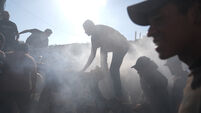
The hottest summer since records began 130 years ago has sparked thousands of fires in Russia, mostly in the western part of the country, and smoke from wildfires around Moscow have again clouded some parts of the capital even though firefighters have scored successes in containing the blazes.

Officials have said that the scorching heat and smog have doubled the number of deaths recorded in Moscow.

"This heat has affected all organs, including respiratory and endocrine systems, and we should expect more cases of diabetes, suicides, alcohol-related nervous breakdowns," Boris Revich, a medical expert at the Moscow-based Institute for Economic Forecasts, said at a news conference.

Revich said children and pregnant women are particularly at risk.

Official data on the number of suicides and medical conditions related to the heatwave are not available yet, he said.

Another expert deplored what he called the lack of long-term emergency planning in healthcare.

"We never care to work with a future perspective in mind," said Alexey Skripkov of the Federal Medical and Biological Agency. "It's a big systemic mistake."

He said that European nations such as Germany and France were quick to upgrade their healthcare policies after the unprecedented heatwave in 2003.

Russian officials have failed to take similar measures even though peat bog and forest fires have burned around Moscow in the past.

Russia's Emergency Situations Ministry said that its teams have cut the area covered by fires around Moscow by more than a quarter over the past 24 hours, but 14 forest and peat bog fires are still burning east and south-east of the city.

Early today, large sections of the capital were again cloaked by smog, although the concentration of pollutants remained far below their peak levels earlier this month when smog hung over the city for a week.

Alexei Popikov of the Mosecomonitoring watchdog agency said carbon monoxide levels in the air remained within their maximum safe limit today, but the amount of hydrocarbons is twice the permissible level. He said the situation was expected to improve with a wind change later in the day.

More than 50 people have died directly in the wildfires across Russia, and more than 2,000 homes have been destroyed.

The Emergency Situations Ministry said today that more than 166,000 people and 62 firefighting aircraft are battling wildfires across the country, but the amount of land on fire nationwide has been halved since yesterday.

More in this section

Cookie Policy Privacy Policy Brand Safety FAQ Help Contact Us Terms and Conditions

© Examiner Echo Group Limited