Double bombings kill 30 in Baghdad

More than 30 people were killed in Baghdad today when a suicide bomber blew themselves up amid a crowd that had gathered in the aftermath of an earlier explosion.

More than 30 people were killed in Baghdad today when a suicide bomber blew themselves up amid a crowd that had gathered in the aftermath of an earlier explosion.

The twin blasts – the deadliest in the city in months – came moments apart during the morning rush hour in the mostly Shiite Kasrah section of the Azamiyah district in the northern part of the Iraqi capital.

Police said the first explosion damaged a minibus carrying young girls to school. The second happened when a suicide bomber detonated an explosive belt in the middle of a crowd that had gathered around the vehicle.

The Interior Ministry said 31 people died and 71 were wounded.

It was thought extremists may have been sending a message to President-elect Barack Obama about “the real situation in Iraq”, pressuring the government not to sign a new security agreement with the United States or attempting to embarrass the ruling parties ahead of regional elections in January.

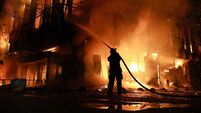
The blasts shattered storefronts along the crowded street and set more than a dozen cars on fire.

Abbas Fadhil, 45, said he was working in a nearby restaurant.

“I rushed to the site and saw several girl students trapped in a bus and screaming for help. We took the girls outside the bus and rushed them to the hospitals,” he said, standing in front of the damaged restaurant – his white shirt soaked with blood.

“This is a criminal act that targeted innocent people who were heading to work and school while the politicians are busy with their personal greed and ambitions,” Fadhil said.

Ahmed Riyadh, 54, owner of a nearby grocery store, said the bombing was a “vicious attack” that “did not differentiate between Shiites and Sunnis.”

“We are fed up with such attacks and we want only to live in peace,” he said. “The politicians should work hard and set aside their differences to stop the bloodshed.”

No group claimed responsibility for the blasts, the single deadliest attack in the Iraqi capital in weeks.

But suicide attacks against Shiite civilians are the hallmark of al Qaida, which maintains a limited presence in Baghdad despite military setbacks and the Sunni revolt against the terror movement last year.

Violence is down significantly in Baghdad since the worst of the Sunni-Shiite fighting in 2006 and 2007.

In recent weeks, however, there appears to have been an increase in small-scale bombings during the morning rush hour – targeting Iraqi police and army patrols, government officials heading for work or commuters, in an attempt to undermine public confidence.

The continuing attacks show the determination of extremist groups to continue the fight.

A still unratified security agreement with the US would keep American soldiers in Iraq until 2012.

Mr Obama has pledged to withdraw all combat troops within 16 months of taking office on January 20, although he has said he would consult with the Iraqi government and US commanders before taking any action.

x

More in this section

Cookie Policy Privacy Policy Brand Safety FAQ Help Contact Us Terms and Conditions

© Examiner Echo Group Limited