UN chief bringing 'message of hope' to Burma

UN chief Ban Ki-moon flew over the cyclone-ravaged landscape of Burma’s heartland today, touching down to learn from officials’ briefings and heart-to-heart chats with storm victims of the misery that he hopes more foreign assistance can alleviate.

UN chief bringing 'message of hope' to Burma

UN chief Ban Ki-moon flew over the cyclone-ravaged landscape of Burma’s heartland today, touching down to learn from officials’ briefings and heart-to-heart chats with storm victims of the misery that he hopes more foreign assistance can alleviate.

Before his helicopter tour of the stricken area, Ban said he was bringing a “message of hope,” to Burma’s people.

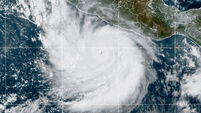
By the military government’s count, some 78,000 people were killed by the May 2-3 Cyclone Nargis, and another 56,000 are unaccounted for.

The firsthand look at the devastation wrought by the storm left Ban shaken, even though the areas to which he was taken were far from the worst-hit.

“I’m very upset by what I’ve seen,” Ban told reporters, after a walk through a makeshift relief camp where 500 people huddled in blue tents at Kyondah village in Dedaye township, about 45 miles south-west of Rangoon, Burma’s largest city.

Burma’s military regime have been keen to show it has the relief effort under control despite spurning the help of foreign disaster experts, and trotted out officials to give statistics-laden lectures to make their point.

But the UN says up to 2.5 million cyclone survivors face hunger, homelessness and potential outbreaks of deadly diseases, especially in the lower-lying areas of the Irrawaddy Delta close to the sea. It estimates that aid has reached only about 25 percent of them.

The places Ban visited, the Kyondah Relief Camp, and the town of Mawlamyinegyun, an aid distribution point, seemed orderly and well organised.

But the destruction in the areas around them was relatively mild compared to that further south-west in the townships of Labutta and Bogalay. Officials gave no explanation of why Ban was not taken to those areas, where the preponderance of dead and missing are reported.

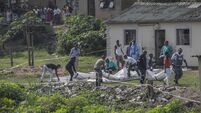
The International Red Cross said rivers and ponds in Bogalay remain full of corpses, and that many people in remote areas had received no aid.

Kyondah – which has electricity and clean water – is somewhat of a showcase. The camp’s inhabitants had cooking pots and blankets that appeared to be new. It was also selected for visits by senior junta members and representatives of foreign embassies and international aid organisations last week.

An idea of the storm’s destructive force was more obvious from the air.

The two helicopters carrying Ban’s party flew over seemingly endless fields that had been flooded, villages with destroyed houses, rivers swollen past their banks, people huddled on rooftops, in tent villages or taking to boats.

There was flooding as far as the eye could see, people still trying to make do in damaged homes that looked completely cut off.

So far, no one at the UN has ventured an estimate of how long the delta is expected to remain vastly submerged. But today, Ban said he expects the relief operations to be needed for at least six months more.

Much of the area is rice paddies – but the level of water is way too high to grow rice and the paddies are inundated with salt water that also is damaging, UN officials said.

The monsoon, bringing seasonal rains, is part of the normal cycle, but they don’t usually cause flooding in the delta, they said. Heavy rains followed the cyclone.

Ban expressed hope that the heavy rainfall since the cyclone – though it is causing more flooding because the ground can’t absorb it – might also cleanse the rice paddies of the salt water.

“I praise the will, resilience and the courage of the people of Burma. I bring a message of hope for the people of Burma,” he said before embarking on his carefully orchestrated four-hour tour. He is the only foreign leader so far allowed into the disaster zone.

Following Ban into the delta will be representatives invited from 29 nations, including Japan, Singapore and Thailand. The group, which includes government officials, aid officials and private-sector donors, will visit the region tomorrow.

Also today, the first World Food Programme helicopter was allowed to fly to Rangoon to assist in relief operations to the delta. WFP officials in Bangkok confirmed 10 flights would be allowed beginning today.

In a meeting earlier with Prime Minister Lt Gen Thein Sein, Ban stressed international aid experts should be rushed in because the crisis was too much for Burma to handle alone, according to a UN official at the talks.

“The United Nations and all the international community stand ready to help to overcome the tragedy,” Ban said.

UN officials travelling with Ban said they were discussing with Chinese authorities whether Ban could tour the earthquake zone in Sichuan directly after leaving Burma.

The trip, which has not been finalised, would give Ban the chance to compare the two countries’ responses and urge China – Burma’s biggest ally – to put its weight behind opening the flow of aid workers.

Ban tried to keep political issues off his plate.

Activists called on Ban to meet with detained pro-democracy leader Aung San Suu Kyi and seek her release. The Nobel Peace prize laureate has been confined to her Rangoon villa for most of the last 18 years and her current period of detention is due to expire Monday.

But such a meeting was not on Ban’s official itinerary.

As Ban began his visit, foreign aid agencies stressed the need to quickly reach survivors suffering from disease, hunger and lack of shelter.

“In 30-plus years of humanitarian emergency work this is by far – by far – the largest case of emergency need we’ve ever seen,” said Lionel Rosenblatt, president of US-based Refugees International. “And yet, right offshore, right here in Thailand, we have the means to save these people.”

In a meeting before Ban travelled to the delta, Thein Sein said the relief phase of the government’s operation was ending and that the focus had shifted to reconstruction, according to the UN official at the talks.

UN official Dan Baker said junta leader Senior Gen Than Shwe would meet with Ban tomorrow at Naypyitaw. Ban earlier said Than Shwe had refused to take his telephone calls and did not respond to two letters.

More in this section

Cookie Policy Privacy Policy Brand Safety FAQ Help Contact Us Terms and Conditions

© Examiner Echo Group Limited