Gaddafi in Paris for official visit
Colonel Muammar Gaddafi is in Paris today for an official visit that marks the Libyan leader’s return to grace.
Mr Gaddafi has shed his rogue image for that of trusted statesman ready to sign off on deals worth billions.
In keeping with his flamboyant persona, his visit is likely to be extravagant - featuring deals to buy a fleet of Airbus passenger jets and possibly defence equipment, too.
But most symbolic for Libya’s new status is France’s plan to sell a civilian nuclear reactor to the country, once ostracised by the world community as a sponsor of terrorism.
It will be the Libyan leader’s first trip to France since 1973, though he travelled to Brussels in 2004 to extend an olive branch in a first step toward ending years of isolation.
For President Nicolas Sarkozy, who has made bold symbolism his leadership style, the gains could be multi-fold, from securing the hefty contracts to establishing a firm foothold in what some see as a new El Dorado.
A boost in French-Libyan relations, and a reactor sale, could also send a message to countries such as Iran, in a stand off over its nuclear programme, that benefits await those that abide by international rules.
However, growing protests over the visit forced Mr Sarkozy to defend his invitation during a weekend summit in Lisbon, Portugal, attended by Mr Gaddafi.
“If we don’t welcome those who take the road to respectability, then what do we say to those who take the opposite road?” Sarkozy said.
True, the French president conceded “he has his personality, his temperament”.
The visit posed a special set of protocol problems. Initially announced as a three-day stay, Mr Gaddafi, who came to power in a 1969 bloodless coup, has stretched it to six.
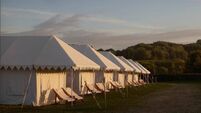
He will stay at the official guest residence near the presidential Elysee Palace. However, respecting the “desert tradition” of his region, Mr Gaddafi will pitch a Bedouin tent in the elegant gardens, presidential spokesman David Martinon said on Friday.
French officials are uncertain of the full programme of the man whose official title is “guide of the revolution”. The Libyan Embassy said it also was unsure of the complete agenda.
Mr Sarkozy and Mr Gaddafi will meet twice for talks that are likely to focus on terrorism, bilateral and strategic ties, as well as the French president’s proposal for a “union” of countries bordering the Mediterranean Sea. With Libya a departure point for migrants seeking a European foothold, illegal immigration also was expected to be discussed.
Libya, long regarded as a pariah for sponsoring terrorism, has set a course to undo UN sanctions and return to the international fold, announcing in 2003 the dismantling of its clandestine nuclear arms programme and the same year paying $2.7bn (€1.8bn) to families of the victims of the 1998 Pan Am bombing. It then agreed to pay $170m (€116m) in compensation to the families of the 170 victims of the 1989 bombing of a French UTA passenger jet.
The last obstacle was removed this summer with the freeing of six Bulgarian medics after negotiating sessions with Cecilia Sarkozy, now divorced from the French president. He extended the invitation verbally on a July visit.
However, some in France worry about the real intentions of the Libyan leader who, before the Lisbon summit, said that Europe’s former colonial powers should provide restitution to Africa.
Mr Gaddafi’s arrival in France coincides with International Human Rights Day, and Human Rights Minister Rama Yade expressed disgust with the symbolism of the date chosen for the visit.
“It would be indecent … that this visit be summed up with the signing of contracts,” she said, according to the daily Le Parisien. She urged the government to avoid the “kiss of death” by pressuring Mr Gaddafi to respect human rights.
Rights group Amnesty International has expressed concern about “severe restrictions” on journalists and dissidents in Libya and treatment of illegal migrants caught trying to flee Libya for Europe.

CONNECT WITH US TODAY



Be the first to know the latest news and updates