More Burma deaths as troops open fire
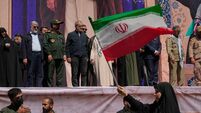
Violence erupted for a second day in Burma today with troops pouring rifle fire into crowds of anti-government demonstrators.
Eyewitnesses reported several people were killed and one Japanese journalist was confirmed among the victims.
Despite the threat from soldiers and armed police who attempted to seal off the centre of Rangoon more than 70,000 protesters gathered for the 10th consecutive day of marches protesting against the country’s brutal military leadership.
But the junta ignored international pleas for restraint and stepped up the level of violence as they tried in vain to stop the unrest.
The troops opened fire with automatic weapons after several thousand protesters ignored orders to disband.
In other parts of the city, thousands of people ran through the streets after warning shots were fired into crowds. Bloody sandals were left lying in the road.
Witnesses said at least one man had been shot, though the guns did not appear to be aimed directly at the massive crowd that gathered at Sule Pagoda.
The Japanese Embassy confirmed that a Japanese citizen had been killed.
Protesters shouted at the soldiers, angry about early morning raids on Buddhist monasteries. Soldiers reportedly beat and arrested more than 100 monks, who have spearheaded the largest challenge to the junta since a pro-democracy uprising was suppressed in 1988 with the death of 3,000 civilians.
“Give us freedom, give us freedom!” some demonstrators shouted at the soldiers, who by mid-afternoon had fanned out across the streets of Rangoon, the country’s largest city.
The government has admitted that one man was killed in Rangoon yesterday when police opened on demonstrations, but dissidents outside Burma reported receiving news of up to eight deaths.
Some reports said the dead included monks, who are widely revered in the Buddhist nation and the emergence of such martyr figures could stoke public anger against the regime and escalate the violence.
Before dawn today, security forces raided several monasteries considered hotbeds of the pro-democracy movement.
A monk at Ngwe Kyar Yan monastery pointed to bloodstains on the concrete floor and said a number of monks were beaten and at least 100 of the 150 who live there taken away. Shots were fired in the air and tear gas was used against a crowd of about 1,500 supporters during the raid, he said.
“Soldiers slammed the monastery gate with the car, breaking the lock and forcing it into the monastery,” said the monk, who did not want to be named for fear of reprisals.
“They smashed the doors down, broke windows and furniture. When monks resisted, they shot at the monks and used tear gas and beat up the monks and dragged them into trucks.”
Empty bullet shells, broken doors, furniture and glass peppered the bloodstained, concrete floor of the monastery.
A woman disciple said monks were also arrested at the Moe Gaung monastery, which was being guarded by soldiers. Both monasteries are located in Rangoon’s northern suburbs.
In Mandalay, the country’s second-largest city, about 400 miles north of Rangoon, five army trucks with soldiers and three fire trucks were seen driving into the Mahamuni Pagoda, where hundreds of monks were locked inside by security forces.
Another 60 soldiers blocked the road to the pagoda from the centre of the city.
Led by thousands of monks in maroon robes, protesters have been demanding more democratic freedoms, the release of political activists and economic reforms in the impoverished nation.
The protests, which began on August 19, were initially sparked by high fuel prices but have been swelled by pent-up opposition to harsh military rule.
Burma’s state-run newspaper today blamed “saboteurs inside and outside the nation” for causing the protests and claimed the demonstrations were much smaller than the foreign media were reporting.
Security forces today also arrested Myint Thein, spokesman for opposition leader Aung San Suu Kyi’s political party.
One diplomat said that Suu Kyi remained at her Rangoon residence, where she has been held under house arrest for much of the past 18 years. Rumours had circulated that she had been taken away to Rangoon’s notorious Insein prison.
The diplomat said the junta had deployed more security forces around Suu Kyi’s house and on the road leading to it, and that more than 100 soldiers were now inside the compound.
Dramatic images of the recent protests, many transmitted by dissidents using cell phones and the Internet, have riveted world attention on the escalating confrontation between the military regime and its opponents.
The US today called on Burma’s military leaders to talk with the protesters and urged China, the country’s main economic and political ally, to use its influence to prevent further bloodshed.

CONNECT WITH US TODAY



Be the first to know the latest news and updates