Bush to Italy as Americans go on trial

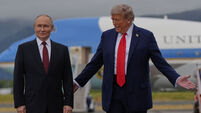
The state of US-Italy ties may best be revealed by what takes place in a Milan courtroom just hours before US President George Bush arrives today.

Bush to Italy as Americans go on trial

The state of US-Italy ties may best be revealed by what takes place in a Milan courtroom just hours before US President George Bush arrives today.

A group of 26 Americans are due to go on trial in the first prosecution involving the CIA’s extraordinary rendition programme.

The US president’s visit comes at a time of cool relations between the two allies.

Premier Romano Prodi’s centre-left government has spared no criticism of all major US policies, has completed the pullout of troops in Iraq and has refused to beef up Italy’s contingent in

Afghanistan.

Another major irritant is Italy’s prosecution of Americans in two separate cases.

Along with the 26 Americans on trial for the abduction of an Egyptian cleric in Milan, a US soldier is on trial in Rome for the March 2005 killing of an Italian spy in Baghdad.

In both cases, the US citizens are being tried in absentia.

It is a contrast from June 2004, the last time Bush was on an official visit to Italy.

He was greeted by Premier Silvio Berlusconi as “my friend George”.

Berlusconi also famously said he agreed with Washington, regardless of what the American position might be.

Things have changed since Prodi took over last year, though. Prodi has not visited the White House, though he met with Bush on the sidelines of international summits such as the 2006 Group of Eight in Russia.

By contrast, in 2001 Berlusconi went to the White House five months after he became premier.

“In Washington there’s a renewed sense of mistrust toward Italy, seen as an unreliable country,” said Massimo Teodori, a professor of US history and the author of numerous books on American affairs.

He cited Italy’s policy in Afghanistan, the legal cases and what he said was a “clearly anti-American hard-line left within the government”.

In the run-up to Bush’s visit, Prodi made a point of asking his Cabinet ministers not to take part in the anti-Bush demonstrations being planned in Rome for tomorrow, when Bush is scheduled to meet Prodi and visit the Vatican for his first talks with Pope Benedict XVI.

Officials in both Rome and Washington have sought to minimise the contrasts.

“We’ve got a good relationship,” Bush said of Prodi in an interview to Italy’s La Stampa and other newspapers before his trip to Europe. “Italy has been a strong partner in a lot of areas, and I appreciate it.”

Prodi, whose government includes Communists and other radical leftists, has insisted that frank criticism among friends does not endanger their relations.

“There is no worry or anxiety, we are not going into this meeting with a guilt complex … but with great pleasure to see an ally with whom we share solid and intense relations,” said an Italian diplomatic source.

The premier gave the go ahead to plans to expand a US base in northern Italy, despite massive protests, including from members of his own coalition.

A longtime opponent of the Iraq war, Prodi completed the pullout of Italian troops – which had been sent in by Berlusconi – in December.

He sent 2,500 troops to an expanded UN force in Lebanon, and kept Italy’s 2,000-strong contingent in Afghanistan as part of the Nato mission, a commitment praised by Bush in the interview.

However, the Italian government did not heed calls by the Bush administration to some European allies to provide more troops to fight Taliban in the south and lift restrictions on how and where soldiers can fight.

Rome’s long-standing strategy of negotiating with kidnappers in hostage situations also exposed rifts.

A recent case where five Taliban prisoners were swapped for an Italian journalist abducted in Afghanistan provoked a sharp reaction by the State Department.

Foreign Minister Massimo D’Alema has been critical of the American strategy in Afghanistan, saying military power alone would not solve the problems.

But his proposal for an international conference on Afghanistan has largely fallen on deaf years.

D’Alema has also criticised Washington for not discussing its missile defence system in the Nato-Russia Council. “This is unusual and the source of a certain amount of worry,” he said this week.

“It is as if the Italian leadership was frozen at the time of the crisis between Europe and the United States in 2003,” when the Iraq war was launched, said Andrea Romano, professor of contemporary history at Rome’s Tor Vergata University.

“But now other European leaderships are moving on,” he said, referring to Germany and France. “

The risk we face is not that of becoming enemies of the United States, but of becoming useless.”

Bush was travelling to Rome from Heiligendamm, Germany, where he was attending the G8 summit.

More in this section

Cookie Policy Privacy Policy Brand Safety FAQ Help Contact Us Terms and Conditions

© Examiner Echo Group Limited