World Court to decide if Serbia responsible for genocide
The UN’s highest court will deliver its judgment on Monday on Bosnia’s demand to make Serbia accountable for the slaughter, terrorising, rape and displacement of Bosnian Muslims in the early 1990s.
If it rules for Bosnia, the International Court of Justice in The Hague, Netherlands, could open the way for compensation amounting to billions of pounds from Serbia, the successor state of Slobodan Milosevic’s Yugoslavia, although specific claims would be addressed only later.
It also would be a permanent stain on Serbia in the eyes of history, regardless of any effort by Belgrade to distance itself from the brutality of those years.
Reflecting the complexities, the 16 judges have taken 10 months to deliberate since hearing the final arguments last May. Officials at the World Court, as it is informally known, say just the summary of the judgment is likely to take three hours for Judge Rosalyn Higgins, the court president, to read. The full decision could be as thick as a book.
The court was created after the Second World War to adjudicate disputes among UN members, most often involving contentious borders or alleged treaty violations. Its decisions are binding, without appeal, and subject to enforcement by the Security Council if necessary.
Seldom before has it had to deal with issues that go to the heart of a nation.
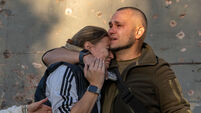
Dozens of Bosnian survivors, including women from Srebrenica where some 8,000 men were killed in July 1995, were expected to stand vigil outside the baroque Peace Palace while the decision is being read.
The ruling comes 14 years after Bosnia first approached the court during the chaos of Yugoslavia’s bloody disintegration, and 12 years after the end of the 1992-95 war. The political landscape has changed dramatically since then, with both countries separately aspiring to join the European Union. But passions have hardly cooled.
“This will be a very significant judgment, both from the perspective of the aftermath of the conflict and for international law generally,” said Andre Nollkaemper, director of the Amsterdam Centre for International Law at the University of Amsterdam.
Other courts have already ruled that acts of genocide occurred during the Bosnian war, when more than 100,000 people were killed in a Bosnian Serb campaign that gave the world the phrase “ethnic cleansing”.
Two Bosnian Serb officers have been convicted by the International Criminal Tribunal for the former Yugoslavia, set up in The Hague in 1993 – even as the fighting continued – to prosecute suspected war criminals.
Gen. Radislav Krstic is serving a 35-year prison term for aiding and abetting genocide, and Col. Vidoje Blagojevic is appealing against his 18-year sentence for complicity in genocide.
Milosevic died last year in his prison cell in the final weeks of his four-year genocide trial. Two other Bosnian Serbs accused of orchestrating atrocities, Radovan Karadzic and Gen. Ratko Mladic, remain at large, and critics accuse Serbia to this day of harbouring Mladic.
But the World Court case is not about individuals. Bosnia says the Serbian state itself must accept blame.
CONNECT WITH US TODAY



Be the first to know the latest news and updates