Madrid train bomb trial to start
A trial into Europe’s worst terrorist attack in 15 years gets under way in Spain today, with 29 suspects facing charges in bombings that killed 191 rush-hour commuters nearly three years ago.
The case promises to be spectacular, and highly emotional, dredging up terrifying memories of one of Spain’s darkest days. Some 100 experts and 600 witnesses are likely to be called, among them people who had their lives shattered in the March 11, 2004 blasts in Madrid.

Seven lead defendants face possible jail terms of 30 years for each of the killings and 18 years apiece for 1,820 attempted murders.
However, under Spanish law, the maximum time anyone can serve for a terrorist conviction is 40 years.
The attack, involving 10 backpack bombs that ripped through four packed commuter trains, has been called modern Spain’s most traumatic event since the 1930's civil war.
The trial marks the culmination of a lengthy probe which concluded that the attack was carried out by a homegrown cell of Muslim extremists angry over the then conservative Spanish government’s support for the Iraq war.
The cell was inspired by al-Qaida but had no direct links to it, nor did it receive financing from Osama bin Laden’s terrorist organisation, Spanish investigators say.
The proceedings will be held under extremely tight security at a trade-fair pavilion because the premises of the National Court, which handles terrorism cases, were deemed too small. Testimony is expected to last more than five months and a verdict is expected in late October.
Spain has raised its three-stage terrorism alert level to the middle rung as a precautionary measure.
Among the top defendants are Rabei Osman, an Egyptian arrested in Italy in 2004 and considered one of the masterminds of the attack, and Moroccans Jamal Zougam and Abdelmajid Bouchar. Both are accused of planting some of the bombs.
The four other prime suspects include Spaniard Emilio Trashorras, a former miner who is accused of supplying the dynamite used in the massacre, and Youssef Belhadj, who prosecutors believe made such key decisions such as picking the day of the attack and giving the plotters last-minute instructions. All the defendants have pleaded not guilty.
Of 12 suspected ringleaders, only three will be in the courtroom. The rest are either dead or remain at large.
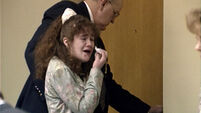
Survivors and relatives of those killed will have a separate room to watch the proceedings, and psychologists will be on hand to counsel them.