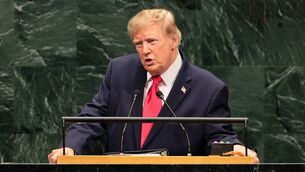
Bush goes home to rethink Iraq
US President George Bush went to his Texan ranch today to rethink his strategy in Iraq as the US death toll in the country passed that of the September 11 attacks.
Bush, saddled with low approval ratings for his handling of the Iraq conflict, will host a National Security Council meeting at the ranch on Thursday, but is not expected to make any final decision on what he says will be a new way forward in Iraq.
Vice President Dick Cheney, Secretary of State Condoleezza Rice, Defense Secretary Robert Gates and National Security Adviser Stephen Hadley will attend the meeting.
White House spokesman Scott Stanzel said there could be other National Security Council meetings before the president makes up his mind and announces his decision, a move expected before the State of the Union address on January 23.
Bush is under mounting pressure to change US policy in Iraq, where violence continued to escalate this month.
Today, the US military reported that seven more soldiers had died, pushing the American death toll for the month to 90.
With five days remaining in the month, December is already the second-deadliest month for the US military this year, behind the 105 soldiers killed in October.
The latest deaths also brought the number of US military members killed since the beginning of the Iraq war in March 2003 to at least 2,978, five more than the number killed in the September 11 terror attacks.
Thousands of Iraqis have been killed.
Mr Stanzel said Bush continues to question advisers and think through the consequences of various US actions.
âOur forces, coalition forces in Iraq, are continuing to take the fight to the enemy and the president will announce a new way forward when heâs comfortableâ with his decision, he said.
Mr Bush, who spent Christmas with his family at the Camp David presidential retreat in Maryland, has spent weeks figuring out a new war plan.
Anticipation is high, not just because people are weary of war, but also because of the way Mr Bush has gone about deciding his next move.
Saddled with a reputation for stubbornness, he has gone in the other direction.
He has made a visible effort to seek advice from the military, diplomats, academics, retired generals, a special study commission, Iraqi officials, Republican leaders and even Democrats he once ridiculed.
By the time he announces his plan in January, roughly two months will have passed since a humbling election loss for Republicans brought a promise of a ânew way forwardâ.
There might as well be a drum roll.
âHe has built up expectations,â said David Gergen, a former White House adviser in the administrations of presidents Richard Nixon, Gerald Ford, Ronald Reagan and Bill Clinton.
âPeople are saying: âOkay, if youâve spent all this time and effort on it, you better have a pretty darn good plan.'"
The ostensible goal of that plan will be to get Iraq on a path towards effective self-government and to help the US fight terrorism.
Mr Bush is also out to win back some of the American people, who want to know the war has an end in sight.
Recent history shows that with high expectations come problems.
The Iraq Study Group, a bipartisan commission of Washington elders, this month offered Mr Bush a stark, comprehensive plan to change course.
It was so highly anticipated that when it was not totally embraced by the White House it seemed to fall flat.
Mr Bush now faces a test of great expectations, largely of his own making.
He has promised a new approach, yet even his new defence secretary, Robert Gates, has acknowledged that âthere are no new ideas in Iraqâ.
Indeed, some of the main ideas under consideration - sending in more troops, embedding more US advisers in Iraqi units, engaging in more aggressive diplomacy - are not new.
If Bush does come up with a fresh approach after nearly four years of war, it will raise the question of why he had not thought of it before.
Even with that seemingly no-win set of expectations, the president does have room to succeed, said Kathleen Hall Jamieson, director of the Annenberg Public Policy Center at the University of Pennsylvania.
âIt doesnât have to be new. It has to be new for him,â said Ms Jamieson, who specialises in presidential rhetoric.
What people want is to hear the president explain a clear route to an honourable outcome, one in which it is clear that the war left Iraq and the US better off, Ms Jamieson said.
âThere are times when a country roots for a leader. I think thatâs what happening with this,â Ms Jamieson said.
âA lot of people who voted for Democrats want the president to succeed. I think he has some advantage coming in, because the public so desperately wants success.â