Shock new 9/11 terror trial evidence

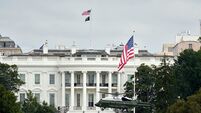
Laying out a stunning new version of his terrorist mission, al-Qaida conspirator Zacarias Moussaoui told jurors he was supposed to hijack a fifth jetliner on September 11, 2001, with would-be shoe bomber Richard Reid and fly it into the White House.

Shock new 9/11 terror trial evidence

Laying out a stunning new version of his terrorist mission, al-Qaida conspirator Zacarias Moussaoui told jurors he was supposed to hijack a fifth jetliner on September 11, 2001, with would-be shoe bomber Richard Reid and fly it into the White House.

But the jury also heard the mastermind of the September 11 attacks, Khalid Shaikh Mohammed, now in US custody, repeatedly state that Moussaoui was to be a part of a second wave of attacks unrelated to September 11.

In a 58-page statement read to jurors, Shaikh Mohammed said that he wanted only Middle Easterners for September 11 so that Europeans like Moussaoui stood a better chance of mounting a subsequent attack after security had been increased.

Testifying against the advice of his court-appointed lawyers, Moussaoui shocked the courtroom. Jurors who will decide whether he is to be executed or imprisoned for life were almost motionless during his nearly three hours on the stand. They didn’t look down to take notes; all eyes locked on the bearded 37-year-old Frenchman of Moroccan descent.

His testimony started in familiar territory. He denied he was supposed to be the so-called missing 20th hijacker of September 11. He testified he was not intended to be a fifth terrorist on United Airlines Flight 93 that crashed into a Pennsylvania field, the only plane hijacked by four instead of five terrorists.

Then came the shock.

Defence attorney Gerald Zerkin: “Before your arrest, were you scheduled to pilot a plane as part of the 9/11 operation?”

Moussaoui: “Yes. I was supposed to pilot a plane to hit the White House.”

He said he didn’t know details of the other hijackings set for that day except that planes were to be flown into the twin towers of the World Trade Centre.

Zerkin asked if he knew who else would be on his plane.

“Richard Reid. The other crew members were not definite,” Moussaoui replied, referring to a man he had met in the 1990s at London’s Finsbury Park mosque, where Islamic extremists recruited followers.

On December 22, 2001, Reid was subdued by passengers aboard American Airlines Flight 63 from Paris to Miami when he attempted to detonate a bomb in his shoe. That plane landed safely in Boston. Reid later pleaded guilty and was sentenced to life in prison.

This account by Moussaoui diverged sharply from his previous statements, including his confession when pleading guilty last April. For three years, he has said he had no involvement in the September 11 plot. Instead, he has said he was taking pilot lessons in the upper Midwest state of Minnesota to fly a 747 jetliner into the White House later should the US refuse to release a radical Egyptian sheikh imprisoned for separate terrorist convictions.

Former federal prosecutor Preston Burton said in an interview that Moussaoui was admitting “far more individual involvement than he had made before.” Now in private practice in Washington, Burton called it “a stunning revelation that would help prosecutors rather than him".

On cross-examination, prosecutor Rob Spencer underlined that Moussaoui was now saying his attack was to be part of the September 11 plot.

Spencer: “Osama bin Laden put you back in as the pilot of the fifth plane?”

Moussaoui: “That’s correct.”

Moussaoui had explained earlier yesterday that at one point he was excluded from pre-hijacking operations because he had got into trouble with his al-Qaida superiors on a 2000 trip to Malaysia. He had rejected flight training they tried to arrange for him there and had been floating ill-conceived bombing and robbery plots to the local al-Qaida affiliate that was putting him up.

Moussaoui said he was summoned back to Afghanistan by Shaikh Mohammed. “My position was, like you say, under review,” Moussaoui testified. It was only after he acknowledged to Osama bin Laden that he had gone wrong in Malaysia that bin Laden restored him to the plot, he added.

Moussaoui told the court he knew the World Trade Centre attack was coming and had lied to investigators when arrested in August 2001 because he wanted the operation to continue.

Prosecutor Spencer asked: “You knew on August 16 that other al-Qaida members were in the US?”

“That’s correct,” Moussaoui replied.

Spencer: “You knew there was a pending plot?”

“That’s correct.”

Spencer: “You lied because you wanted to conceal that you were a member of al-Qaida?”

“That’s correct.”

“You lied so the plan could go forward?”

“That’s correct.”

To get a death penalty, the government must show that an act of Moussaoui led directly to at least one of the nearly 3,000 deaths on September 11. Prosecutors have said the act was his lying to the FBI after his August 16, 2001, arrest, lies that they contend prevented the FBI and Federal Aviation Administration from detecting the plot and saving at least one life.

Before Moussaoui testified, his attorneys took one last stab to keep him off the stand. Zerkin argued that his client would not be a competent witness because he recognises only Islamic law, not American law, and believes it’s permissible to lie to further holy war.

When Moussaoui balked at the witness oath, US District Judge Leonie Brinkema asked him directly if he would tell the truth and he said he would.

Spencer tried but failed to counter one of the defence’s opening day arguments. Defence attorney Edward MacMahon had told the jury that Moussaoui wanted martyrdom and the only way he could achieve that would be if the jury gave him the death penalty. “Don’t make him a hero,” MacMahon pleaded.

Three times, Spencer asked Moussaoui a version of “If you get the death penalty, you are not a martyr?”

“It’s more complex,” Moussaoui protested. “It depends.”

Spencer: “Depends on what?”

“If you have fought to the best of your ability,” Moussaoui said.

Former federal prosecutor Lee Rubin, now in private practice in California, said prosecutors need to be careful how they play up Moussaoui’s testimony with the jury. “The first question is, is it truthful? Or is he committing suicide, effectively?”

“Rather than rotting in a jail, he might consider the ultimate martyrdom to be being put to death by the American infidels,” Rubin said.

In testimony read by a public defender, Shaikh Mohammed said he wasn’t aware that Moussaoui was in custody until after September 11, and that Moussaoui’s arrest on August 16 would have disrupted September 11 plans if he were a part of the operation.

Shaikh Mohammed also said he wanted all the second-wave hijackers to be Europeans or Asians who might face less scrutiny in a post-September 11 world. But that attack never happened, he said, because he did not anticipate the ferocity of the US response to September 11 and the only other pilot backed out.

Shaikh Mohammed considered Moussaoui too self-confident and too talkative. He instructed September 11 planner Ramzi Binalshibh to cut off contact with Moussaoui in early August 2001 for fear that Moussaoui would get Binalshibh caught.

Defence attorneys had wanted to call Khalid Mohammed to the courtroom, but the 4th US Circuit Court of Appeals ruled his testimony could be submitted in writing for security reasons.

x

More in this section

Cookie Policy Privacy Policy Brand Safety FAQ Help Contact Us Terms and Conditions

© Examiner Echo Group Limited