Islamic fanatic held for film-maker's murder

A Islamic fundamentalist with alleged terrorist ties was being held in a prison hospital today for the murder of a Dutch filmmaker who criticised the treatment of women under Islam.

Islamic fanatic held for film-maker's murder

A Islamic fundamentalist with alleged terrorist ties was being held in a prison hospital today for the murder of a Dutch filmmaker who criticised the treatment of women under Islam.

Theo van Gogh, 47, was repeatedly shot and stabbed to death in an Amsterdam street yesterday.

The culprit was shot in the leg during a shoot-out with police.

Dutch Justice Minister Piet Hein Donner said the suspect ”acted out of radical Islamic fundamentalist convictions”, and that he had contacts with a group that was under surveillance by the Dutch secret service.

The suspect, whose name was not released, was also allegedly a friend of an 18-year-old Muslim of Moroccan origin, Samir Azzouz, who is awaiting trial on charges of planning a terrorist attack on targets including a nuclear reactor and Amsterdam’s Schiphol Airport.

Dutch newspapers ran extensive coverage on the killing with angry headlines and witness accounts. The Telegraaf read “Butchered” over a large colour photograph of Van Gogh’s body with a knife protruding from his chest. ”We’re not going to take this,” said the Algemeen Dagblad daily.

The killer shot Van Gogh eight or nine times, calmly slipped his weapon in the pocket of a beige raincoat before bending over his victim and slitting his throat with a knife, according to the Algemeen Dagblad.

“Don’t do it. Don’t do it. Have mercy. Have mercy!” it quoted as Van Gogh’s last words before dying.

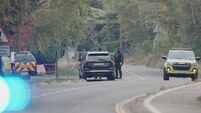
Police arrested a 26-year-old man with dual Moroccan and Dutch citizenship the shoot-out which also left a police officer slightly injured.

The government held late night crisis meetings and the Immigration Minister met with Muslim groups to discuss how to avoid violent confrontations with the Muslim community.

Police did not release the suspect’s identity, but said he had a record of violent crime.

The film by Van Gogh the great-grandson of painter Vincent Van Gogh’s brother, was aired in on Dutch television in August, drawing the ire of some Muslims.

Dutch Muslim groups – despite disagreeing with Van Gogh’s views on Islam - condemned the killing and called for reconciliation. They expressed fears of possible reprisals against Muslims.

Around 20,000 people poured onto Amsterdam’s central square in an emotional demonstration of support for Van Gogh and against violence.

The crowd blew horns, whistles and banged pots and pans.

“We won’t gather for a moment of silence, but to say loud and clear: freedom of expression is dear to us, and it must continue,” the city’s mayor Job Cohen said.

An award-winning filmmaker, television producer and newspaper columnist, Van Gogh was a controversial figure. He once mocked a prominent Dutch Jew, referred to Jesus as ”the rotten fish” of Nazareth and called a radical Muslim politician “Allah’s pimp.”

His murder came at a time of increased tensions in the Netherlands, where many blame violent crime on the Muslim minority, mainly made up of immigrants. Muslims, in turn, say new anti-immigration and anti-terrorism laws unfairly discriminate against them.

Police said Van Gogh was shot twice as he biked along an Amsterdam street. The assailant then shot him several more times at close range before stabbing him and placing a note on his body.

The killing instantly recalled the assassination of anti-immigration politician Pim Fortuyn, who was killed in 2002 by an animal rights activist. His death had shocked the people of a country where violent political crime is extremely rare.

“This has to end, once and for all,” said 20-year-old student Orinta van Lent at the demonstration. “You cannot just kill people on the street in a brutal way when you disagree with them.”

About 20 people were detained at another gathering in The Hague after chanting nationalist and anti-Muslim slurs.

Van Gogh said he had received threats after the airing of his movie “Submission”, which he made with a right-wing Dutch politician who had renounced the Islamic faith of her birth.

Police kept watch on Van Gogh’s house immediately after the film’s airing but dropped that precaution because there was no concrete evidence of a threat, public prosecutor Leo de Wit said.

x

More in this section

Cookie Policy Privacy Policy Brand Safety FAQ Help Contact Us Terms and Conditions

© Examiner Echo Group Limited