Aid shipments arrive in Liberia
Boats and planes landed some of the first shipments of desperately needed international aid for Liberia’s capital today.
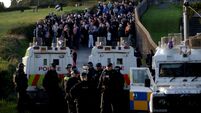
US Marines in gun-mounted rubber-walled boats patrolled Monrovia’s port, navigating among sunken vessels as a second relief ship docked following Thursday’s lifting of 70 days of sieges by Liberia’s rebels.
Hungry still, about 500 civilians gathered to stare at the gates of the port, hoping for some of the food trickling in there. Thousands of others coursed across the newly opened bridge connecting famished government-held areas to the markets of the former rebel-held territory around the port.
Rebels formally ceded control of the port Thursday to West African peace troops backed by US Marines, ending a siege that had killed hundreds outright and left residents in government-held with little to eat but flower leaves and snails.
Ending of the siege followed Taylor’s resignation on Monday, under US, West African and rebel pressure.
Humanitarian workers are returning to the city after largely vacating Monrovia during the siege, and the first aid ship docked on Friday. Aid workers distributed small amounts of aid today, handing out sacks of cornmeal to families at a church and elsewhere in the city.
World Food Program workers said they had found at least about 3,000 tons of their food stores intact, of about 10,0000 that had been stockpiled at the port, heavily looted during the fighting.
At the airport, planes landed food and other aid, including a shipment from the UN Children’s Fund of high-energy biscuits, milk for malnourished children and other items all together worth US 500,000, spokeswoman Margherita Amodeo said.
Pallets of aid lay on the tarmac, with workers preparing them for shipment into the city, but Amodeo said much more is needed – and that it would be some time before aid workers can travel out of Monrovia to reach one million to two million needy in Liberia’s interior, where fighting continues between rebels and fighters of the embattled government.
“We can only reach a small part of the population and in this area, the needs are very high,” said Amodeo. “We need to bring in as much as possible.”
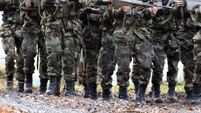
Elsewhere at the airport, two UN planes unloaded about 110 Nigerian peacekeeping soldiers – bringing the force to nearly 1,000 of a planned 3,250-strong initial deployment of West African soldiers.
About 200 U.S. Marines are billeted at the airport to back up the force, if needed.
At the seaport, a second UN-marked boat landed overnight carrying soap, blankets, plastic sheeting, cutlery and jerrycans for water.
A handful of US Marines patrolled the port today while US military helicopters buzzed overhead. Nearly 2,000 Marines are aboard three warships off the coast.
“We’ve received nothing but a positive reaction,” said Capt. Michael Charney of Elmhurst, Illinois, one of those patrolling. “People smile and wave and yell, ’Hi, Marine.”’
Guns have been largely silent in Monrovia since the Nigerian peacekeepers’ arrival in the city nearly two weeks ago. Fighting has continued in the countryside – even as negotiators grind toward a final peace deal in Accra, Ghana.
Mediators had hoped to sign the power-sharing pact today, but said the leading rebel group, Liberians United for Reconciliation and Democracy, was demanding the speaker of the house post and control of the ministries of defence and foreign affairs.
The two main rebel groups and the government previously had agreed to stay out of top posts in the power-sharing administration, meant to govern Liberia for two years during elections.
Rebel and government forces battled near Gbargna in central Liberia today and in the northern and eastern borderlands with Guinea and Ivory Coast, said top Liberian Gen. Benjamin Yeaten.
“I think the peacekeepers should move in quickly to arrest the situation,” Yeaten said.
The chief of staff of the peace force, Col. Theophilus Tawiah of Ghana, said he would contact rebel leaders for confirmation of a violation of an all-but ignored June 17 cease fire agreement.

CONNECT WITH US TODAY



Be the first to know the latest news and updates