Star clusters could hold alien lifeforms
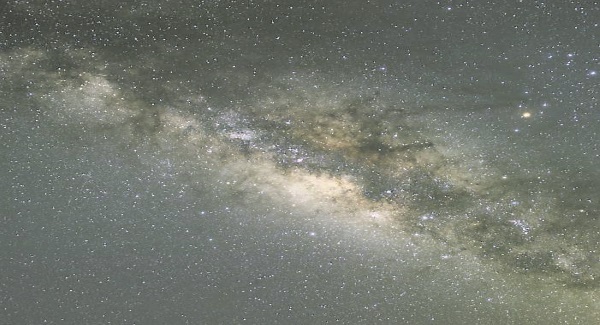
For many reasons, the distant regions might be favourable locations for intelligent life, astrophysicist Dr Rosanne Di Stefano believes.
One is their age. Globular clusters contain stars estimated to be 10 billion years old — ample time for life to evolve to an advanced level.
Also, their stars are so close together. It takes a month or so for light waves to travel between neighbouring stars in one of the clusters. The nearest star to Earth is 4.2 light years away.
“It would also be easier for a civilisation to explore and even set up outposts on other worlds,” according to Dr Di Stefano, from the Harvard-Smithsonian Centre for Astrophysics in Cambridge, US.
The sun is only 4.6 billion years old, so if globular cluster civilisations exist they could be billions of years more advanced than us.
“Of course, this is all conjecture. We don’t know whether there is alien life in such clusters. But globular clusters would be a good place to look and might be the first place where intelligent life is identified in our galaxy.”
CONNECT WITH US TODAY



Be the first to know the latest news and updates