Families weep at ‘Grim Sleeper’ serial-killer trial in Los Angeles
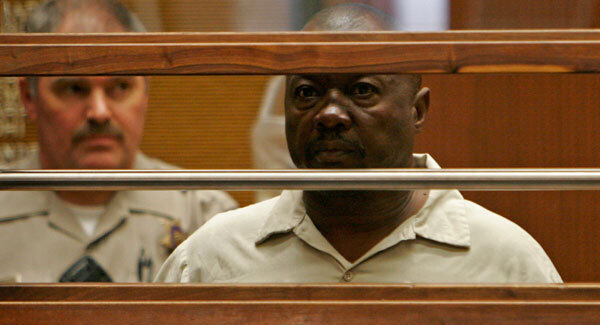
As the prosecutor, Beth Silverman, showed photo after photo of the 10 victims to a packed courtroom, family members of the dead young women wept. Some covered their faces, others walked out.
It was an emotional beginning to the long-awaited ‘Grim Sleeper’ trial, more than 30 years after the first killing.
Lonnie Franklin Jnr has pleaded not guilty to killing nine women and a 15-year-old girl, between 1985 and 2007, in one of the city’s most notorious serial-killer cases. Franklin, 63, has been behind bars, awaiting trial, since his arrest in 2010.
The Grim Sleeper’ nickname was coined because of an apparent 14-year gap in the murders, between 1988 and 2002.
Police have duelling theories about the gap. Some think the killings stopped after one intended victim survived, in 1988, scaring off the attacker.
Other investigators believe there were more victims, but their bodies weren’t found.
In her opening statement to jurors, Silverman said Franklin took advantage of the crack-cocaine epidemic in South Los Angeles, targeting women “willing to sell their bodies, and their souls, in order to gratify their dependency on this powerful drug.”
Autopsies showed all but one victim had cocaine in their systems when they were killed. Some had turned to prostitution.
“This was the perfect opportunity for someone who preyed on women,” Silverman said.
“Someone who knew the streets and the dark alleys by heart, someone who lived there and was able to blend in, someone who knew where the drug-addicted women, and perhaps prostitutes, would congregate, and who knew how to lure potential victims into the darkness, and the isolation, of a vehicle through the promise of crack.”
Franklin’s attorney, Seymour Amster, will deliver his opening statement later in the trial.
“There’s more to it than people want to believe,” Amster said in an interview last week.
Silverman said the killings were linked by firearms or DNA that matched Franklin. She also showed jurors photos that Franklin had in his home of two victims, including one who had just been shot in the chest when she was photographed.
As many as 30 detectives investigated the ‘Grim Sleeper’ killings in the 1980s. They exhausted leads within a few years.
A special squad of detectives was assembled after the most recent killing, the June, 2007 shooting of 25-year-old Janecia Peters, whose naked body was found in a rubbish bag.
Police arrested Franklin three years later, after his DNA was connected to more than a dozen crime scenes. An officer posing as a busboy at a pizza parlour got DNA samples from dishes and utensils Franklin had been using at a birthday party.
Family members of the ‘Grim Sleeper’ victims, and a survivor of the attacks, have been frustrated by repeated delays in the case and were eager for the trial to start.
Porter Alexander, the father of one of the victims, was 48 when his 18-year-old daughter was killed. He’s now 75.
“The day of reckoning is here,” Alexander said last week.
“You can’t help but be excited that you lived to see an end to this madness. It’s been a long road, and I’m glad I’ll physically be able to be there.”
When photos of his daughter’s naked body were shown in court, Alexander walked out, as other family members comforted his weeping wife.
The ‘Grim Sleeper’ was among at least three serial killers who stalked Los Angeles-area women during the crack-cocaine epidemic of the 1980s and 1990s.
The attacks were dubbed the ‘Southside Slayer’ killings, before authorities concluded more than one attacker was involved.
CONNECT WITH US TODAY



Be the first to know the latest news and updates