Turkey sends aid to Syrian refugees
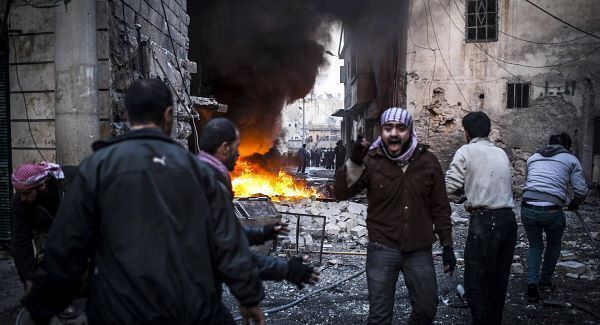
Aid trucks and ambulances entered Syria from Turkey yesterday to deliver food and supplies to tens of thousands of people fleeing an escalating government assault on Aleppo, as air strikes targeted villages on the road north to the Turkish border.

Turkey sends aid to Syrian refugees

Russian and Syrian forces intensified their campaign on rebel-held areas around Aleppo that are still home to around 350,000 people and aid workers have said the city, Syria’s largest before the war, could soon fall.

Russia’s intervention has tipped the balance of the war in favour of President Bashar al-Assad, reversing rebel gains made last year.

“In some parts of Aleppo, the Assad regime has cut the north-south corridor ... Turkey is under threat,” Turkish president Tayyip Erdogan was quoted as saying.

Turkey’s armed forces had the full authority to counter any threats to its national security, he said, although government officials have said the Nato member does not intend to mount any unilateral incursion into Syria.

Sunni Arab powers in the region, which, like Turkey, want to see Assad removed from power, have expressed readiness to intervene with ground forces provided it is part of a co-ordinated international effort. The United Arab Emirates yesterday said it was ready to send ground troops to Syria as part of an international coalition to fight Islamic State militants.

Saudi Arabia said last week it was ready to participate in any ground operations in Syria if the US-led coalition decided to start such operations.

Syria would resist any ground incursion into its territory and send the aggressors home “in coffins”, its foreign minister said on Saturday, comments clearly aimed at the UAE and Saudi Arabia.

Taking full control of Aleppo would be a huge strategic prize for Assad’s government in a five-year conflict that has killed at least 250,000 people and driven 11m from their homes.

Reuters

Irish role

A Northern Ireland peace negotiator is helping train women bidding to end the Syrian conflict.

Monica McWilliams said it was hugely important they were part of inclusive proximity talks which have been organised by the UN in Geneva in Switzerland. Three women from the strife-torn region are part of the 15-strong team.

Ms McWilliams played a key role in clinching the 1998 Good Friday Agreement. She said securing the release of female detainees subjected to human rights violations was a priority for the women in Geneva.

“What they are desperate for is to get some recognition of the fact that it is really important that these women who have suffered so much are included now in these big negotiations.

“Fifteen years ago the UN said never again should there be negotiations like Bosnia, that had completely excluded women. They are determined that there will be a proportion. Three out of 15 is a good start,” said Ms McWilliams, a UniverMrs McWilliams co-founded the Women’s Coalition as a new voice in Northern Ireland politics in the 1990s.

The party played a key role in the talks process leading to the 1998 Agreement which ended 30 years of violence and two of its members were subsequently elected to the devolved Northern Ireland Assembly.Mrs McWilliams went on to lead Northern Ireland’s Human Rights Commission.She is now a professor at the University of Ulster.

She said women had an important part to play in ending the conflict in Syria.Some 250,000 people have been killed and millions of refugees have been created in the five years of violence between the Government and a variety of rebel groups including Islamic State.

More in this section

Cookie Policy Privacy Policy Brand Safety FAQ Help Contact Us Terms and Conditions

© Examiner Echo Group Limited