Yew tree undergoing ‘a sex change’
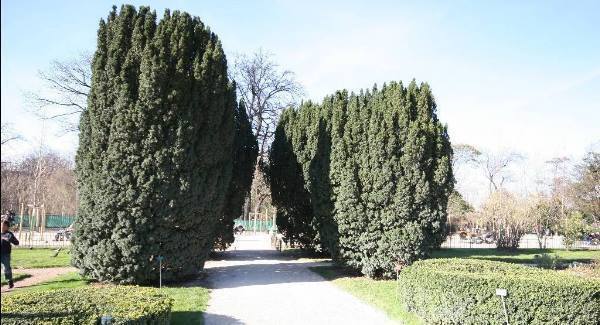
Records have always noted the Fortingall yew in Perthshire as a male tree but it has recently started sprouting berries, something only female yew trees do.
Experts at the Royal Botanic Garden in Edinburgh spotted three berries on a high branch of the tree, located in the churchyard of the village of Fortingall, Perthshire, and have now taken them for analysis as part of a conservation project.
Max Coleman of the Royal Botanic Garden said yew trees have been known to change sex before but discovering the process on “such a special tree is what makes this a special story”.
The Fortingall yew is thought be between 3,000 and 5,000 years old, and is one of the oldest living organisms in Europe.
It has survived the ravages of time and the attention of eager tourists, who in previous centuries took clippings from it as a souvenir.
The trunk changed shape many years ago and has lost its centre and one side, and is is now protected by a wall.
Coleman said: “Yew trees are male or female usually and it is pretty easy to spot which is which in autumn, males have tiny things that produce pollen and females have bright red berries from autumn into winter.”
CONNECT WITH US TODAY



Be the first to know the latest news and updates