IS destroys 2,000-year-old Syria arch
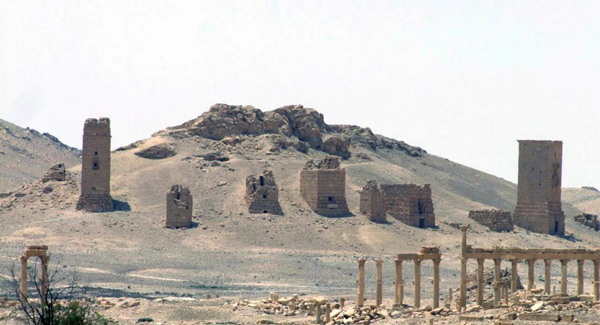
The Arch of Triumph was one of the most recognisable sites in Palmyra, the central city affectionately known by Syrians as the ‘Bride of the Desert’, which the IS group seized in May.
The monumental arch sat atop the famed colonnaded streets of the ancient city, which linked the Roman Empire to Persia and the East.
The Britain-based Syrian Observatory for Human Rights said the IS group blew up the arch but left the colonnades in place.
An opposition activist who uses the name Khaled al-Homsi also posted on Twitter that the militants destroyed the arch.
Palmyra’s sprawling ancient complex, which also includes remains of temples to local gods and goddesses, has been under attack from IS.
The Sunni extremists impose a violent interpretation of Islamic law across a self-declared ‘caliphate’, declaring that such ancient relics promote idolatry and saying they are destroying them as part of their purge of paganism.
Demolition of famous arch adds to list of ancient sites destroyed by ISIS: http://t.co/g1BNxKbeLR
— National Geographic (@NatGeo) October 5, 2015
However, they are also believed to sell off looted antiquities, bringing in significant sums of cash.
In recent weeks, IS militants blew up two famed temples in Palmyra. Satellite images showed the temples, each nearly 2,000 years old, reduced to rubble. Three ancient tower tombs were also eradicated.
The temple of Baalshamin, a structure of giant stone blocks several storeys high fronted by six towering columns, was dedicated to a god of storm and rain — the name means literally ‘Lord of the Heavens’.
The even larger and slightly older Temple of Bel, dating back to 32AD, was a unique merging of ancient Near Eastern and Greco-Roman architecture.