Croatia ‘unable to accommodate refugees’
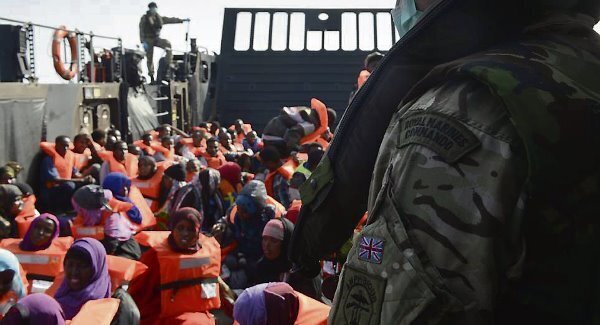
The refugees, mostly from poor or war-torn countries in the Middle East, Africa and Asia, have streamed into Croatia since Wednesday, after Hungary blocked what had been the main route with a metal fence and riot police at its border with Serbia.
“We cannot register and accommodate these people any longer,” Croatian prime minister Zoran Milanovic told a news conference in the capital Zagreb.
“They will get food, water and medical help, and then they can move on. The European Union must know that Croatia will not become a migrant ‘hotspot’. We have hearts, but we also have heads.”
The arrival of 13,000 in the space of 48 hours, many crossing fields and some dodging police, has proved too much for one of the EU’s less prosperous states in a crisis that has divided the 28-nation bloc and left it scrambling to respond.
A record 473,887 refugees and migrants have crossed the Mediterranean to Europe so far this year, the International Organisation for Migration said.
Hundreds of thousands have been trekking across the Balkan peninsula to reach the richer European countries north and west, especially Germany, which is preparing to accept 800,000 asylum seekers this year.
But that has wrongfooted the European Union, which has come up with no common policy to deal with the biggest wave of migration to Western Europe since World War Two.
Hungary acted on its own to shut the main route this week by closing its border with Serbia, leaving thousands of migrants scattered across the Balkans searching for alternative paths.
Croatia, offering one of the few overland routes to Germany that would bypass Hungary, found itself suddenly overwhelmed.
While Zagreb initially made welcoming statements, Milanovic said he had called a session of Croatia’s National Security Council and that it was time to deal with the problem differently. The president has told the military to be ready if called on to help stop the flow of people.
Croatia, the EU’s newest member state, has already closed almost all roads from the border. Interior minister Ranko Ostojic said if the crisis continued “it is a matter of time” before the border was shut completely, though Milanovic, in his remarks, questioned whether even that would keep migrants out.
Police have rounded up many migrants at the Tovarnik railway station on the Croatian side of the border with Serbia, where several thousand spent the night under open skies.