Man crushed to death in Eurotunnel rush
Eurotunnel said it had blocked more than 37,000 such attempts by migrants to reach Britain since January.
There were conflicting numbers of people involved, ranging from 150 to as many as 1,200. French authorities and the company agreed there had been about 2,000 attempts on each of two successive nights.
The numbers have been growing, as has the sense of crisis in recent weeks, spurred by new barriers around the Eurotunnel site, labour strife that turned the rails into protest sites for striking workers, and an influx of desperate migrants.
Many British officials have expressed growing alarm at what they see as a potential influx of foreigners, although it is not clear how many people have successfully made the passage. Nine migrants have died in the attempt since June, said France’s interior minister.
Bernard Cazeneuve said: “This exceptional migrant situation has dramatic human consequences. Calais is a mirror of conflicts tearing up regions of the world.”
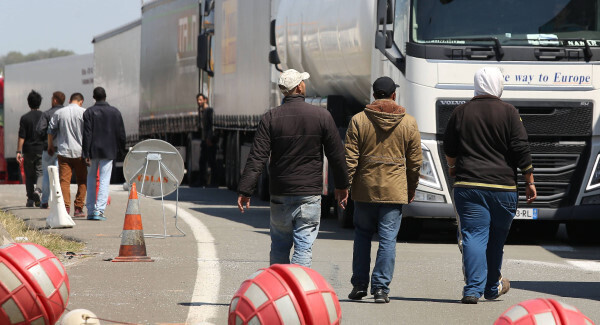
About 25 migrants were seen getting off a public bus in Calais yesterday with a police officer who left them by the side of the road. Several said they were returning from a night of trying to cross the Channel.
Natacha Bouchart, mayor of Calais, said about 150-250 migrants tried repeatedly overnight to reach the Eurotunnel. French officials said it was the second night of mass attempts on the tunnel. Gilles Debove, a police union official, counted about 2,000 attempts for a second night running. Debove said officers pushing back the migrants counted between 750 and 1,200 people.
Bouchart told France Info radio that migrants are trying to reach England from France “at all costs” — first crossing a busy highway and then trying to stow away on trucks waiting to board trains. She says Britain, France, and the Eurotunnel need to work together on the issue.
The man killed overnight, believed to be a Sudanese man in his mid-20s, was crushed by a truck as he tried to stow away, Debove said.
Cargo trucks were lined up overnight for several kilometres leading to the Eurotunnel freight loading zone, some of them stuck on a highway overpass above one of the many makeshift migrant camps.
“It’s become a phenomenon which is beyond our means,” said Eurotunnel spokesman John Keefe. “We’re just a small transport company operating in a little corner of Europe.”
CONNECT WITH US TODAY



Be the first to know the latest news and updates