Plight of migrants ‘makes one cry’
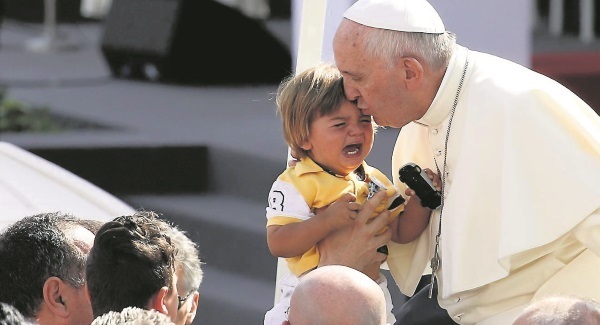
The Church does not have an official position on the authenticity of the shroud of Turin, but has said the mysterious cloth, which has baffled scientists, is a powerful reminder of Jesus’ suffering.
Many popes have prayed before the shroud, which is kept locked behind an altar, and is on display for only the third time in 17 years. More than a million people have seen it since April.
Later, at the end of a Mass for 60,000 people, the Pope said the shroud should spur people to reflect not only on Jesus, but also on “the face of every suffering and unjustly persecuted person.”
Francis, born Jorge Mario Bergoglio, is of immigrant stock and yesterday called himself “a grandson of this land.” His grandparents and father emigrated to Argentina from the Turin area.
In a morning outdoor talk to thousands of workers and unemployed people, he defended the right to employment and urged his listeners, although going through hard times, to help the 10% of the city’s population that lives in absolute poverty.
“Immigration increases competition, but migrants should not be blamed, because they are the victims of injustice, of this throwaway economy, of wars,” he said in the manufacturing district that was an engine of Italy’s post-war industrial rise.
Departing from his prepared text, he said. “It makes one cry to see the spectacle of these days, in which human beings have been treated like merchandise.”
Italy’s right-wing Northern League, which has won votes from people who say migrants take resources from a long-stagnant economy, is very strong in the neighbouring Lombardy and Veneto regions.
Francis has made immigration a top priority of his papacy. His first trip, in 2013, was to the southern island of Lampedusa, to pay tribute to the thousands of migrants who have died trying to cross the Mediterranean.
France and Austria have stepped up border controls on migrants from Italy, turning back hundreds and leaving many camped out in train stations in Rome and Milan.
Francis later went to the cathedral, where he sat in silent veneration before the shroud, which bears an image, eerily reversed like a photographic negative, of a man with the wounds of a crucifixion.
Measuring 4.4 metres by 1.2 metres, it shows the back and front of a bearded man, his arms crossed on his chest. It is marked by what appear to be rivulets of blood, from wounds in the wrists, feet and side.