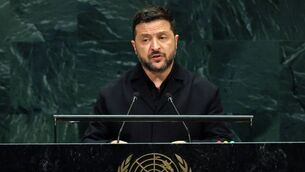
‘Ukraine’s regions should have more power’
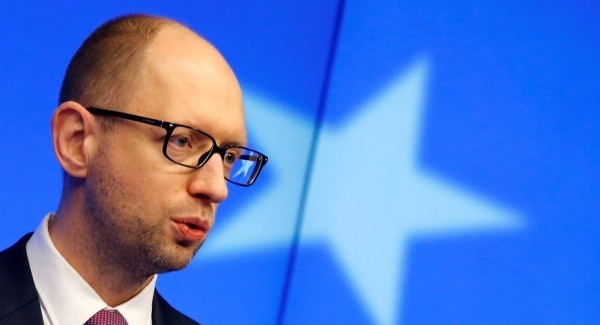
Arseniy Yatsenyuk told reporters he favours a peaceful solution to the stand-off with Russia, but left it unclear how his ideas differ from the demands of protesters occupying government buildings in the east or from Moscow’s advocacy of federalisation.
He also left the door open to storming the buildings occupied by armed men, even though a two-day deadline announced earlier this week has passed.
The officials who met Mr Yatsenyuk in Donetsk did not include representatives of the protesters. They asked Mr Yatsenyuk to allow referenda on autonomy for their regions, but not on secession.
“There are no separatists among us,” said Gennady Kernes, mayor of Kharkiv, the second-largest city in Ukraine, where protesters occupied a government building earlier in the week.
Meanwhile, Ukraine said it would turn to Europe for gas and won a promise of help from Brussels after Russia warned it could cut supplies over Kiev’s refusal to pay Moscow’s “political, uneconomic price” for supplies.
Presenting a united front a day after president Vladimir Putin wrote to the EU warning that its supplies could be disrupted if Ukraine failed to cover its bills, European officials said they had little to fear and would help Ukraine pay.
With Russia increasing the pressure on Ukraine’s faltering economy, Ukrainian energy minister Yuri Prodan told parliament the EU would stand in solidarity with Kiev if Russia reduced supplies, making sure Moscow could not increase flows through alternative pipelines to bypass its neighbour.
“Ukraine cannot pay such a political, uneconomic price, so now we are negotiating with the European Union about reverse deliveries into Ukraine,” Prodan said. “We will make gas purchases from reverse flows urgently. On the conditions offered by European gas companies. We plan that they will be Germany’s RWE and a French gas company.”
The ministry’s spokes- woman confirmed the French company was GDF Suez, adding no agreement had been signed as yet. GDF Suez declined to comment.
Prodan said Ukraine needed European gas to build up its reserves as Russian gas was no longer being pumped into storage, adding Ukraine had unused capacity of 15bn cubic metres.
Kiev has around 7bn cubic metres in storage and says it needs 14 to 15bn cubic metres to be able to guarantee transit to European consumers. Russia meets 30% of Europe’s natural gas demand, and half of this goes through Ukraine.
Russia has nearly doubled the gas price it charges Ukraine, punishing an economy that for years was mismanaged by pro- Moscow president Viktor Yanukovych and has been in freefall since he was toppled in violent protests.
Kiev’s new leaders accuse Moscow of using gas as a way of punishing them for pursuing closer ties with the EU, and the standoff has deepened the worst East- West crisis since the end of the Cold war in 1991.
Washington accused Moscow of using energy as “a tool of coercion”.
But Kremlin spokesman Dmitry Peskov stepped up the pressure on Ukraine, reiterating that its gas debt was mounting and Kiev was failing to meet its payment obligations — a wording that could trigger the reduction of supplies.
European energy commissioner Guenther Oettinger advised against taking the threat of gas cuts at face value, saying Russia needed the revenue from gas deliveries.