Egypt suffers deadliest day since 2011 revolution
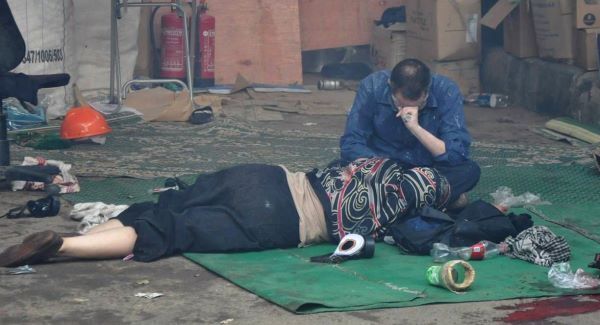
It made it the deadliest day in Egypt since the 2011 revolution against Morsi’s predecessor Hosni Mubarak began, leading to more than two years of turmoil.
Egypt declared a state of emergency after clashes broke out across the country following a blood-soaked bid to clear two protest camps in Cairo.
Security forces moved on the two areas where Muslim Brotherhood supporters of the ousted president were holding sit-ins.
Egypt’s interior minister said 43 policemen were killed in the clashes.
Mohammed Ibrahim, who is in charge of the police, said Morsi’s supporters stormed 21 police stations and damaged or torched seven churches across the nation.
He said they also stormed the Finance Ministry in Cairo and occupied its ground floor.
Two journalists were among the dead — Mick Deane, 61, a cameraman for Sky News, and Habiba Ahmed Abd Elaziz, 26, a reporter for the Gulf News, a state-backed newspaper in the United Arab Emirates.
Clashes also broke out elsewhere in the capital and other provinces, injuring more than 1,400 people nationwide, as Islamist anger over the crackdown spread, with police stations, government buildings, and Coptic Christian churches attacked or set ablaze.
The interim government declared the month-long state of emergency, ordering the armed forces to support the police in efforts to restore law and order and protect state facilities. A night-time curfew for Cairo and 10 provinces also was put into effect.
Meanwhile Egypt’s vice president and pro-reform leader Mohamed ElBaradei resigned in protest at the raids saying he would not be held responsible for a “single drop of blood”.
The assaults came after days of warnings by the military-backed interim administration that replaced Morsi after he was removed in a Jul 3 coup. The two sit-in camps at major junctions on opposite sides of the Egyptian capital began in late June to show support for Morsi. Protesters have demanded his re-instatement.
The smaller of the two camps was cleared of protesters by late morning, with most of them taking refuge in the nearby Orman botanical gardens on the campus of Cairo University and the zoo. Security forces later stormed the larger camp in the Cairo district of Nasr City and by early evening said they had the area under control.
Protesters claimed security forces used live ammunition, but the Interior Ministry, which is in charge of the police, said its forces only used tear gas and came under fire from the camp.
The ministry also warned that forces would deal firmly with protesters who were acting “irresponsibly”, suggesting it would respond in kind if its men are fired upon. It said it would guarantee safe passage to all who want to leave the Nasr City site but would arrest those wanted for questioning by prosecutors.
Army troops did not take part in the two operations, but provided security. Police and army helicopters hovered over both sites as smoke rose over the skyline hours after the police launched the simultaneous actions.
The turmoil was the latest chapter a bitter stand-off between Morsi’s supporters and the interim leadership took over the Arab world’s most populous country. The military ousted Morsi after millions of Egyptians massed in the streets to call for him to step down.
The coup provoked similar protests by Morsi’s backers after he and other Brotherhood leaders were detained as divisions have deepened, dealing a major blow to hopes of a return to stability after the 2011 revolution that toppled autocratic ruler Hosni Mubarak.
Separately, an alliance of pro Morsi groups said the 17-year-old daughter of senior Brotherhood leader Mohamed el-Beltagy was killed. Asmaa Mohamed el-Beltagy was shot dead in the larger of the two vigils.

CONNECT WITH US TODAY



Be the first to know the latest news and updates