Bangladesh may face EU trade action over safety standards
The European Union is considering trade action against Bangladesh, which has preferential access to EU markets for its garments, in order to pressure Dhaka to improve safety standards after a building collapse killed hundreds of factory workers.

Bangladesh may face EU trade action over safety standards

Duty-free access offered by Western countries and low wages have helped turn Bangladesh’s garment exports into a $19 billion (€14.4bn) a year industry, with 60% of clothes going to Europe.

Any action by the EU on Bangladesh’s duty-free and quota-free access would require the agreement of all member states and could take more than a year to implement.

“The European Union calls upon the Bangladeshi authorities to act immediately to ensure that factories across the country comply with international labour standards . . .,” the 27-nation bloc said in a statement issued by EU foreign policy chief Catherine Ashton and Trade Commissioner Karel de Gucht.

The Swiss-based IndustriAll Global Union, which represents 50 million workers worldwide, set a May 15 deadline to finalise with Western retailers a commitment to a fire and building safety plan for Bangladesh.

“Funds will be made available for inspections, training and upgrades of dangerous facilities,” it said in a statement and called on retailers to renegotiate contracts to pay suppliers more in order to guarantee living wages for workers and to enable technical upgrades to factories.

About 3.6 million people work in Bangladesh’s garment industry, making it the world’s second-largest apparel exporter, behind China. The industry employs mostly women, some of whom earn as little as $38 a month.

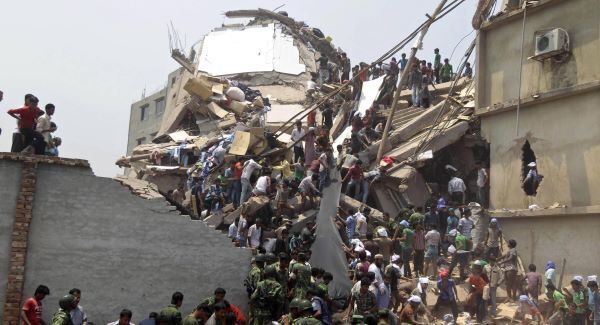
Anger in Bangladesh has been growing since the illegally built Rana Plaza in Dhaka’s commercial suburb of Savar collapsed last week, killing 411 people in the country’s worst industrial accident. There were about 3,000 people inside the complex, which was built on a swamp, when it collapsed. About 2,500 people have been rescued. Many remain missing.

“Why are they taking so much time to pull out bodies?” asked a grief-stricken father who, like many others, has been waiting on the streets near the collapsed factory, hoping for information about his son. A mass burial of around 40 people took place yesterday.

More in this section

Cookie Policy Privacy Policy Brand Safety FAQ Help Contact Us Terms and Conditions

© Examiner Echo Group Limited