Campaign enters riskiest phase for allies as threat of errors grow
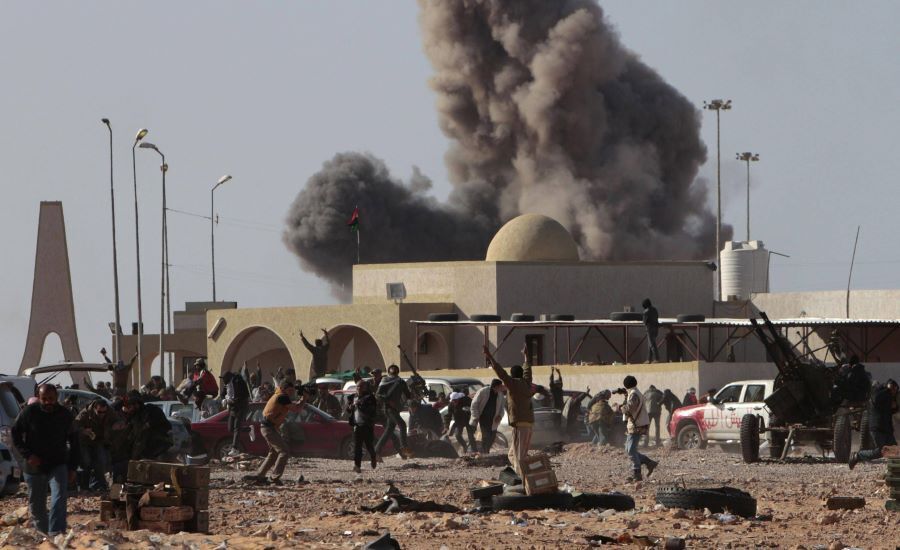
While three nights of bombing have enforced a no-fly zone and appeared to have knocked out surface-to-air missile defences, they have yet to stop Gaddafi loyalists attacking rebel cities.
The crash of a US Air Force F-15E fighter jet with mechanical failure served as a reminder of the risk of mishaps, even though both pilots ejected and avoided falling into the hands of Gaddafi’s forces.
To keep up the momentum of their bid to enforce a total ceasefire, coalition pilots must go on striking. And the targets they are assigned as time goes by are likely to get riskier in terms of civilian casualties, and more controversial in terms of agreed war aims.
NATO’s 1999 bombing of Yugoslavia to halt an impending humanitarian catastrophe in Kosovo started out in much the same way. NATO hoped two or three days of bombing would prove it was not bluffing and compel Serbian autocrat Slobodan Milosevic to withdraw his forces from the rebel province. But the air strikes lasted from March 24 until June 10.
It took 11 weeks, in which NATO ran out of targets, sending pilots back again and again to “bounce the rubble” of sites they had destroyed. Civilians were killed in strikes that went wrong, and NATO solidarity was battered.
Belated admissions of regrettable “collateral damage” helped to fuel mounting protests against the war in Western capitals.
Libya’s government says dozens of civilians have already been killed, though its claims so far are impossible to verify.
“You can always get ‘lucky’ with air power — a strike that kills Gaddafi, for instance,” said US Naval War College professor of national security studies Nikolas Gvosdev. “But increased reliance on air power raises the costs, particularly the chances of collateral damage.”
Faulty intelligence or an errant allied missile could destroy a school, a hospital or a mosque, killing dozens.
“The danger is that this undoes much of what was good about the Arab spring,” said Rosemary Hollis, professor of Middle Eastern policy studies at London’s City University. “The risk is that it is seen as the West again interfering in the way it is always seen to, and simply making matters worse.”
In the Kosovo campaign, by the end of day three, almost all strategic military targets were destroyed. But the Yugoslav army was still fighting in Kosovo. Phase Two turned to attacks on those ground forces. Then it went on to bridges, factories, and government buildings, including army HQ in the capital, Belgrade.
Targets on the original “no strike” list were eventually hit, often after tense disputes among allies desperate to minimise the risk of civilian casualties and to avoid any charge that their aims were in any way malicious.
NATO pilots bombed the Chinese embassy in Belgrade, killed 73 in a Kosovo refugee column and obliterated a rebel camp in error.
Solidarity was strained near breaking point when NATO’s supreme commander, US General Wesley Clark, ordered strikes on the office tower of Serbian state television — the “voice of Milosevic’s war machine” — and civilians were killed.
In the end, despite vows not to get into a ground war, preparations for exactly that got the go-ahead from US President Bill Clinton, who ordered an advance force of Apache helicopter gunships to Kosovo’s neighbour, Albania. Milosevic capitulated after 78 days and it was never used.
But the British commander, General Mike Jackson, a Kosovo veteran, said this week that he “wouldn’t put too strong a possibility on Gaddafi voluntarily throwing in the towel”.
Gaddafi could switch to guerrilla warfare “which is rather more difficult to deal with using conventional military means, from the air and from the sea,” he said, and “there may have to be action taken against him from within Libya itself”.

CONNECT WITH US TODAY



Be the first to know the latest news and updates